Mexico Data Centers vs. Power Grid: The T-MEC Bottleneck
México wants to be North America’s next digital hub. The problem is plugging it all in.
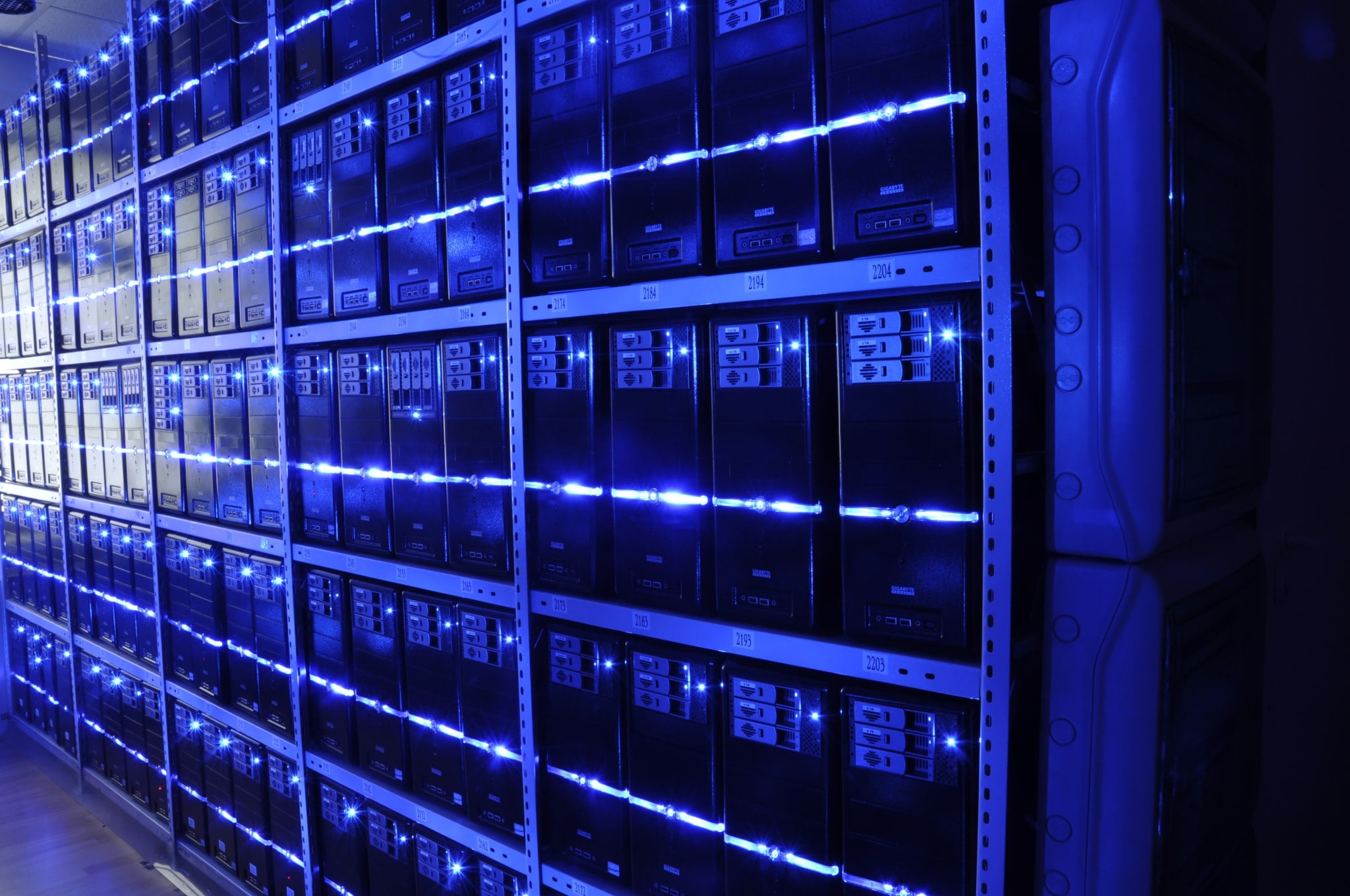
México wants to be North America’s next digital hub. The problem is plugging it all in.
The collision between México’s data centers and its power grid is now the biggest question hanging over the country’s digital future. Billions of dollars are flowing in to build the warehouses that run the internet and artificial intelligence. But the electricity to feed them is running short, and that bottleneck is quietly shaping how far nearshoring and the T-MEC trade pact can go.
- US$82.5 billion in data-center spending is projected for México between 2026 and 2031, according to the industry group MEXDC.
- México has about 50 data centers and 279 MW of live computing power — the United States has more than 5,400 facilities.
- Querétaro holds roughly 72% of that capacity, making one central state the country’s digital heartland.
- México’s grid runs near its ceiling of about 52,300 MW, and spare capacity fell to roughly 3% in 2024 — below the 6% safety line.
- The energy ministry (SENER) expects data centers to need 1,500 MW of new power by 2030.
- State utility CFE spent 24% less on physical infrastructure in 2025 than the year before.
The boom is real, and it is huge
Start with what a data center actually is. It is a building packed with computers — the servers that store your photos, stream your video, and now train AI models. They run day and night, and they drink electricity.
México is trying to attract a lot of them. The industry group MEXDC projects US$82.5 billion in data-center investment between 2026 and 2031. In January 2025, Amazon Web Services alone pledged US$5 billion (about MX$85 billion) to build a new cloud “region” in Querétaro. Google and Equinix are building there too.
Why Querétaro carries the load
Nearly three-quarters of México’s existing capacity sits in one place: the central state of Querétaro. Operators like it for low earthquake risk, good fiber-optic cables, and closeness to Mexico City.
That concentration is a strength and a weakness. It has created a genuine tech cluster. It has also piled demand for power and water onto a single region, sparking local pushback and stretching the wires that were never built for this.
The Mexico data centers power grid squeeze
Here is the catch. “Grid capacity” simply means how much electricity the national network can generate and move around at once. México’s grid already runs close to its peak of roughly 52,300 MW.
The margin of spare power dropped to about 3% in 2024, below the 6% level regulators treat as safe. More than 60% of the transmission network runs near its limit. In practice, that means slow, uncertain hookups: MEXDC says a new site can take around five years to permit, build, and connect.
The scale gap is stark. MEXDC executive director Adriana Rivera says serious AI work needs at least 250 MW at a single site, yet México’s largest facility, in Pedro Escobedo, Querétaro, runs at about 149 MW. The country is not yet wired for frontier AI.
What the government is doing about it
The state utility CFE is not sitting still. Its 2024–2030 plan promises about US$23.4 billion — US$12.3 billion to add 13,000 MW of generation, US$7.5 billion to fix the transmission grid, and US$3.6 billion for distribution.
The worry is delivery. CFE actually spent 24% less on physical infrastructure in 2025 than the year before. President Claudia Sheinbaum’s team is courting AI money — Salesforce chief Marc Benioff pledged US$1 billion over five years — but MEXDC says a joint strategy with the energy ministry has not yet clicked into place.
Why this matters for nearshoring and the T-MEC
This is where trade comes in. Cross-border digital trade across North America already tops US$250 billion a year, and the T-MEC (the USMCA pact, up for review in 2026) bans forcing companies to keep data inside one country. That should let México host servers for the whole region.
Power is the ceiling on that promise. One report found that around 70% of planned industrial parks in the northern and central corridors face energization delays past 2026. If factories and data centers both wait in line for the same scarce electricity, the nearshoring story slows — and rivals like Brazil and Chile look easier to plug into.
Why you should care
If you live in or invest across Latin America, this is not an abstract engineering debate. The same grid that powers a data center powers your apartment, your co-working space, and the factory down the road. When 20 states have already reported blackouts and fluctuations, cheap reliable electricity stops being a given.
For investors, the read is simple. México’s digital upside is real, but the smart money is now watching megawatts as closely as tax breaks. Whoever solves the power problem — renewables, gas, storage, or all three — unlocks the rest.
More: Mexico news in English, every day from The Rio Times.
Sources
- MEXDC via Mexico Business News
- Mexico’s Ministry of Energy (SENER)
- CFE 2024–2030 plan via Nearshore Americas
- Institute of the Americas
- Mexico Energy Partners
- AWS/Amazon investment announcements (TechCrunch, Mexico News Daily)
- CSIS analysis of the 2026 USMCA digital-trade review
Frequently Asked Questions
What is a data center, in plain terms?
It is a building full of computers that store data and run online services and AI. They operate around the clock and use a great deal of electricity, which is why power supply is such a big deal for them.
Why is Querétaro the center of México’s data-center boom?
The state has low earthquake risk, strong fiber-optic connections, and easy access to Mexico City. That has pulled in about 72% of the country’s data-center projects, including a US$5 billion Amazon Web Services project.
Is México’s grid really running out of power?
It is very tight. The network runs near its 52,300 MW peak, and spare capacity fell to about 3% in 2024, below the 6% regulators consider safe. New connections can take roughly five years.
How does this affect nearshoring and the T-MEC?
The T-MEC lets companies move data freely across North America, which favors México as a hub. But limited electricity is delaying industrial parks and data centers alike, capping how quickly that digital-economy potential can be realized.
This article was produced by The Rio Times’ automated AI newsroom. Editorial responsibility: Matthias Camenzind, Publisher and Editor-in-Chief. The Rio Times also runs Ask Rio Times, which answers from 100,000+ of our own articles, the daily Latin America Power Map, and prediction-market odds on elections and markets.. How we use AI · Report an error