
KENYA · ELECTIONS
Key Facts
- —The country Kenya is an East African democracy and a major non-NATO ally of the United States, with a general election due on 10 August 2027.
- —What happened On Tuesday 20 October 2026 the Nation reported that lawmakers are weighing a bill that drops the legal duty to livestream results.
- —The bill The Elections (Amendment) Bill, 2024, passed by the Senate in December 2024, rewrites Section 39 of the Elections Act in clause 22.
- —The court history In 2018 the High Court struck down a rule that made livestreamed results public information only and not a basis for the final declaration.
- —The commission’s view On Thursday 30 July the election commission said the bill keeps electronic transmission and adds a fallback where there is no 3G signal.
- —What it means for you Investors and diplomats watch whether Kenyan citizens and media can check the 2027 count live against the final declaration.
- —Still open Whether the National Assembly keeps, changes or drops clause 22, and when it will vote.
The Kenya election livestream could lose its place in the law, the Nation reported on Tuesday 20 October 2026. Lawmakers in Nairobi are weighing a bill that deletes the legal duty to show results live from polling stations.
For US readers, the change matters because Kenya is a major non-NATO ally of Washington and a base for American business in East Africa. Trust in the count at the August 2027 election affects investors, diplomats and aid planners.
Where the Elections Bill Stands
The Elections (Amendment) Bill, 2024 passed the Senate, Kenya’s upper house, in December 2024, the Nation reported in July. It is now before the National Assembly, the lower house, which must consider it and decide whether to agree.
The National Assembly read the bill a first time on 13 February 2025, and then it was shelved, the Nation said. The Justice and Legal Affairs Committee, the House panel that reviews legislation, now has the bill, Citizen Digital reported on 30 July.
What Clause 22 Would Change
Clause 22 repeals and replaces Section 39 of the Elections Act, which governs how results are sent in and declared. The new text leaves out the commission’s duty to set up a Kenya election livestream of results as announced at polling stations.
The bill would also drop the line saying that a failure to send or publish results electronically does not, by itself, cancel results already declared. Today the commission shows the polling-station figures on large screens at the national tallying centre, and broadcasters take the feed from there, the Nation said.
The 2018 Court Ruling Behind the Fight
An earlier rule said livestreamed results were for public information only and could not be the basis for a declaration. Justice Chacha Mwita of the High Court ruled on Friday 6 April 2018 that this rule, Section 39(1G), was invalid.
Katiba Institute, a Kenyan legal group, brought the case, and the Nation said the Court of Appeal later upheld the ruling. The judge wrote that “the results streamed live from polling stations are the primary source of those finally declared.”
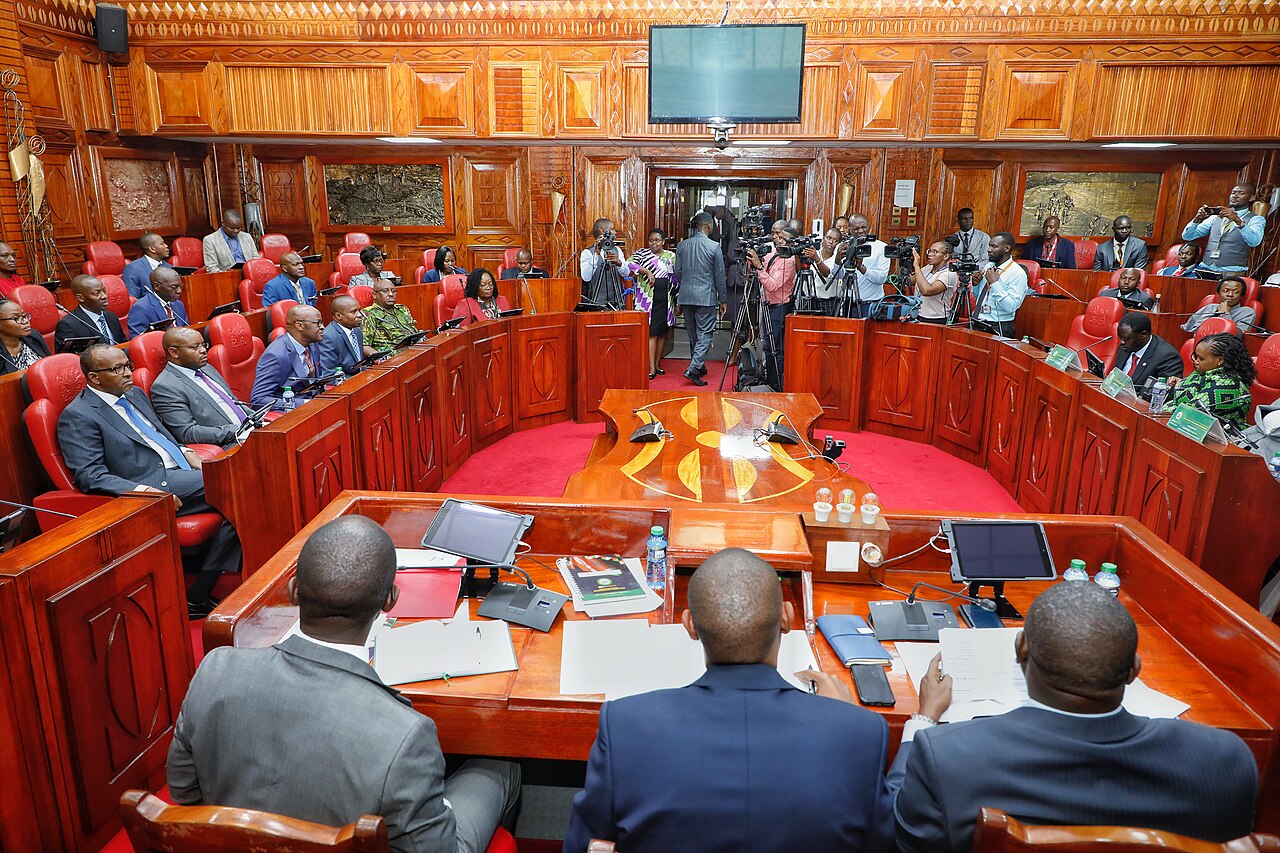
What the Election Commission Says
The Independent Electoral and Boundaries Commission, known as the IEBC, runs Kenya’s elections and is chaired by Erastus Ethekon. On Thursday 30 July 2026 it said the bill leaves Section 44 untouched, which sets up electronic voter identification and result transmission.
The commission said the bill adds a fallback way to send results where the 3G mobile network, the minimum signal needed, is missing. It also said the bill follows the Supreme Court’s 2017 election petition ruling, which made the paper Form 34A the primary result record.
Critics Warn of Less Transparency
Justin Muturi, a former attorney general and former Speaker who now leads the Democratic Party, said that “darkness and democracy are not synonymous.” He called any plan to ban a Kenya election livestream “unconstitutional and offensive to the principles of open governance.”
The fight is not new: in 2022 the Justice and Legal Affairs Committee rejected an IEBC request to drop the rule for presidential results. It said Kenyans should compare live figures with the final declaration.
What It Means for US Readers
Kenya is a major non-NATO ally of the United States, and a disputed 2027 result could unsettle American firms and aid programmes. Open results let voters test a count, and the 2017 presidential vote ended in a Supreme Court petition.
Our reports on the Kenya election tender and on who holds power in Kenya give the wider picture. The Kenya election livestream rule is one of several election-law fights that will shape trust in the 2027 result.
What Is Not Known
The date of the National Assembly debate has not been announced, and neither has the committee’s view on clause 22. It is also open whether MPs will amend the Senate text, and what a Kenya election livestream would look like without a legal duty.
It is not clear whether broadcasters would still receive the polling-station feed by practice if the legal duty is deleted. Nor is it known whether a new court challenge would follow if the bill becomes law.
More: Kenya news in English, every day from The Rio Times.
Frequently Asked Questions
What would the Kenya election livestream bill change?
Clause 22 of the Elections (Amendment) Bill, 2024 would repeal and replace Section 39 of the Elections Act. The new text no longer requires the election commission to livestream results from polling stations.
Is Kenya banning the election livestream?
The Nation reports that the bill removes the legal duty on the commission to set up a livestream mechanism. Critics such as Justin Muturi describe the Kenya election livestream change as a ban.
Why did the High Court rule against the earlier rule in 2018?
Justice Chacha Mwita found that a rule making livestreamed results public information only weakened the electoral process. He said results streamed from polling stations are the primary source of the final figures.
What does the election commission say about the bill?
The IEBC said on Thursday 30 July that the bill keeps electronic transmission and adds a fallback where there is no 3G signal. It said the bill also aligns the law with a 2017 Supreme Court ruling.
When is Kenya’s next general election?
Kenya’s next general election is due in August 2027. The National Assembly has not yet announced when it will vote on the bill.
Sources: Nation, MPs plan to stop election results livestreaming in legal change, 20 October 2026; Nation, Stop livestreaming election results? IEBC sets the record straight, 31 July 2026; Citizen Digital, IEBC dismisses claims of plan to scrap live transmission of election results, 30 July 2026; Kenya Law, Katiba Institute and 3 others v Attorney General and 2 others [2018] KEHC 7560 (KLR), 6 April 2018.
This article was produced by The Rio Times’ automated newsroom system. How we use AI · Report an error · Editorial responsibility: Matthias Camenzind, Editor-in-Chief