Japan, U.S., and South Korea Collaborate on Hydrogen and Tech Innovation
Japan, the United States, and South Korea have launched a joint initiative to advance hydrogen energy and critical technologies, aiming to address global energy challenges and strengthen economic security.
Announced by Japanese Economic Security Minister Minoru Kiuchi, the collaboration focuses on innovation in hydrogen storage, climate modeling, and advanced computing. The initiative targets four key areas: hydrogen energy, computing, positioning systems, and sensor technologies.
Two projects will tackle hydrogen’s logistical challenges by developing cost-effective refining and storage methods using artificial intelligence and hydrogen-absorbing alloys. These innovations could make transporting hydrogen gas safer and more efficient.
Another project will focus on creating advanced catalysts to improve hydrogen production, a crucial step in scaling clean energy solutions. The computing component of the collaboration aims to enhance climate change modeling and earthquake prediction.
Researchers plan to develop a climate prediction model for East Asia using PM2.5 air quality data. Additionally, advancements in positioning systems and sensor technology are expected to improve precision across industries.
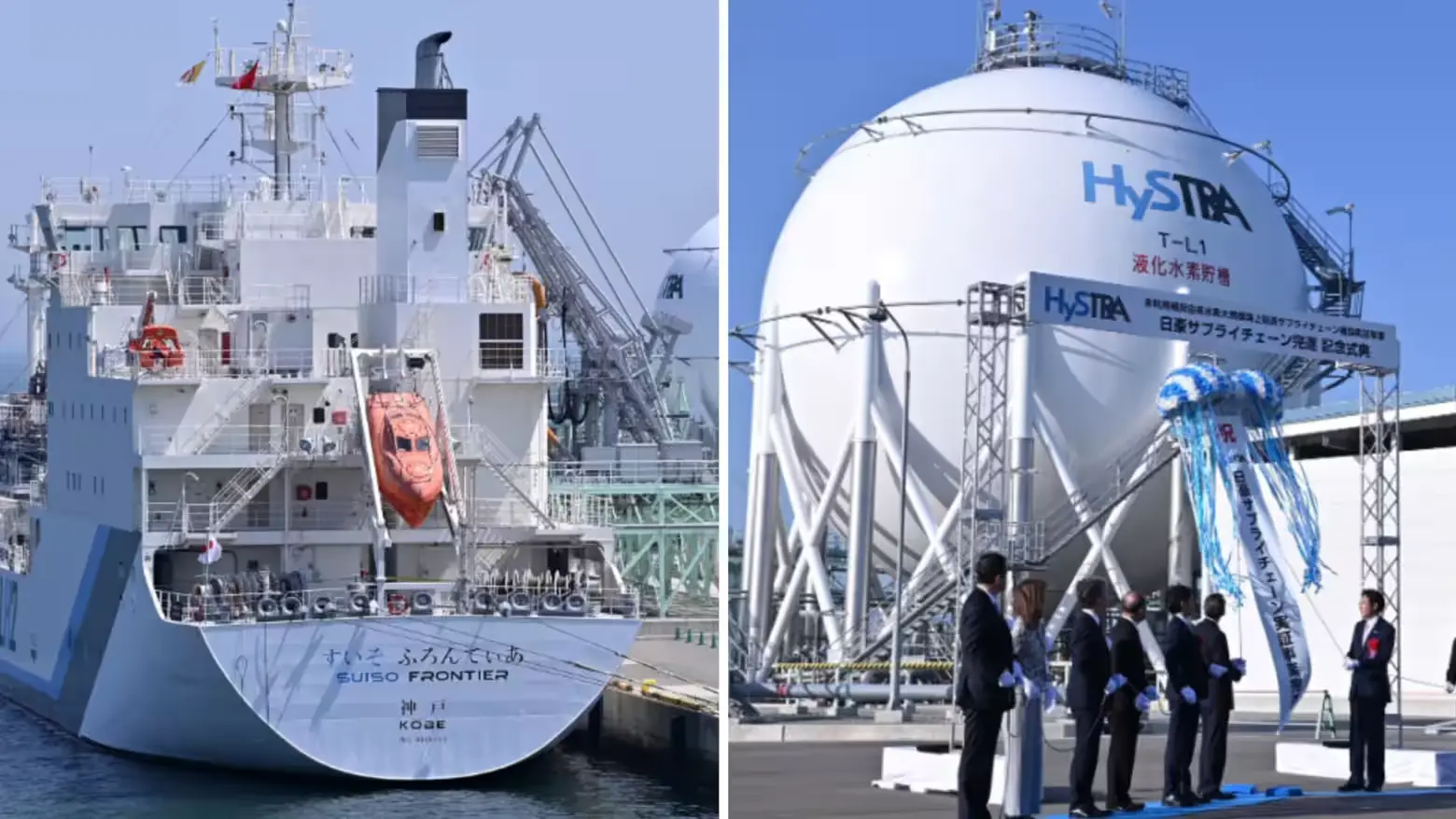
Trilateral Partnership Focuses on Hydrogen Energy Innovation
Ten research institutions will participate, including Japan’s National Institute of Advanced Industrial Science and Technology, the U.S.’s Sandia National Laboratories, and South Korea’s Korea Institute of Science and Technology.
Japan has allocated 650 million yen ($4.33 million) from its 2024 supplementary budget to fund the initiative. This partnership also reflects strategic concerns over protecting critical technologies.
A Japanese law passed in 2022 prioritizes safeguarding innovations that could pose security risks if leaked to nations like China or Russia. By collaborating, these countries aim to secure their technological edge while fostering mutual progress.
Hydrogen energy is a key focus as global demand for sustainable alternatives grows. This trilateral effort underscores the importance of international cooperation in tackling shared challenges. It also advances clean energy innovation that could shape future markets and policies worldwide.
This article was produced by The Rio Times’ automated newsroom system. How we use AI · Report an error · Editorial responsibility: Matthias Camenzind, Editor-in-Chief