Honda-Nissan $60 Billion Merger Collapses Amid Disputes Over Control
On February 13, 2025, Japanese automakers Honda and Nissan officially announced the collapse of merger talks that began in December 2024.
The proposed $60 billion deal aimed to create the world’s third-largest automaker, rivaling Toyota and Volkswagen, while bolstering their competitiveness in the electric vehicle (EV) market.
However, disagreements over governance and strategic priorities ultimately derailed the ambitious plan. The merger discussions initially envisioned a joint holding company overseeing both brands.
This structure promised shared resources to tackle challenges such as electrification and competition from Tesla and Chinese EV leaders like BYD. Yet, tensions escalated when Honda proposed making Nissan a wholly-owned subsidiary through a share exchange.
Nissan’s leadership rejected this shift, citing concerns over losing autonomy. Sources revealed that Honda’s push for control clashed with Nissan’s insistence on equal partnership despite its weaker financial position.
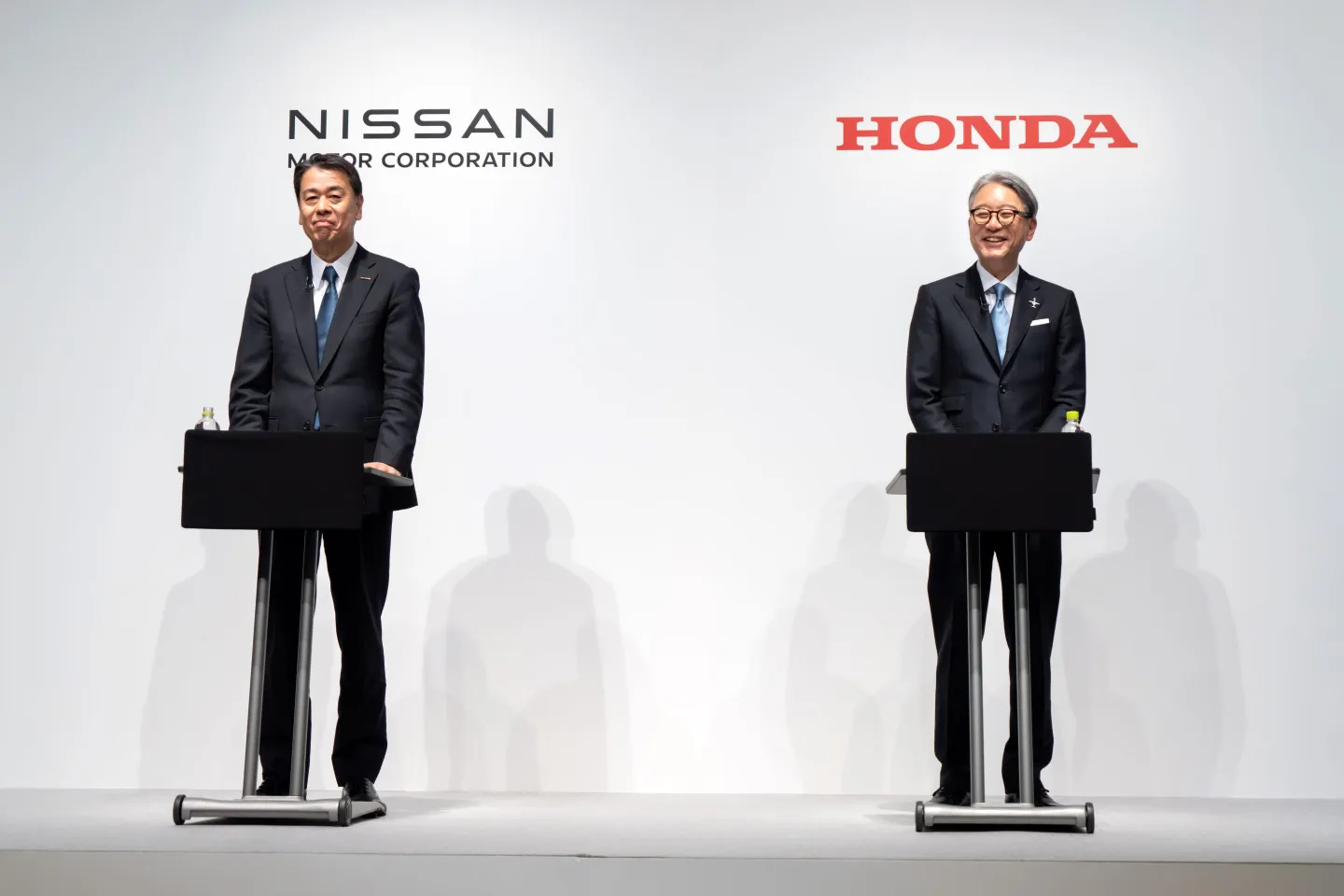
Nissan has faced significant struggles in recent years, including a 93% drop in first-half net profit in 2024 and declining sales in key markets like China and the U.S. The company announced plans to cut 9,000 jobs globally and reduce production capacity by 20%.
Strategic Realignments in the Automotive Industry
Despite these challenges, Nissan resisted deeper restructuring measures, such as factory closures, which Honda viewed as essential for recovery. Analysts believe Nissan underestimated the urgency of its financial situation, further straining negotiations.
Both companies emphasized the need for agility in the rapidly evolving automotive landscape. They concluded that a complex governance structure would hinder swift decision-making in areas like EV development.
“Prioritizing speed of execution in an increasingly volatile market makes it most appropriate to cease discussions,” stated their joint release. While the merger’s collapse leaves Nissan searching for new partners or strategies to stabilize its future, Honda appears better positioned to continue independently.
Following the announcement, Honda’s stock rose over 8%, reflecting investor confidence in its standalone approach, while Nissan’s shares fell by more than 4%. Despite abandoning the merger, Honda and Nissan reaffirmed their commitment to collaborating on EVs and intelligent vehicle technologies.
They will continue working together under a strategic partnership framework. However, industry observers note that Nissan’s financial instability raises doubts about its ability to thrive. Significant external support or restructuring efforts may be necessary.
This article was produced by The Rio Times’ automated newsroom system. How we use AI · Report an error
Read More from The Rio Times