IMF Upgrades Egypt’s Growth Outlook as Economy Shifts to Expansion

Africa · Northern
Key Facts
—IMF upgrade. The Fund lifted Egypt’s 2026 growth projection to 4.6% in its July 2026 World Economic Outlook update.
—Programme anchor. Egypt’s $8 billion Extended Fund Facility with the IMF, approved in March 2024, has unlocked about $2.3 billion in disbursements.
—Drivers. Non-oil manufacturing, tourism, telecommunications, and recovering remittances are powering the rebound.
—State footprint. The IMF warns that the dominance of state- and military-owned enterprises remains the main brake on durable, job-rich growth.
—Geopolitical premium. Egypt’s strategic position astride the Suez Canal and the Red Sea makes its economy a barometer of regional stability.
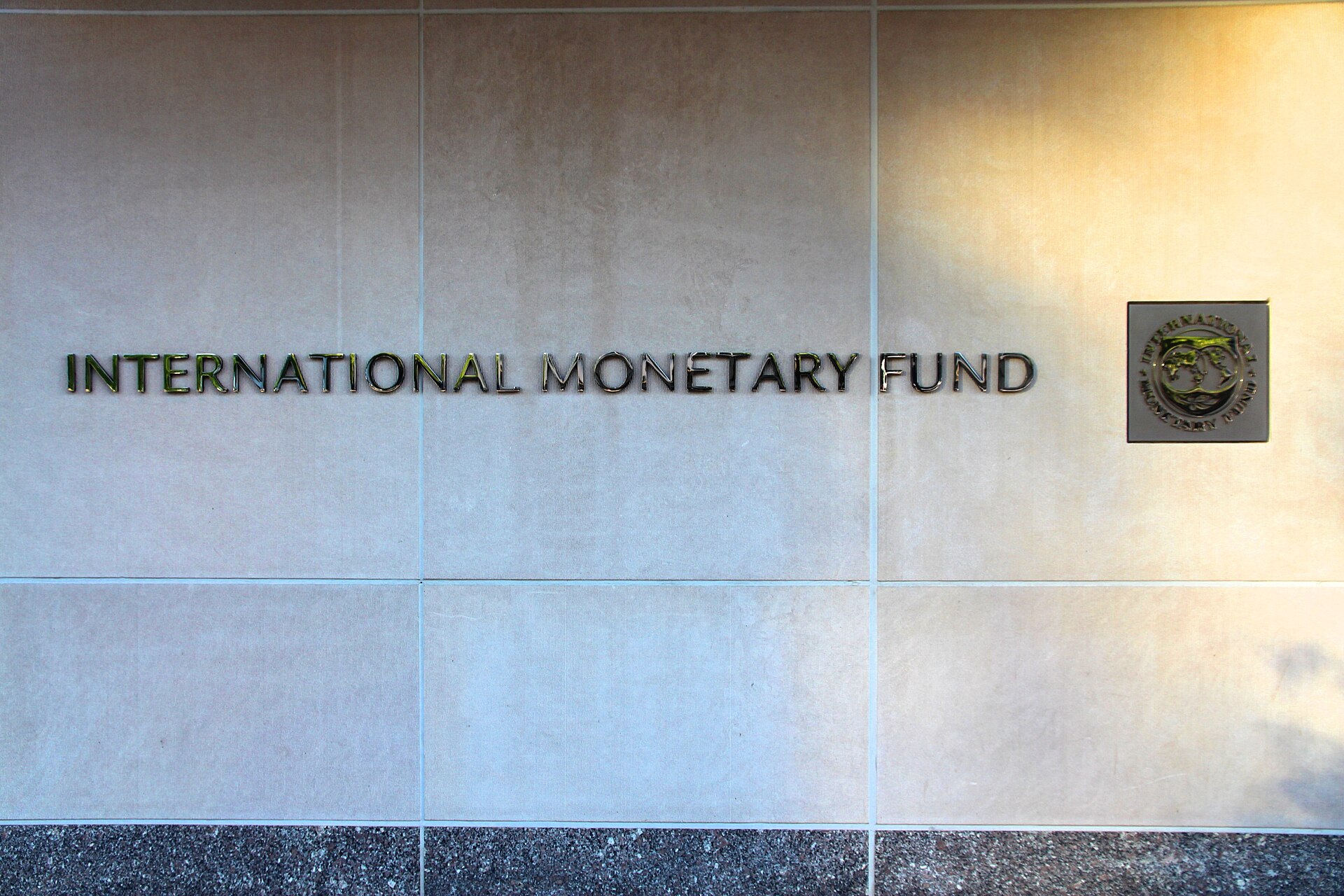
The IMF has upgraded Egypt’s growth outlook to 4.6% in 2026, marking a deliberate shift in official language from crisis stabilisation to a tentative expansion that still hinges on external financing and unfinished structural reform.
A forecast upgrade built on normalisation
In its July 2026 World Economic Outlook update, the International Monetary Fund raised Egypt’s growth projection to 4.6%, up from 4.4% in 2025 and 0.4 percentage points above its April 2026 estimate. The revision follows a sequence of upward adjustments that began in October 2025, when the Fund lifted its forecast for the 2025/26 fiscal year to 4.5%.
By March 2026, programme review documents were already pointing to 4.7% growth for the same fiscal year, reflecting stronger-than-expected momentum in non-oil manufacturing, tourism, and telecommunications. The World Bank projected Egypt’s real GDP growth at 4.3% for FY2025/26 and 4.8% for FY2026/27.
Why the IMF is talking about a shift “from stability to growth”
The Fund’s choice of language is deliberate and signals that the acute phase of Egypt’s macroeconomic repair is largely complete. A staff mission in May 2025 concluded that Cairo had made “substantial progress toward macroeconomic stability,” lifting the FY2024/25 growth estimate to 3.8% after a stronger first half.
The recovery rests on several pillars that were largely absent during the crisis period. Foreign exchange availability improved markedly after the 2024 float and the accompanying currency reset, allowing non-oil manufacturers to access imported inputs again.
Tourism and telecommunications have remained consistently strong, while remittances and non-oil exports have reinforced the external position. The World Bank describes Egypt’s economy as having entered a “new phase of resilience and opportunity,” with medium-term growth averaging 4.5% over the FY2025–FY2027 window if reform momentum holds.
The $8 billion anchor and the Gulf backstop
Egypt’s stabilisation is inseparable from the $8 billion Extended Fund Facility the IMF approved in March 2024, which includes a Resilience and Sustainability Facility component. By February 2026, successive programme reviews had unlocked roughly $2.3 billion in disbursements, anchoring investor confidence and keeping Cairo’s reform commitments under regular scrutiny.
The IMF facility is only one piece of a broader financing architecture that includes substantial support from Gulf states, the World Bank, and the European Union. This multi-layered backstop matters because Egypt’s external stability depends on capital flows that extend well beyond the Fund’s balance sheet alone.
For Latin American readers accustomed to IMF programme cycles, the Egyptian case offers a familiar but instructive parallel: a large, strategically placed emerging economy using a Fund anchor to buy time for structural change, while Gulf partners play a role not unlike China’s relationship with commodity exporters in South America. The dynamics of this great-power financing contest are explored in our pillar series Africa: The New Scramble.
The state-heavy model that refuses to shrink
The strongest caution in the IMF’s own documentation is that Egypt’s growth model remains dominated by the state. A July 2025 staff report found mixed reform progress and noted that the influence of state- and military-owned enterprises had declined only slowly, limiting space for private investment and job creation.
The Fund’s Article IV analysis is blunt: Egypt’s state-led growth model has constrained employment generation, and the authorities need to move more decisively toward private-sector-led, export-led expansion. The current rebound still depends heavily on external financing, macro stabilisation, and services such as tourism, rather than on a broad-based productivity surge driven by private capital formation.
This tension between headline growth and structural inertia is the central fault line for investors. A 4.6% expansion looks attractive on a spreadsheet, but if it is propelled by public spending and Gulf deposits rather than by competitive private firms, the durability of the recovery remains an open question.
Suez, security, and the geopolitical premium
Egypt’s economic trajectory cannot be separated from its geography. The country sits at the intersection of the Red Sea and Suez Canal trade route, the Israel-Gaza conflict spillover zone, and the Mediterranean migration corridor, making it a strategic prize for both Western and Gulf powers.
The IMF and Reuters have both noted that Suez Canal activity was hit by regional turbulence, though other sectors more than offset the drag in recent quarters. That remains a vulnerability: Egypt’s growth story is partly hostage to shipping disruption and wider Red Sea instability, a risk that intensifies whenever Houthi attacks or great-power naval posturing escalate.
This strategic exposure also explains why market and policy actors often treat Egypt as too large and too important to fail, even when reform progress is incomplete. The IMF itself warns that Egypt faces a “more shock-prone world,” with financial, geopolitical, and climate risks complicating the transition from stability to self-sustaining growth.
What to watch next for the Egypt growth outlook
The immediate test is whether Cairo can maintain reform momentum as growth recovers and the pressure to ease fiscal discipline mounts. The IMF’s programme reviews will continue to serve as a quarterly report card, with each disbursement signalling whether the Fund judges progress to be on track.
For international investors and frontier-market watchers, the key indicators are the pace of state-asset sales, the evolution of the private-sector credit share, and the durability of foreign-exchange inflows beyond the IMF-Gulf cycle. A growth upgrade is welcome, but the real story is whether Egypt can convert a cyclical recovery into a structural transformation that outlasts the next geopolitical shock.
Connected Coverage
Background: our latin america economy guide.
More: Egypt news in English, every day from The Rio Times.
The big picture: Egypt explained — economy, politics, society and daily life in one read.
Frequently Asked Questions
What is Egypt’s current IMF growth forecast?
The IMF’s July 2026 World Economic Outlook update projects Egypt’s economy will grow by 4.6% in 2026, up from 4.4% in 2025. Earlier programme review documents from March 2026 had already pointed to 4.7% growth for the 2025/26 fiscal year, reflecting stronger-than-expected momentum in non-oil manufacturing, tourism, and telecommunications.
Why did the IMF upgrade Egypt’s growth outlook?
The upgrade reflects a transition from macroeconomic stabilisation to a tentative recovery, driven by improved foreign exchange availability after the 2024 currency float, a rebound in non-oil manufacturing as import access improved, and sustained strength in tourism and telecommunications. Remittances and non-oil exports have also supported the external position, though the Fund cautions that the recovery remains dependent on continued reform and external financing.
What are the main risks to Egypt’s economic recovery?
The IMF identifies three principal risks: the still-dominant role of state- and military-owned enterprises, which limits private-sector job creation; Egypt’s exposure to a “more shock-prone world” with financial, geopolitical, and climate threats; and the vulnerability of Suez Canal revenues to regional instability. The Fund has also warned that reform progress has been mixed and that the transition to private-sector-led growth has been slower than hoped.
This article was produced by The Rio Times’ automated newsroom system. How we use AI · Report an error · Editorial responsibility: Matthias Camenzind, Editor-in-Chief
LatAm Markets: Live Signals → — real-time movers, turnover leaders and FX across Latin America.