Honduras · Investment
Key Facts
- When it became real: Honduras officially rejoined ICSID — the International Centre for Settlement of Investment Disputes, the World Bank’s court for arguments between foreign companies and governments — on Sunday, 16 August 2026. That is exactly 30 days after the paperwork was filed in Washington on 17 July.
- Why it took a month: The rulebook does the waiting for you. Article 68(2) of the ICSID treaty says membership starts 30 days after a country hands in its signed ratification document, so there was nothing to negotiate — just a calendar to run down.
- Who pulled Honduras out: The government of former president Xiomara Castro formally quit the treaty on 24 February 2024, and the exit kicked in six months later on 25 August 2024. Her argument was that letting foreign firms sue Honduras abroad chipped away at the country’s sovereignty.
- Who brought it back: President Nasry “Tito” Asfura, who won the 30 November 2025 election with about 40.27% of the vote and took office on 27 January 2026, signed the treaty again in March and finished the job in July.
- The claim everyone is watching: A company called Honduras Prospera is suing the country over the shutdown of its private zone on Roatán island. It first asked for US$10.775 billion — later reported as trimmed to roughly US$1.63 billion — and the case is still running with no decision yet.
- How much is in the queue: Attorney General Dagoberto Aspra said in mid-August that 18 claims against Honduras are sitting at ICSID, most of them asking for between L1.6 billion (~US$60 million) and L2.5 billion (~US$93 million) each. The government has not published a combined total.
- The catch nobody should miss: Rejoining does not rewind the clock. Honduras is only covered from 16 August 2026 onwards, so the two-year gap stays a gap.
Membership took legal effect on Sunday, 16 August 2026 — but the giant Prospera claim and 17 other cases are still sitting on the government’s desk.
Honduras is formally back inside the World Bank’s investment arbitration court, two years after storming out. The country’s membership took legal effect on Sunday, 16 August 2026.
It is the clearest signal yet that President Nasry “Tito” Asfura wants to make peace with foreign investors. It is also, on its own, a smaller change than the headlines suggest — and worth understanding properly before anyone celebrates.
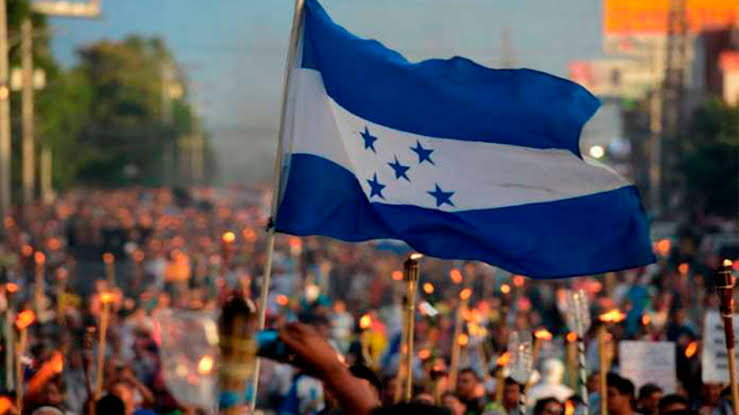
What actually happened, and exactly when
On 17 July 2026, Honduras’ ambassador to the United States, Roberto Flores Bermúdez, walked into the World Bank in Washington and handed over a signed document called an Instrument of Ratification. ICSID’s secretary-general, Martina Polasek, took delivery — and Honduras became the 159th member of the club.
That did not switch anything on straight away. The ICSID treaty has a built-in pause: Article 68(2) says membership begins 30 days after the document is filed.
Count 30 days from 17 July and you land on 16 August 2026. Honduras’ foreign ministry confirmed that date in writing, and it is the one the arbitration world has been working to.
Why Honduras walked out in the first place
The exit was the work of former president Xiomara Castro, who governed from 2022 to 2026. Her government sent the World Bank a formal notice quitting the treaty on 24 February 2024.
Again, the rulebook set the pace. Article 71 of the same treaty gives a six-month notice period, so Honduras did not actually leave until 25 August 2024.
Castro’s case was about sovereignty. She objected to the idea that a foreign company could drag Honduras in front of an international panel over decisions taken by its own Congress and courts.
There was a very specific fight behind that principle — the ZEDEs. A ZEDE, short for Zona de Empleo y Desarrollo Económico, is a semi-autonomous private zone allowed to run its own rules, its own courts and its own tax system inside Honduran territory.
The Prospera claim is the elephant in the room
Honduras’ Congress scrapped the law that created the ZEDEs in April 2022. Then, on 20 September 2024, the Supreme Court ruled that the decrees behind them were unconstitutional — and said so retroactively, as though they had never been valid.
The best-known ZEDE, Prospera, sits on the Caribbean island of Roatán and is backed largely by American investors. It responded by filing arbitration: Honduras Prospera Inc. and others v. Republic of Honduras, ICSID Case No. ARB/23/2.
The opening damages claim was US$10.775 billion — the figure that turned this into an international story. Reporting in 2025 said it had since been trimmed to around US$1.63 billion, which is still an enormous sum for a country of Honduras’ size.
The case is very much alive. The tribunal issued a decision on preliminary objections in February 2025, and in March and May 2026 it handed down housekeeping orders — on whether to split the case into stages, and on whether outside groups can file their own opinions.
Prospera’s argument does not rest on ICSID membership at all. It says its investment is protected by CAFTA-DR — the free trade agreement linking the United States, Central America and the Dominican Republic — and by a separate investment deal it signed with Honduras.
What the return changes, and what it does not
Start with the biggest misunderstanding. Rejoining ICSID does not hand every foreign investor in Honduras a right to sue.
ICSID is the courtroom, not the ticket to get in. To bring a case, a company still needs the government’s consent, and that consent comes from somewhere else — a trade deal like CAFTA-DR, a bilateral investment treaty (a BIT, meaning a pact between two countries promising fair treatment to each other’s investors), or a signed contract.
The second limit is timing. The return is not retroactive, so Honduras is inside the system from 16 August 2026 forward and the 2024 to 2026 window is not patched over.
What genuinely improves is enforceability. An ICSID award is unusually hard to shrug off, because member countries agree to treat it like a ruling from their own courts — which is precisely the comfort that vanished when Honduras left.
Why this matters if you have money or plans in Honduras
If you run a business here, own property here, or are weighing a move, this is the sort of news that shifts the background risk rather than your day-to-day life. Being outside ICSID marked Honduras as a country where a dispute with the state could become very hard to resolve, and that reputation follows you into every loan negotiation and insurance quote.
The numbers show why the government cared. Honduras closed 2025 with roughly US$881 million in foreign direct investment — money brought in from abroad to build or buy real businesses — and COHEP, the main private-sector business chamber, has been reporting that investment falling.
The lempira, meanwhile, has drifted gently weaker. The Central Bank’s official reference rate was L26.7935 per US$1 on 31 July 2026 and around L26.81 per US$1 by mid-August — so roughly 26.8 lempiras to the dollar is the figure to budget with.
Just do not mistake the signal for a solution. The 18 claims are still there, the Prospera tribunal is still sitting, and how Asfura’s government handles the bill when it arrives will tell investors far more than a treaty signature ever could.
More: Latin America news in English, every day from The Rio Times.
Frequently Asked Questions
What is ICSID, in plain English?
ICSID stands for the International Centre for Settlement of Investment Disputes — CIADI in Spanish. It is the World Bank’s arbitration body, where foreign companies and governments settle investment arguments outside national courts.
When exactly did Honduras rejoin?
Membership took legal effect on 16 August 2026. That was 30 days after Honduras filed its ratification document at the World Bank on 17 July 2026, as the treaty’s Article 68(2) requires.
Who is the president of Honduras now?
Nasry “Tito” Asfura, who took office on 27 January 2026 after winning the 30 November 2025 election with about 40.27% of the vote. His government reversed the withdrawal ordered by his predecessor, Xiomara Castro.
Can I sue Honduras at ICSID now that it has rejoined?
Not just because it is a member. You also need the country’s consent through a treaty such as CAFTA-DR, a bilateral investment treaty, or a contract that names ICSID as the place to settle disputes.
Connected Coverage
The EU Steps In to Back Honduras’s Power Sector Overhaul
Honduras’s Power Company Is Drowning in Losses and Debt
El Niño Turns Central America’s Dry Corridor Into a Hunger Zone
Sources: ICSID (World Bank) — announcement of Honduras’ ratification and membership; IAReporter — Honduras ratifies ICSID Convention anew, two years after it left the treaty; Infobae — Honduras formaliza su regreso al CIADI; LatinNews — Honduras rejoins World Bank investment dispute panel; Contexto HN — Banco Mundial destaca retorno de Honduras al CIADI; El Heraldo — Cohep reporta caida de la inversion extranjera en Honduras; Banco Central de Honduras — tipo de cambio de referencia; ADR Journal — Honduras returns to ICSID, rejoins World Bank investment arbitration
This article was produced by The Rio Times’ automated newsroom system. How we use AI · Report an error · Editorial responsibility: Matthias Camenzind, Editor-in-Chief