Germany and Kyiv Forge Long-Range Missile Alliance, Redrawing War Dynamics
Chancellor Friedrich Merz announced a €5 billion military aid package and joint weapons production with Ukraine during President Volodymyr Zelenskyy’s May 28 visit to Berlin.
The agreement, formalized by defense ministers from both nations, enables Ukraine to domestically manufacture long-range missiles and artillery without range restrictions, targeting Russian military infrastructure deep inside occupied territories.
Germany will finance production facilities in Ukraine and collaborate with defense firms like Rheinmetall to transfer technical expertise for artillery, drones, and air defense systems.
Initial deliveries are expected within weeks, leveraging existing Ukrainian military expertise to bypass training delays. Merz emphasized this “new military-industrial cooperation” avoids direct Taurus missile transfers—a politically sensitive issue in Germany—while still empowering Kyiv’s strategic strikes.
The deal responds to Russia’s intensified aerial attacks on Ukrainian cities and stalled peace talks. Kremlin spokesperson Dmitry Peskov condemned the move as “dangerous,” accusing Berlin of escalating tensions.
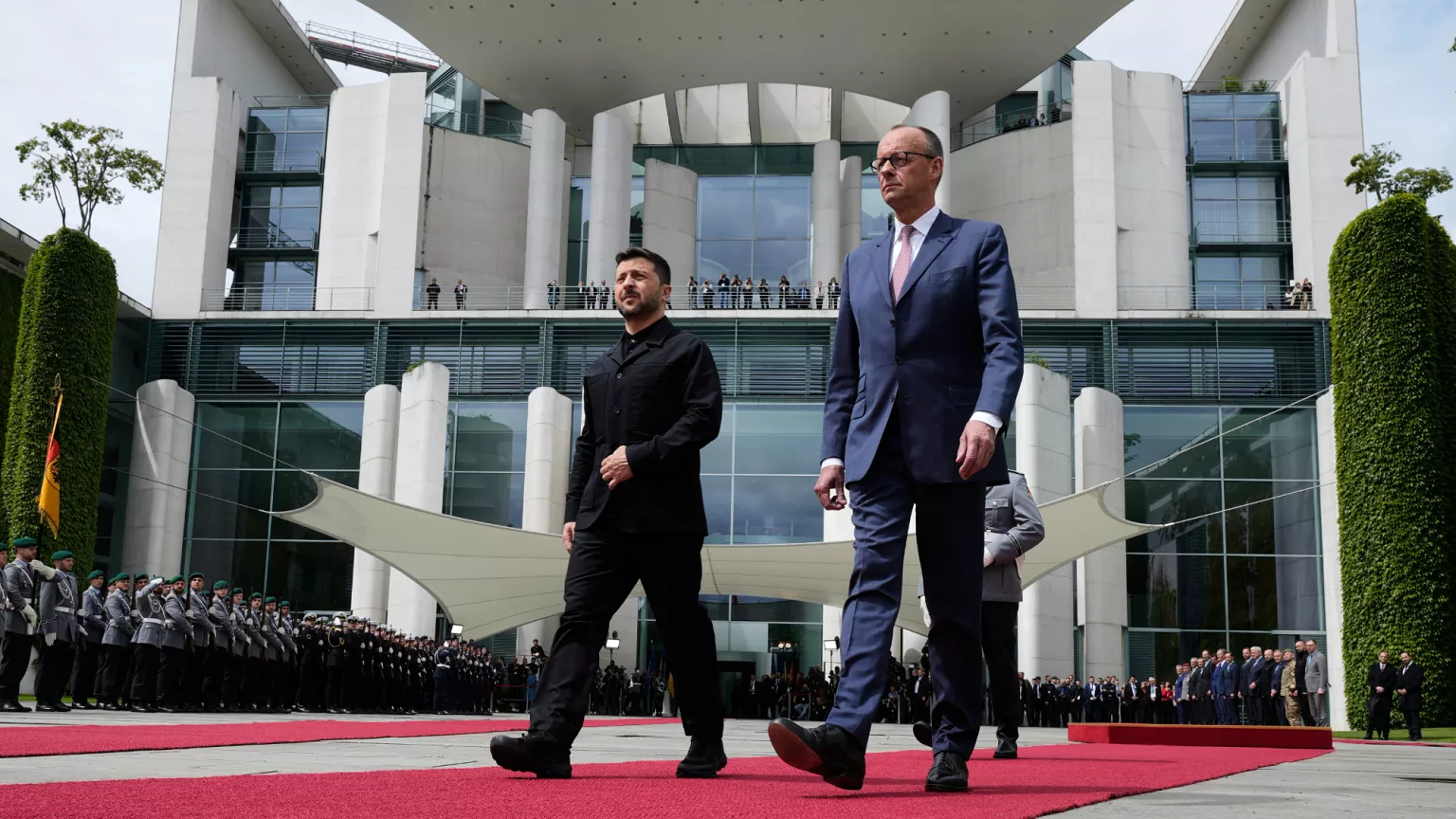
Since 2022, Germany has provided over €40 billion in military aid, including Leopard tanks and IRIS-T air defenses, transitioning from post-war pacifism to becoming Ukraine’s second-largest arms supplier after the U.S.
Financial provisions include €1.2 billion for ammunition stockpiles and maintenance hubs near frontlines. Satellite communications upgrades aim to counter Russian electronic warfare disruptions.
While avoiding public details on missile ranges, German officials confirmed Ukraine can now strike targets beyond its borders—a capability tacitly approved by Western allies months earlier.
The partnership aligns with broader NATO efforts to integrate Ukraine’s defense industry, reducing reliance on foreign arms. For Germany, it secures long-term contracts with Ukrainian manufacturers while sidestepping domestic opposition to weaponizing the conflict.
Kyiv gains critical leverage to disrupt Russian supply lines, though challenges persist in scaling production amid ongoing strikes on industrial sites.
This article was produced by The Rio Times’ automated newsroom system. How we use AI · Report an error · Editorial responsibility: Matthias Camenzind, Editor-in-Chief
Read More from The Rio Times