China’s Deflation Crisis Overshadows Trade Tensions as Economists Sound Alarm
China’s economists are now more concerned about deflation than trade wars. For three straight months, prices for everyday goods and services have fallen, with April’s consumer inflation dropping 0.1% year-on-year.
Factory-gate prices, meanwhile, have plummeted for 30 consecutive months, hitting a 2.7% annual decline in April—the steepest drop in four years.
These trends, combined with weak industrial activity and a collapsing real estate sector, have shifted focus from U.S.-China tariffs to a deeper structural crisis.
The real estate sector, which drives nearly a quarter of China’s economy, remains a key pressure point. Housing prices fell 4.8% in 2024 and are projected to drop nearly 5% in 2025, with investment in the sector expected to shrink 8.4%.
This collapse has stifled demand for construction materials and weakened consumer confidence, as families delay purchases of big-ticket items like cars and appliances.
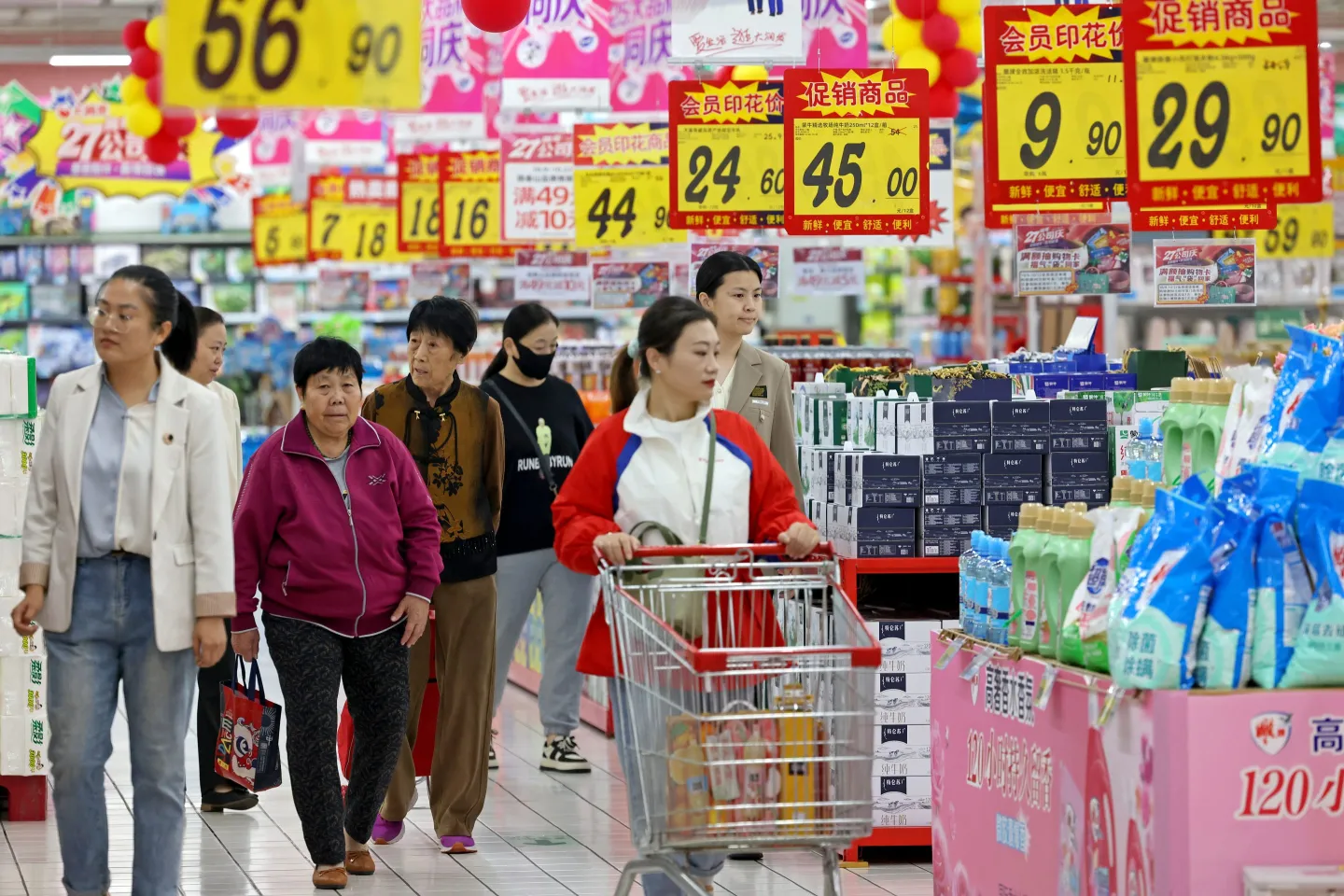
Companies are responding with aggressive price cuts. Automaker BYD slashed prices by up to 34% on 22 electric and hybrid models in May, sparking fears of a prolonged price war.
Such moves squeeze profit margins, forcing firms to cut costs or risk losing market share. This deflationary spiral threatens to reduce wages and employment, further dampening spending.
While a temporary U.S.-China tariff pause boosted exports, analysts warn the relief is fleeting. Export growth is now forecast at 1.1% for 2025—up from a prior contraction—but this reflects rushed orders ahead of renewed tariffs rather than sustained demand.
The government has cautiously cut interest rates and reserve requirements, but these measures have failed to revive domestic consumption or address overcapacity in industries.
China’s Deflation Risks
Globally, China’s deflation risks ripple effects. Lower commodity prices could hurt exporters like Brazil and Australia, while Chinese firms might turn to protectionism or invest in self-reliant technology to shield against foreign competition.
The IMF projects China’s inflation will average zero in 2025—the lowest among nearly 200 countries—highlighting the severity of the challenge. This crisis underscores a broader shift: China’s reliance on credit-driven growth and export-led expansion has hit limits.
Without structural reforms to boost household incomes, reduce savings rates, or address aging demographics, deflationary pressures are unlikely to ease.
The real test lies in whether Beijing can balance debt risks with policies that revive demand without reigniting speculative bubbles. China’s deflation is no longer just an internal struggle—it’s a warning sign for a world increasingly intertwined with its economy.
The stakes are clear: failure to stabilize prices could trap the country in stagnation, with consequences echoing far beyond its borders.
This article was produced by The Rio Times’ automated newsroom system. How we use AI · Report an error
Read More from The Rio Times