Gambia Gets US$480,000 in Election Aid
ECOWAS has paid US$480,000 to Gambia’s electoral commission and civil society groups ahead of the vote, but the release gives no split.

Election Support: The Gambia
The Economic Community of West African States (ECOWAS), the regional bloc of West African states, headquartered in Abuja, paid out US$480,000 in election grants in The Gambia on Wednesday 25 November 2026. The cheques went to the electoral commission and a group of public institutions and civil society groups ten days before the presidential vote on Saturday 5 December.
For US readers, the vote tests a small democracy on the Atlantic coast of West Africa. It also shows what regional money buys: training for thousands of polling staff and an early-warning scheme for violence.
Key Facts
- Who. ECOWAS, the West African regional bloc, funds Gambian election bodies and civil society groups.
- What. US$480,000 in grants, with no per-recipient split published.
- When. Presented Wednesday 25 November 2026; presidential vote Saturday 5 December 2026.
- Prediction markets. Polymarket, a US betting platform, gives incumbent President Adama Barrow 81.5% (28 November, 10:55 p.m. ET).
- As of. 29 November 2026, 04:00 GMT
ECOWAS has paid US$480,000 to Gambia’s electoral commission and civil society groups ahead of the vote, but the release gives no split.
Namizata Meite Sangare, ECOWAS Resident Representative and Head of Mission in The Gambia, presented the cheques at a ceremony in her office, according to a press release of the ECOWAS Commission, the bloc’s executive arm. She described the grants as a gesture of solidarity and urged recipients to “utilise the grant prudently and responsibly.”
General Birame Diop (retired), President of the ECOWAS Commission, authorised the support. He did so under the ECOWAS 2001 Supplementary Protocol on Democracy and Good Governance, which covers assistance to member states holding elections.
The Independent Electoral Commission (IEC), the body that runs Gambian elections, received a share alongside the National Human Rights Commission (a public human-rights body), the Gambia Bar Association (the lawyers’ professional body) and the National Coordination Centre for Response Mechanism (NCCRM), a Gambian coordination body. The list also names the Peace Ambassadors (a recipient group the release does not describe), The Gambia Press Union (the journalists’ association), the West Africa Network for Peace Building (WANEP, a regional peacebuilding network), the Association of NGOs (TANGO, a body of civil society groups) and the Gambian chapter of the Inter-Africa Network for Women, Media, Gender and Development (FAMEDEV).
The release does not give the split between them. As a rough yardstick of our own, the total comes to about 42 US cents for each person on the register, and the IEC’s own share is lower because non-IEC groups also receive money.
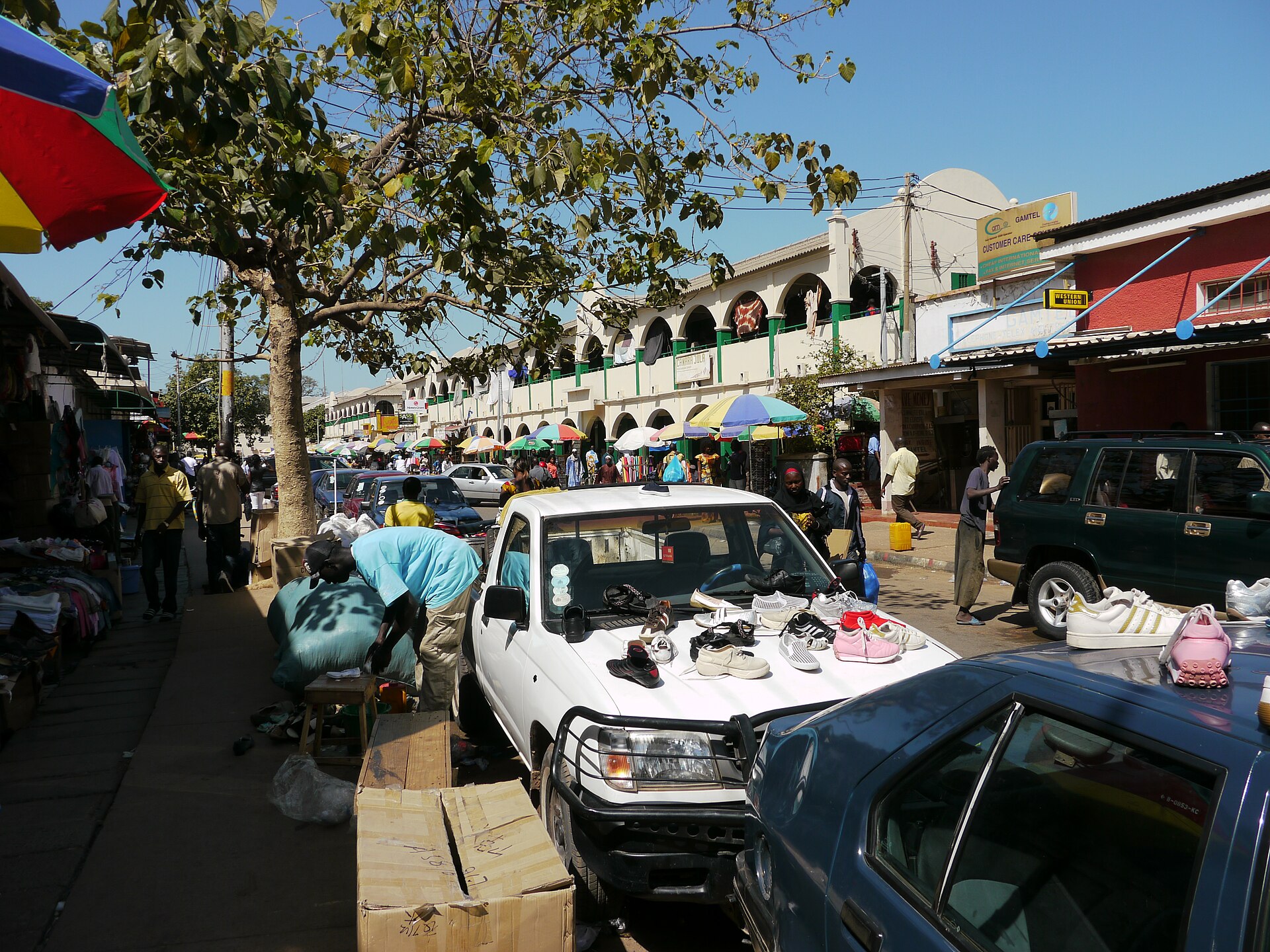
IEC Chairman Joseph Colley thanked ECOWAS and said the money would pay for training 8,851 polling staff for the December election. At a press conference in early November 2026 he gave the voter register as 1,146,474 people, served by 730 registration centres and 1,773 polling stations.
The register covers 53 constituencies in seven electoral areas, and the size of the task varies sharply between them. Brikama, an electoral area, is the largest with 437,020 voters, while the capital Banjul is the smallest with 24,820.
FAMEDEV said it will use its grant to set up a Women-led Election Observatory and Early Warning Mechanism for conflict prevention. The group says the aim is to promote participation of women, youth and people with disabilities.
Serigne Ka, ECOWAS Head of Electoral Assistance, spoke for Commissioner Francess Piagie Alghali, who leads political affairs, peace and security, and for Dr Babatunde Afolabi, the ECOWAS Director of Political Affairs. He said the grant is one of several kinds of support.
The others in The Gambia include technical and logistical help, and training on result tabulation and transmission, women and youth participation, inclusiveness and voter education. Tabulation and transmission cover how polling-station counts are added up and passed on.
ECOWAS also keeps a peace stabilisation mission in The Gambia, known as ECOMIG (the ECOWAS Mission in The Gambia), and sent a fact-finding mission in June 2026 with the African Union, the continental body of African states and the UN Office for West Africa and the Sahel (UNOWAS). Long-term ECOWAS observers have been in the country since 10 November 2026.
The combined observation mission is led by Dr José Ulisses de Pina Correia e Silva, a former Prime Minister of Cabo Verde. Short-term observers will join the long-term team before the vote, on dates the release does not give.
The Commonwealth Secretariat, the central body of the Commonwealth group of nations, sent a pre-election assessment team that consulted the IEC, government, parties, civil society, security agencies and media in the week ending Friday 24 July 2026. Its findings go to Secretary-General Shirley Botchwey to inform the Commonwealth’s observation arrangements for the December vote.
The next fixed date is polling day, Saturday 5 December 2026, when Gambians choose a president in the presidential election. The ECOWAS release predicts no outcome and does not say whether more money is planned.
What Prediction Markets Say
Polymarket, a US prediction-market platform where traders bet real money, gave incumbent President Adama Barrow 81.5% to win the presidential election, the midpoint of a bid of 80 cents and an ask of 83 cents, with US$21,664 traded across the whole market, as of 10:55 p.m. ET on Saturday 28 November 2026. These prices are bets, not polls.
Why we show this: prediction markets turn real-money bets into a live probability that moves within minutes of the news, which is why investors, campaigns and newsrooms in the United States now follow them closely. We show them next to polls and official results, never instead of them.
Frequently Asked Questions
Why does ECOWAS pay for an election in a member state?
Its protocol on democracy and good governance covers assistance to member states holding elections. The grants support how the vote is run and monitored, not who wins.
Who receives the money?
The electoral commission gets a share, as do rights, legal, press and civil society groups. The release gives no split between them.
What happens next?
Polling day is this coming Saturday, and ECOWAS observers are already in the country. Commonwealth assessors have sent their findings to its Secretary-General to inform its observation plans.
Sources
- ECOWAS Commission press releases, November 2026 (ecowas.int)
- Independent Electoral Commission of The Gambia, voter-register figures, November 2026
- Commonwealth Secretariat, pre-election assessment mission, July 2026 (thecommonwealth.org)
This article was produced by The Rio Times’ automated AI newsroom. Editorial responsibility: Matthias Camenzind, Publisher and Editor-in-Chief. The Rio Times also runs Ask Rio Times, which answers from 100,000+ of our own articles, the daily Latin America Power Map, and prediction-market odds on elections and markets.. How we use AI · Report an error