Energy
Key Facts
—The collapse. The national grid disconnected entirely at 12:17 on Monday, the eighth such failure in two years.
—The gap. Cuba expected 935 MW of generation against 3,100 MW of peak demand that day.
—The plant. Antonio Guiteras broke down for the seventeenth time this year, roughly once every eleven days.
—The fleet. Eleven of the island’s sixteen oil-fired power units were out of service, broken or under maintenance.
—The blockade. One hundred and six small local generators, which run on imported fuel, have sat dry since January.
—The date. Monday fell five days before the fifth anniversary of the July 2021 protests.
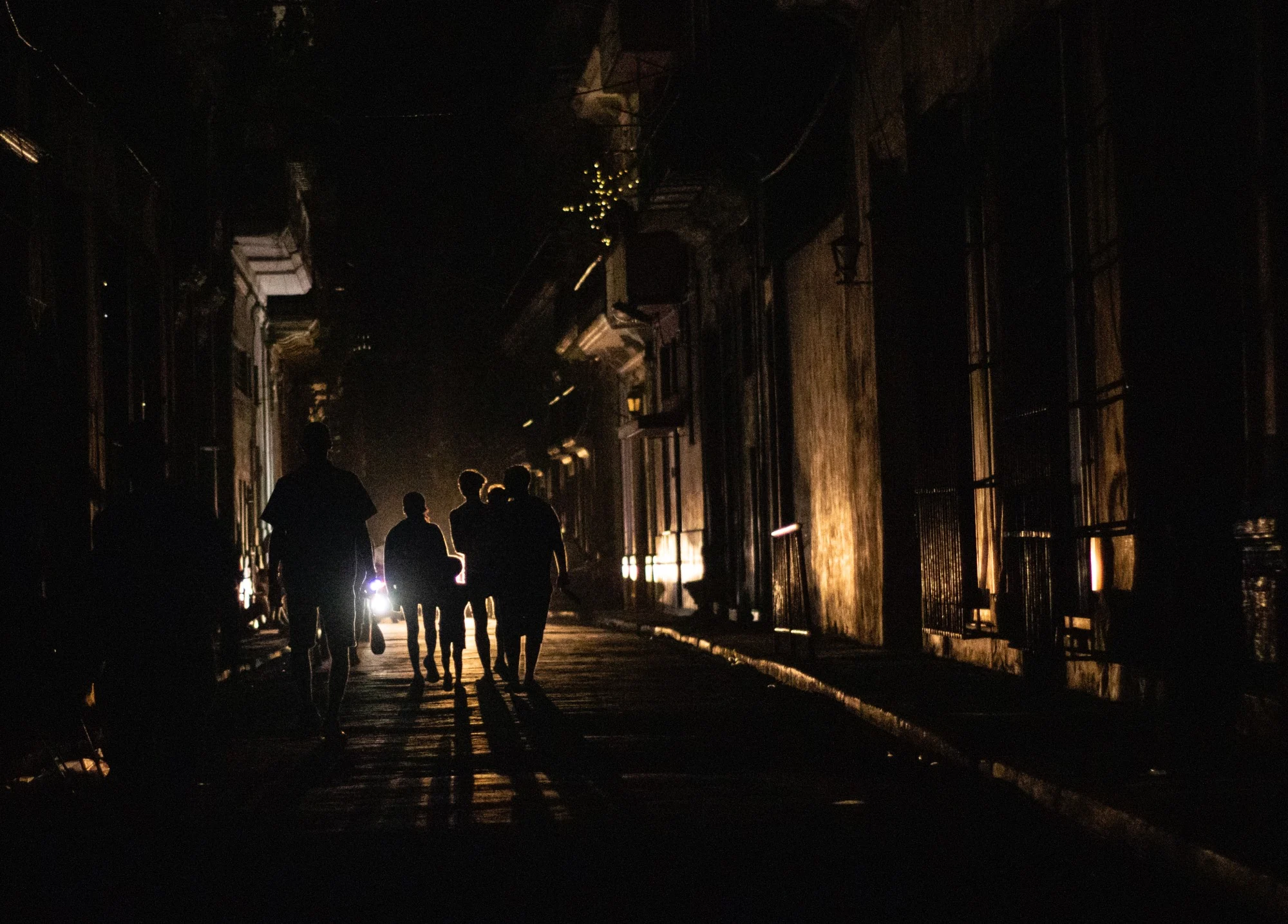
At seven minutes to seven on Monday morning, an economiser failed at Cuba’s largest and most efficient power station. Five hours later the national grid went down, and the Cuba blackout that followed was the eighth in twenty-four months.
The state utility posted a single sentence to Facebook at 12:17. A total disconnection of the national electro-energy system had occurred, and the causes were under investigation.
Under it, Cubans left jokes. One wrote that the utility had become the country’s new investigations department, and investigates more than the criminal police.
The arithmetic behind the Cuba blackout
Before the grid fell, the utility had already published its forecast for the day. Generation available at peak would be nine hundred and thirty-five megawatts, against demand of three thousand one hundred.
Cuba expected, in other words, to supply under a third of its own evening demand. The plan was to switch off seventy-one percent of the country deliberately, a day after a record seventy-two percent went dark at peak.
Eleven of the island’s sixteen thermoelectric units were out of service, broken or under maintenance. That fleet supplies roughly forty percent of the generation mix.
What a Cuba blackout does and does not prove
Here the story divides, and most accounts blur the two causes together. The thermoelectric units burn mostly Cuban crude, so their failures have little to do with the American fuel blockade.
They fail because they are old and were never properly maintained. Decades of operation met a chronic shortfall of investment, and the machines simply wore out.
A further forty percent of the mix is distributed generation, banks of diesel and fuel-oil motors scattered across the island. According to the state utility’s own daily bulletin, one hundred and six of these plants stand idle for want of fuel, alongside two floating power barges and two fuel plants.
That part is the blockade. An executive order signed in January imposed secondary sanctions on any country or company selling fuel to Cuba, and no shipment reached the island between December and the end of March.

A plant that fails once a fortnight
The Antonio Guiteras station in Matanzas is the largest and most efficient single generating block in Cuba. Monday’s fault was its seventeenth breakdown of 2026.
Spread across the one hundred and eighty-six days elapsed, that works out at a failure roughly every eleven days. Both previous national collapses of 2026, in mid and late March, also began at Guiteras.
When the plant trips without warning, its boiler cannot be shut down in a controlled way. Engineers then wait about forty-eight hours for it to cool naturally before they can even look inside.
The week before, the utility’s own director of thermal generation had promised that July would be better. Five units, some four hundred megawatts, were scheduled to rejoin the system.
Solar without storage
Cuba has built fifty-one photovoltaic parks, and together they now generate more electricity than Guiteras does. The difficulty is when.
Without batteries the output vanishes at sunset, and Cuban demand peaks in the evening. A first battery-storage installation is being commissioned in the Havana municipality of Cotorro.
Recovery from a total collapse takes days. Engineers build small islands of supply from sources that start easily, hydro plants, solar parks and generating motors, then interconnect them until there is enough power to restart a thermal station.
By evening the utility had restored just over five percent of Havana’s seven hundred and eighty-seven thousand customers. The state economy is expected to contract at least six and a half percent this year, after shrinking more than fifteen percent across the previous five.
Why does Cuba keep having national blackouts?
Because its thermoelectric fleet is decades old and starved of maintenance, so a single failure at the largest plant can bring down the whole system. Fuel shortages caused by American sanctions compound the problem by idling the diesel generators that supply a further share of the mix.
Is the American blockade to blame?
Partly, and the distinction matters. Sanctions have halted the distributed generators that run on imported fuel, but the thermoelectric units burn mostly domestic crude, and their breakdowns stem from age and underinvestment rather than any shortage of imports.
How long does the grid take to restart?
Days rather than hours. Engineers must first create small isolated microsystems using hydroelectric plants, solar parks and generating motors, then link them together until there is enough power to restart the thermal stations that carry most of the load.
More: Cuba news in English, every day from The Rio Times.
Frequently Asked Questions
What caused the national grid to collapse on Monday?
The collapse began when an economiser failed at Cuba's largest and most efficient power station, Antonio Guiteras, at 6:53 in the morning. Five hours later, at 12:17, the national grid disconnected entirely, marking the eighth such failure in two years.
How large was the gap between Cuba's power supply and demand on the day of the blackout?
The state utility forecast only 935 MW of generation available at peak, against a peak demand of 3,100 MW. This massive shortfall was a key factor in the conditions leading to the grid collapse.
How widespread was the breakdown of Cuba's power generation fleet at the time of the blackout?
Eleven of the island's sixteen oil-fired power units were out of service, either broken or under maintenance. Additionally, 106 small local generators that run on imported fuel had been sitting dry since January, further limiting available power.
Connected Coverage
Cuba Accepts $100 Million US Aid Offer as Russian Oil Runs Out
Cuba’s Blackouts Show What Happens When A Country Runs Out Of Power
This article was produced by The Rio Times’ automated newsroom system. How we use AI · Report an error · Editorial responsibility: Matthias Camenzind, Editor-in-Chief