Utility Wants Brazil’s Dams Put to Auction
A big regional utility has picked a side in Brazil’s argument over who should run its ageing dams, and the government has not yet picked one itself.

Energy: Brazil
Copel, a privatised power company based in Paraná state in southern Brazil, told investors in New York on Thursday 19 November 2026 that it prefers fresh auctions to extensions for Brazil’s expiring hydroelectric licences. Chief executive Daniel Slaviero set out the view at the company’s Investor Day, a presentation to investors.
The choice covers 80 hydro plants with a combined 16.1 gigawatts (GW, a measure of power capacity), according to a technical note from Brazil’s Ministry of Mines and Energy. For US investors, an auction could open a large block of Brazilian power plants to outside bidders, and it also bears on what Brazilian households pay for electricity.
Key Facts
- Who. Copel, a privatised power company in Paraná state, and its chief executive Daniel Slaviero.
- What. Copel wants expiring hydro licences re-tendered in auctions, not renewed for current holders.
- Numbers. 80 plants and 16.1 GW of capacity have licences expiring by 2032.
- Power Index. Brazil ranks 1st of 14 in The Rio Times Latin America Power Index, with 74.2 points (November 2026 edition).
- As of. Saturday 21 November 2026, 12:00 GMT.
A big regional utility has picked a side in Brazil’s argument over who should run its ageing dams, and the government has not yet picked one itself.
Brazil does not sell its hydro plants outright. It grants a company a licence, called a concession, to run a plant for a fixed term, and the plant’s future is decided again when that term ends.
On Wednesday 23 September 2026 the Ministry of Mines and Energy opened a public consultation, lasting 30 days, on the plants whose licences are about to expire. Its technical note says 80 hydro plants have licences ending by 2032, totalling 16.1 GW.
The note does not recommend either re-tendering, meaning a fresh auction of the licence, or renewal for the current holder. The ministry expects to issue a decree with standard rules for all such concessions, but no date has been announced.
The ministry proposes a reference term of 20 years for new grants, which could be shortened, although the law allows up to 30. It also proposes that every grant, renewed or re-tendered, fall under the independent-producer regime, in which a plant sells its power freely.
That change would let plants now in the “quota” regime, where their output is sold to the regulated market, in which distributors buy power at set prices, sell power on the free market instead. Renewal would keep plants with their current holders.
The figures divide into two groups. Forty larger plants, above 50 megawatts, account for about 15.4 GW of the 16.1 GW.
Of the larger plants, 20 (about 5.9 GW) have licences ending by 2029, according to the ministry’s note. Another 20 (about 9.5 GW) end between 2030 and 2032.
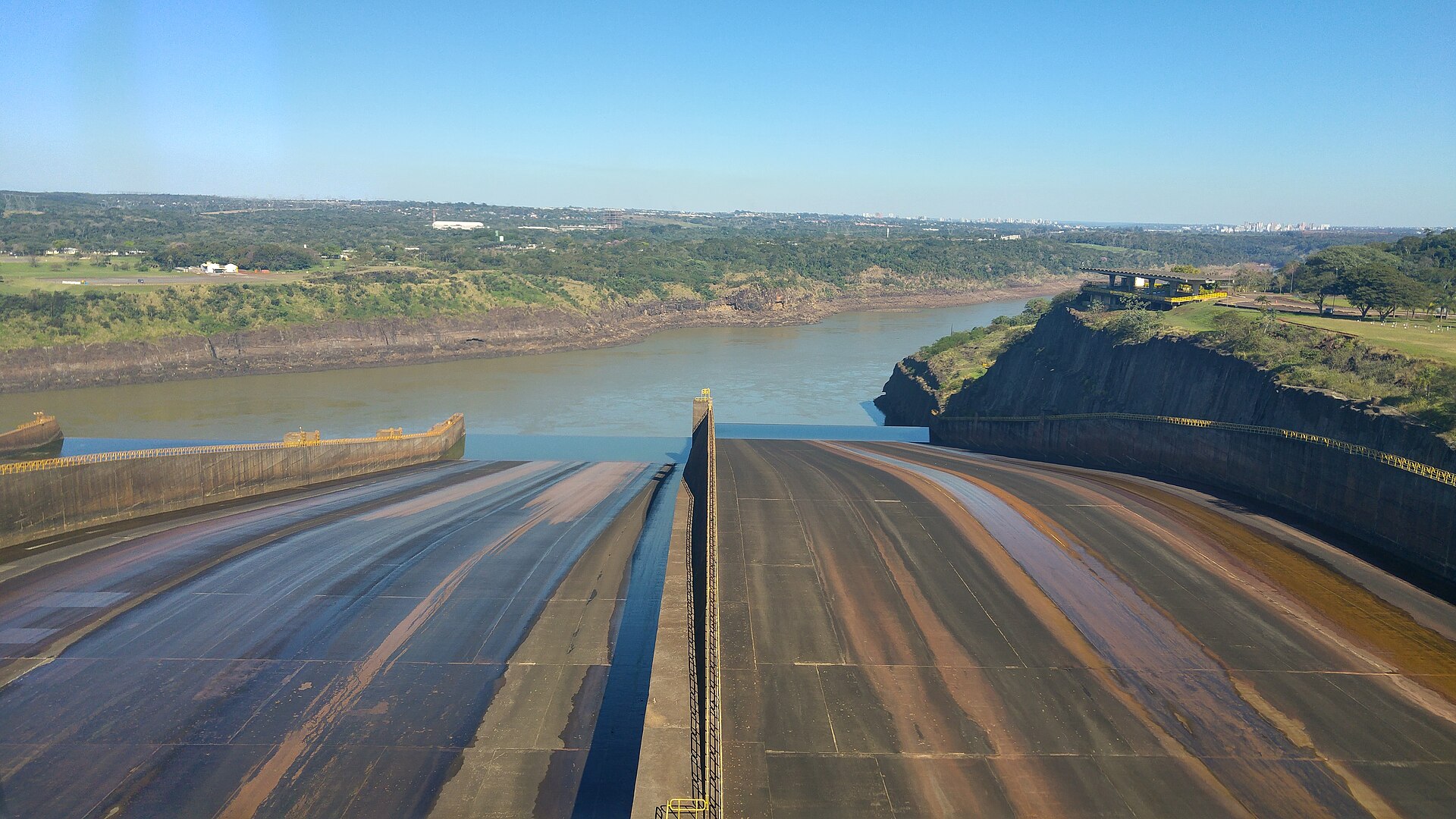
Slaviero told investors that re-tendering is the most suitable path for plants whose licences are nearing expiry. He argued that everyone wins, including the current holder, who knows the asset best.
The ministry’s own note takes no side. A decree with standard rules is expected, with no date announced.
Copel has its own stake in the outcome as an owner of large hydro plants in Paraná. On the day of the Investor Day it announced R$21.1 billion (about US$3.6 billion, with conversions in this article at R$5.93 = US$1) of investment for 2027 to 2030, in a material-fact filing, a formal stock-market disclosure.
About R$14.1 billion of that, or 67%, goes to its power-distribution business, according to the filing. Another R$6.5 billion goes to generation and transmission together, including R$4 billion for projects Copel won in a capacity auction, a federal auction for new power capacity.
Those projects are expansions of the Foz do Areia and Segredo hydro plants in Paraná, which together add about 2.1 GW and lift the company’s generation capacity by about 33%. Foz do Areia alone rises from 1,676 megawatts to 2,536 megawatts.
Slaviero also said Copel is cautious about power-transmission auctions, the bids to build high-voltage lines between regions. Winning discounts have run well above 50%, he said.
The consequence depends on which way the ministry leans. If it chooses auctions, the 80 plants and their 16.1 GW would go to competitive bids, which could draw foreign power groups.
If it chooses renewal, current holders keep their plants. The ministry has not said when its decree will arrive.
Frequently Asked Questions
What does Copel want the government to do?
Copel wants expiring hydro licences put out to fresh auctions rather than renewed for current holders. Its chief executive calls it the most suitable path.
Has the Brazilian government decided?
No. The ministry’s technical note recommends neither path, and a decree with standard rules is expected with no announced date.
Why does this matter outside Brazil?
An auction would open a large block of power plants to competitive bids, including from foreign groups. It also shapes what consumers and the state receive from the plants.
Sources
Primary sources only: Copel (material-fact filing and Investor Day, 19 November 2026); Ministry of Mines and Energy (public consultation of 23 September 2026 and technical note).
Connected Coverage
Brazil news · Copel Plans Record US$3.6 Billion Grid Push · Brazil Energy and Power Sector Explained · Brazil Power Giant Earns US$204M in Third Quarter
This article was produced by The Rio Times’ automated AI newsroom. Editorial responsibility: Matthias Camenzind, Publisher and Editor-in-Chief. The Rio Times also runs Ask Rio Times, which answers from 100,000+ of our own articles, the daily Latin America Power Map, and prediction-market odds on elections and markets.. How we use AI · Report an error
Brazil runoff, Sunday, October 25: Brazil runoff start time and results schedule. Latest: Brazil runoff polls, Flávio 51%, Lula 49%.