Nineteen companies are competing to construct the National Space Center (CEN) for the Chilean Air Force (FACh).
They recently explored the designated site for this project. This event occurred on a Tuesday morning in November at the Comodoro Arturo Merino Benítez building.
The FACh’s Infrastructure Division hosted this informational session.
The session’s goal was to detail the project’s scope. Squadron Commander Claudio Espinoza presented first, focusing on the bidding process.
Then, Captain Jeannette Möller discussed the project’s technical elements.
Aviation Colonel Héctor Contreras, Director of CEN, welcomed the attendees. He emphasized the project’s significance for advancing space technology.
Contreras also highlighted the center’s role in bridging technological divides.
Subsequently, the representatives visited the construction site in Cerrillos’ Bicentennial Park.
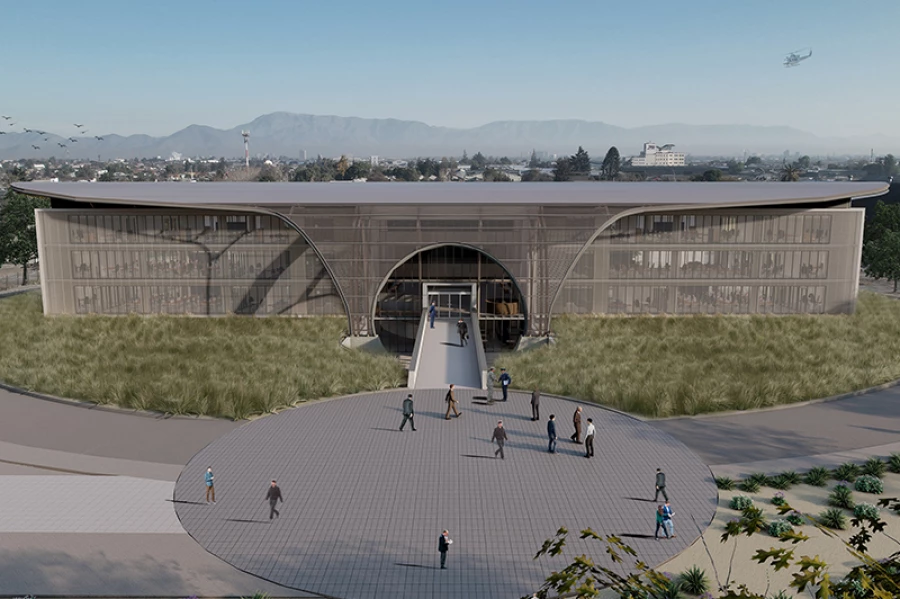
Here, they learned about the project’s specifics and potential impact. The center will facilitate satellite development by both Chilean and international engineers.
The CEN, estimated at 5,800 square meters, will include multiple facilities.
These comprise a Mission Control Center, a satellite manufacturing lab, and a data lab with two supercomputers. It will also feature an innovation lab.
Following this site visit, the companies have 60 days to submit proposals. A committee will then evaluate these submissions and select the best one.
Construction is anticipated to commence in March 2024, with a budget of approximately 13 million dollars.
Background
The CEN project represents a significant step in Chile’s space exploration efforts. Historically, Chile has been a key player in astronomy due to its clear skies.
This new center marks its foray into satellite technology and space operations. The project aligns with Chile’s growing national development emphasis on science and technology.
Over the years, the country has invested in various technological advancements. The CEN is a testament to Chile’s commitment to expanding its space capabilities.
Additionally, it underscores the country’s desire to be a leader in space technology in Latin America.
The project will bolster national security and enhance scientific research and technological innovation.
This article was produced by The Rio Times’ automated newsroom system. How we use AI · Report an error · Editorial responsibility: Matthias Camenzind, Editor-in-Chief
Read More from The Rio Times