Brazilian in ICE Costume at Miami Polls Faces 5 Charges

BRAZIL · ELECTIONS
Runoff · Sunday, 25 October
Flávio Bolsonaro vs Lula: what happens next
First-round results, how the runoff works, the key dates and who backs whom, in one guide.
Key Facts
- —The country Brazil, Latin America’s largest country, held its presidential first round on Sunday 4 October; about 265,400 of its voters are registered in the US.
- —What happened Miami-Dade deputies arrested Danilo Alves Silva, 46, accused of wearing an ICE costume at a Brazilian polling site in Miami.
- —The charges Five Florida counts: voter intimidation, conspiracy to commit bribery, threatening a public servant, unlawful use of police insignia and disorderly conduct.
- —Where it stands He posted a total bond of US$5,650 and is due in court on Monday 19 October, when prosecutors decide whether to file formal charges.
- —Why it matters Voters at the site feared a federal immigration agent could deport them, according to the sheriff’s arrest report.
- —Prediction markets Polymarket gives Flávio Bolsonaro an 84% chance of beating Lula in the 25 October runoff (6 October, 12:34 p.m. ET). Polymarket puts Flávio Bolsonaro’s chance of winning at 85% and Kalshi at 86% (Lula: 16% and 15%), as of 6 October, 1:20 pm ET; prices are bets, not polls.
A Brazilian man accused of posing as a US immigration agent at a Miami polling site now faces five Florida criminal charges. Deputies say Danilo Alves Silva, 46, wore an ICE costume while Brazilians voted for president on Sunday 4 October.
ICE, or Immigration and Customs Enforcement, is the federal agency that detains and deports immigrants, and voters there feared he could deport them. Silva posted a total bond of US$5,650 and is due back in court on Monday 19 October.
What Deputies Say Happened at the Polling Site
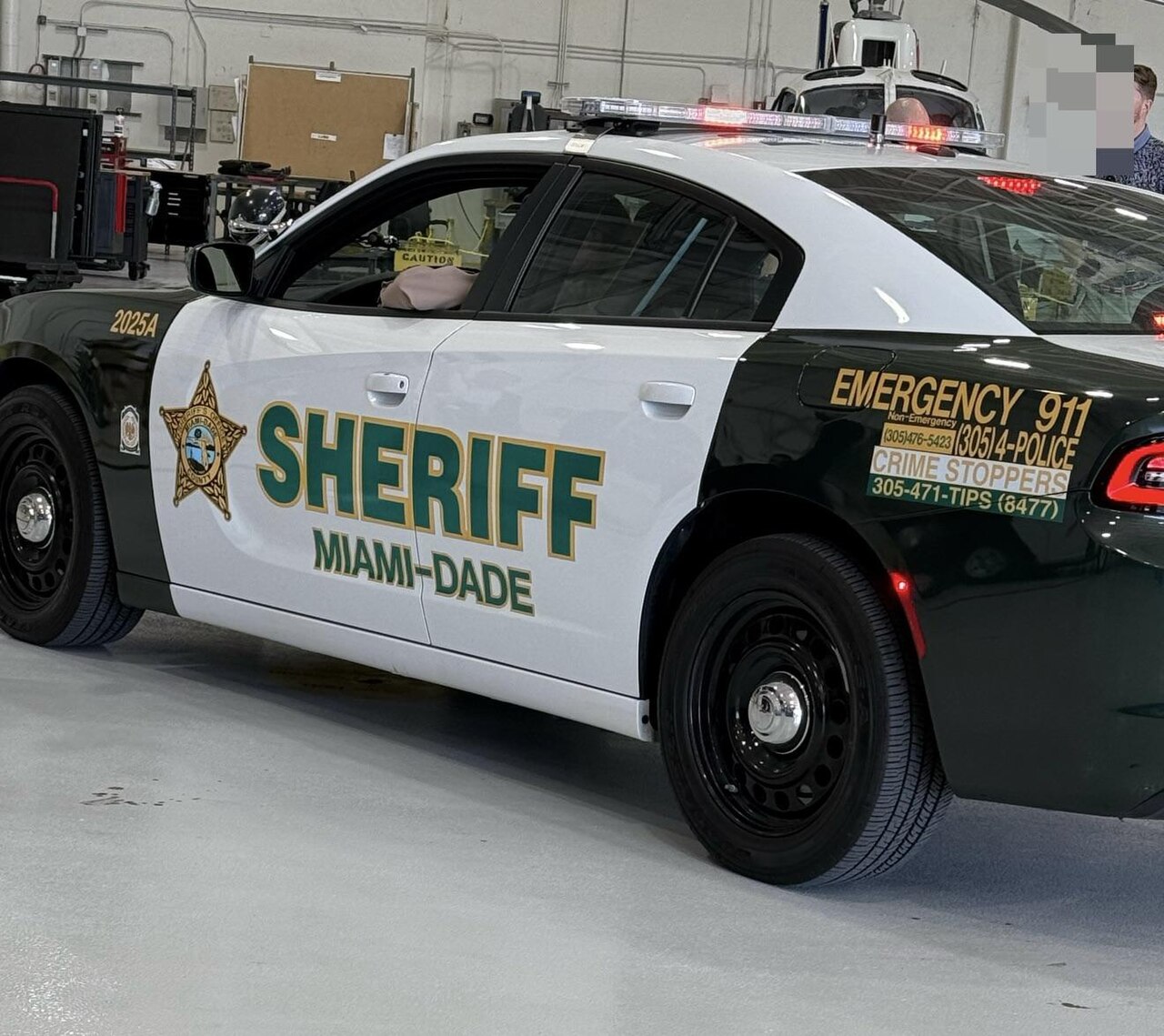
The Kendall Campus of Miami Dade College, a public college in southwest Miami-Dade, served as an official polling site for Brazilian citizens. Deputies from the Miami-Dade Sheriff’s Office, the county’s law-enforcement agency, were already on hand for security.
Shortly after 2 p.m., several people noticed a man walking aggressively between the two voting buildings, according to the arrest report quoted by WSVN 7News. His ICE costume consisted of a blue ICE cap, a raid jacket, sunglasses, a face mask and tactical boots.
He also carried a handheld radio and reported his position over it, CBS News Miami reported from the arrest report. Plain-clothes detectives from the sheriff’s Homeland Security Bureau, a county unit, followed him across the campus.
The report says he approached several people who were visibly afraid that an immigration agent was interfering with their election. Some feared he could deport people at the site, according to WSVN.
Two men then confronted him, one of them holding a camera, and accused him of scaring voters. Detectives stepped in when Silva answered aggressively, according to NBC 6 South Florida.
A Threat, a Bribe Offer and Five Charges
Asked whether he was a federal agent, Silva said no, the report states. He told detectives the ICE costume was bought on Amazon and insisted he was breaking no law.
He said he had voted earlier in a Brazilian football jersey, then changed in his car and returned to see how people reacted. CBS News Miami reported that he was recording on his phone.
Placed in a patrol car, he told a detective he would regret the decision and would come after everyone on scene, WSVN reported. He then allegedly offered money, the report says: “I will get you paid if you let me go.”
Deputies arrested him at about 2:10 p.m., CBS News Miami reported, and booked him into Turner Guilford Knight Correctional Center, a Miami-Dade County jail. Miami Dade College’s chief of security also barred him from returning to the Kendall Campus.
The counts are voter intimidation, conspiracy to commit bribery, threatening a public servant, unlawful use of police insignia and disorderly conduct. Voter intimidation is a third-degree felony under Florida’s Voter Protection Act, punishable by up to five years in prison.
At his first court appearance, his defence lawyer asked whether anyone in a costume could be treated as a criminal. Judge Mindy Glazer replied that it was not Halloween, according to O Tempo, a Belo Horizonte daily.
She also told him the costume was not appropriate during Brazil’s election, NBC 6 South Florida reported. AcheiUSA, a Portuguese-language paper for Brazilians in the US, also carried the exchange.
Jail records cited by CBS News Miami show he has posted a total bond of US$5,650. That left him free until his next hearing.
Why Brazilians in Florida Were on Edge
Brazilians abroad vote only for president and vice-president, at polling stations set up mostly in embassies and consulates but also in schools and other venues. Brazil’s electoral court, the TSE, counts 918,876 registered voters in 134 countries, according to Agência Brasil, the state news agency.
The United States has the largest share, with about 265,400 voters, ahead of Portugal with 134,700 and Japan with 88,300.
Deputies wrote that, given the political climate and the many foreign citizens present, the ICE costume amounted to potential voter intimidation. Salvador’s daily Correio reported that fear of ICE operations near polling sites had worried Brazilians in the US before the vote.
The same voters return on Sunday 25 October for the runoff between President Luiz Inácio Lula da Silva and Senator Flávio Bolsonaro. Lula is the leading figure of the left-wing Workers’ Party (PT), which he co-founded.
Flávio, the eldest son of former president Jair Bolsonaro, runs for the conservative Liberal Party (PL). He took 47.03% of valid votes in the first round against 45.16% for Lula, according to R7.
For more background on the race, see this guide to Brazil’s election.
What It Means for You
If you are a Brazilian voter in the US, you vote again in the runoff on Sunday 25 October. On 4 October, sheriff’s deputies guarded the Kendall Campus, and voters who feel threatened can alert officers or call 911.
Florida’s badge law bans wearing a real or imitation agency uniform or insignia, an ICE costume included, with intent to mislead. A violation is a first-degree misdemeanour, punishable by up to a year in jail.
For Americans following the case, it shows how fear of immigration enforcement now reaches foreign elections held on US soil. Deputies treated an ICE costume at a polling site as a threat to voters, not a prank.
What Prediction Markets Say
On Polymarket, an online prediction market, bettors give Flávio Bolsonaro an 84.4% chance of winning the runoff (6 October, 12:34 p.m. ET). Lula is priced at 15.5%, and these figures are bets, not polls.
The “Brazil Presidential Election” market has drawn about US$174 million in total bets. Flávio’s price rose 0.7 points over the previous 24 hours.
Prediction markets · who wins the runoff
Implied chance of winning Brazil’s presidency on 25 October, from traders’ prices.
Polymarket
Flávio Bolsonaro 84.5% · Lula 15.5% (US$174 million traded)
Kalshi (regulated in the US by the CFTC)
Flávio Bolsonaro 86% · Lula 15%
As of 6 October, 1:20 pm ET (18:20 Lisbon), updated every 20 minutes. Prices are bets, not polls, and can move fast.
Why we show this: prediction markets turn real-money bets into a live probability that moves within minutes of the news, which is why investors, campaigns and newsrooms in the United States now follow them closely. We show them next to polls and official results, never instead of them.
What Is Not Known
Prosecutors have not said which counts they will formally file, and Silva has not been convicted of any crime. How he will plead has not been made public.
It is not known what he planned to do with the video he was recording. Nor is it known whether anyone stayed away from the polls because of the ICE costume.
None of the five counts is federal. Federal law, Title 18, section 912, sets up to three years in prison for posing as a US officer and acting as one.
Whether federal prosecutors or ICE will take an interest in the case is not known.
More: Brazil news in English, every day from The Rio Times.
Frequently Asked Questions
Who was arrested at the Brazilian polling site in Miami?
Deputies identified him as Danilo Alves Silva, 46, of Port St. Lucie, Florida. He is accused, not convicted, and the case is at an early stage.
Was he a real ICE agent?
He was not, according to the arrest report. He told detectives he had bought the ICE costume as a prop on Amazon.
What charges does he face?
Five Florida counts: voter intimidation, conspiracy to commit bribery, threatening a public servant, unlawful use of police insignia and disorderly conduct. Voter intimidation alone carries up to five years in prison.
When do Brazilians in the US vote again?
On Sunday 25 October, in the runoff between President Lula and Senator Flávio Bolsonaro. Voters abroad choose only the president and vice-president.
What happens next in the case?
Silva is due in court on Monday 19 October, when prosecutors are expected to say whether they will formally file charges. He is free after posting a total bond of US$5,650.
Sources: Florida Legislature, section 104.0615 (Voter Protection Act), 6 October 2026; Florida Legislature, section 843.085 (badges and indicia of authority), 6 October 2026; Florida Legislature, section 775.082 (penalties), 6 October 2026; 18 U.S.C. 912 (Legal Information Institute), 6 October 2026; Agência Brasil (TSE voter data), 26 September 2026; O Tempo, 6 October 2026; CBS News Miami, 5 October 2026; WSVN 7News, 5 October 2026; NBC 6 South Florida, 4 October 2026; Miami Herald (via The Spokesman-Review), 5 October 2026; Estado de Minas, 6 October 2026; AcheiUSA, 6 October 2026; Correio, 6 October 2026; R7, 5 October 2026.
This article was produced by The Rio Times’ automated newsroom system. How we use AI · Report an error · Editorial responsibility: Matthias Camenzind, Editor-in-Chief