Brazil Stocks Fall 0.43% as Vale Slides | Brazil Market Report, Nov 24
Key Facts
- The Ibovespa, Brazil’s main stock index, closed at 164,090 (-0.43%), a six-month low.
- Vale, the miner, fell 5.5% and Petrobras, the oil giant, 1.8%, the day’s biggest drags.
- The real firmed: the dollar closed at R$5.9066, down 0.40%.
- The index is 21.5% below its 9 October peak of 209,067.
- B3, Brazil’s stock exchange, was shut on Friday 20 November for a holiday.
Today’s Focus
Brazil’s main stock index, the Ibovespa, closed at 164,090 on Tuesday — its lowest close in at least six months. It slipped 0.43% on the day, a fourth straight fall.
The slide is large when seen over a month. The index is 21.5% below its 9 October peak of 209,067, and it has lost 19.99% across the last 20 sessions.
Two heavyweights did most of the damage. Vale, the iron-ore miner, fell 5.5% and Petrobras, the state-controlled oil company, fell 1.8%, together trading more than US$1 billion.
The real, Brazil’s currency, behaved better than the shares. A dollar cost R$5.9066, 0.40% less than the day before, even as the index sank.
What matters today. Brazil’s market is pricing a nervous mix of fiscal worry and weak commodity heavyweights, and the real is holding up better than the shares.
01 The session in one read
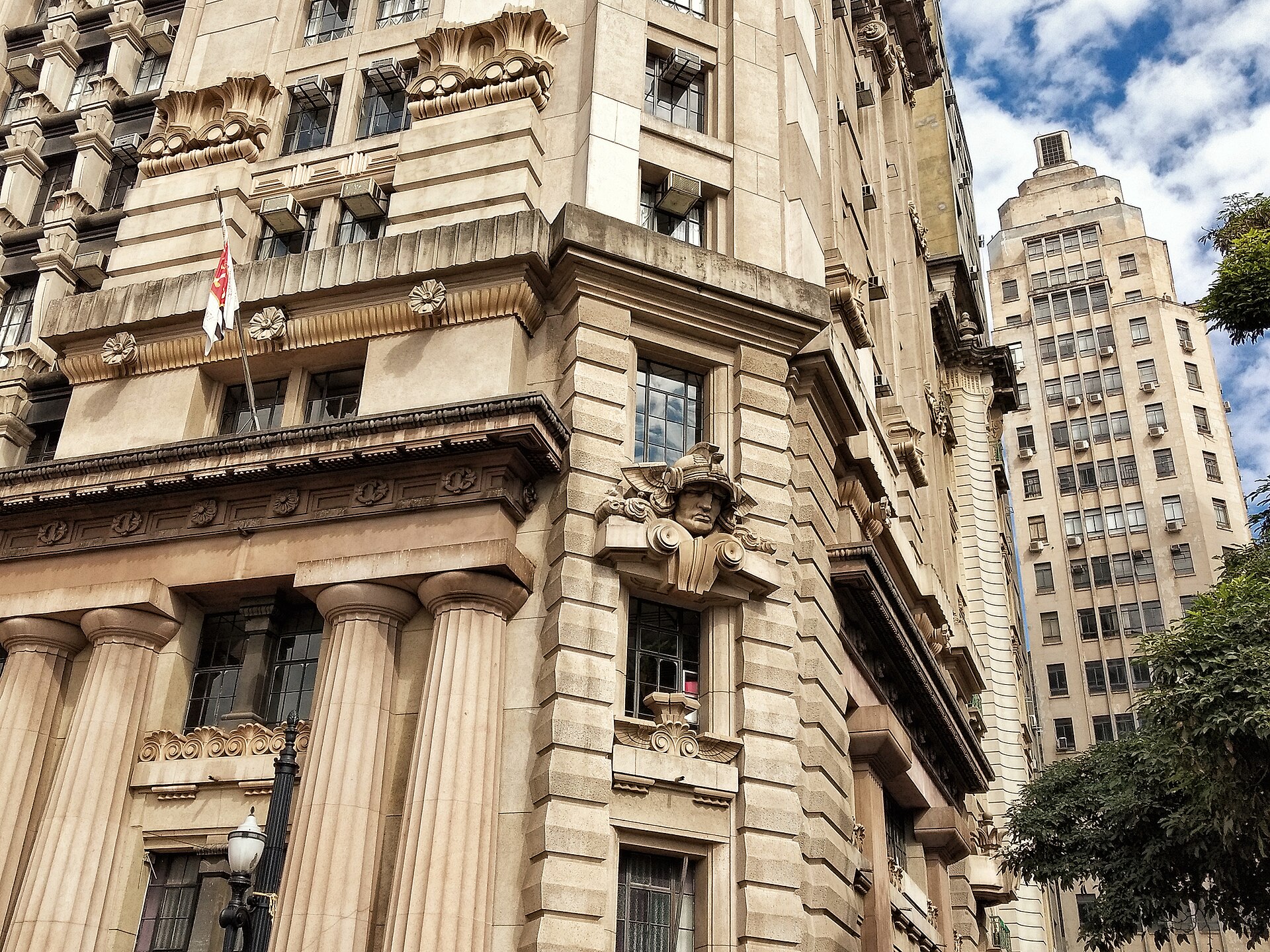
The B3 exchange in São Paulo was closed on Friday 20 November for Black Consciousness Day, so there was no session and no report that day. Trading resumed on Monday, and Tuesday was the second session after the break.
The Ibovespa, Brazil’s main stock index, ended at 164,090 (−0.43%). That is its lowest close in at least six months and the fourth fall in a row.
Measured across the holiday gap, the index is down 3.07% over five sessions, which reaches back to before the break. Over 20 sessions it is down 19.99%.
The picture is less a crash than a long, steady slope downwards. Each day takes a little more, and the cuts have added up to a fifth of the index’s value since the 9 October high.
The evidence points to three overlapping causes: worry over how the government will rein in spending, heavy selling in Vale and Petrobras, and a stretch of foreign caution towards emerging markets. The real firmed while shares fell, which suggests investors are trimming Brazilian equities rather than fleeing the currency.
Confidence is medium because Vale’s fall has no single confirmed trigger, and oil rose on the day while Petrobras fell. The variable to watch is the government’s spending-cap proposal: its scope and timing will decide whether the 154,770 low of 21 November 2025 comes into play.
02 The day’s numbers
| Measure | Level | Change | Read |
|---|---|---|---|
| Ibovespa (Brazil’s main stock index) | 164,090 | −0.43% | Lowest close in at least six months; fourth fall in a row |
| Session range | — | — | Not confirmed in the scan |
| US dollar in reais (USD/BRL) | 5.9066 | −0.40% | Real firmer on the day; dollar down two sessions running |
| Ibovespa vs 9 October peak | 209,067 peak | −21.5% | Index sits 21.5% below its 12-month high |
| Ibovespa vs 12-month low | 154,770 low (21 Nov 2025) | +6.0% | Index is 6.0% above its low of a year ago |
| Ibovespa over 20 sessions | — | −19.99% | About a fifth of the index’s value gone in a month |
| Dollar vs 12-month extremes | 5.95 high (20 Nov); 4.89 low | −0.7% | Dollar is 0.7% below its 20 November high and 20.8% above its May low |
| Key technical level | 154,770 | — | The 12-month low is the floor traders watch |
Read the table as a story of distance. The index has fallen 21.5% from its October peak but is still only 6.0% above its low from a year ago, so the cushion is thin.
The dollar tells a gentler tale. It is 0.7% below its 20 November high of 5.95, which means the real recovered a little while shares kept sinking.
That split matters. Foreign money did not rush for the exits through the currency; it simply sold the most crowded shares.
Over 20 sessions the dollar is up 10.48% against the real, and over 60 sessions it is up 14.6%. The currency has weakened sharply on a three-month view, even with Tuesday’s small relief. Rio Times · Live Market Intelligence
Live Market IntelligenceBrazil — Live Market Board
Brazil — Live Market Board
Instrument Last Change YoY Prev. High Low Volume
IBOV
164,089.81
-0.43%
+5.67%
164,796.05
167,580
164,023
—
USD/BRL
5.91
-0.43%
+9.63%
5.93
5.91
5.89
—
SELIC
13.75%
—
—
—
—
—
PETR4
40.55
-1.82%
+24.62%
41.30
42.25
40.41
89,319,800
VALE3
55.19
-5.51%
-15.21%
58.41
58.35
55.05
46,877,800
ITUB4
39.74
+0.03%
+2.79%
39.73
40.77
39.69
18,269,700
BBDC4
13.62
-0.66%
-27.55%
13.71
14.15
13.58
45,447,300
BBAS3
14.18
-0.14%
-35.07%
14.20
14.76
14.17
52,454,300
B3SA3
14.18
+0.14%
+1.43%
14.16
14.80
14.18
26,499,200
ABEV3
16.10
+1.00%
+16.92%
15.94
16.25
15.96
26,499,800
WEGE3
50.20
+0.58%
+16.23%
49.91
50.33
49.19
10,918,200
PRIO3
59.60
+2.37%
+54.64%
58.22
60.36
58.22
7,542,000
SUZB3
56.14
+1.72%
+17.01%
55.19
56.14
54.64
9,684,600
RENT3
28.51
-0.80%
-33.65%
28.74
29.80
28.51
7,626,400
AZZA3
14.18
-2.74%
-50.75%
14.58
15.14
14.18
4,667,300
CSNA3
3.24
-6.90%
-60.05%
3.48
3.59
3.24
32,399,200
GGBR4
25.27
-0.28%
+35.93%
25.34
25.33
24.32
9,162,500
ENEV3
26.55
+1.84%
+39.01%
26.07
26.93
26.19
18,737,700
03 Why it moved — fiscal worry and heavyweight selling
The first cause, with medium confidence, is fiscal nerves. Brazil’s economic team will propose to President Lula a constitutional amendment, known as a PEC, to restrain public spending. He approved drafting new measures but has set neither their scope nor their timing.
Markets dislike open questions about the budget, because a government that borrows more pushes up the cost of money for everyone. That drags on shares and on the real.
The second cause, also medium confidence, is the big two. Petrobras fell 1.8% even though oil rose, which suggests company news mattered more than the oil price.
Vale’s 5.5% drop is the hardest to pin down, and our confidence is low-to-medium. It came on a day when the broader metals complex looked weak, and the miner is the second most heavily traded stock, so selling there moves the whole index.
The usual outside drivers were mixed. The dollar index (a measure of the US dollar against major currencies) fell 0.45% to 103.848, and the US 10-year Treasury yield eased by 2 basis points to 4.929%, which usually helps emerging markets. Yet the S&P 500 lost 0.50%, the Nasdaq lost 1.48% and the VIX fear gauge stood at 26.36, so foreign appetite for risk stayed cautious.
The FGV, a Brazilian economic think-tank, reported consumer confidence for November at 83.5, down from 84.7 (RT economic calendar).
04 The day’s movers
| Driver | Level / Move | Change | Note |
|---|---|---|---|
| Vale (VALE3) | US$438m traded | −5.5% | Iron-ore miner; biggest drag among the heavyweights |
| Petrobras (PETR4) | US$613m traded | −1.8% | Most-traded stock; fell despite higher oil |
| Sabesp (SBSP3) | US$159m traded | +0.6% | São Paulo’s water utility |
| Banco do Brasil (BBAS3) | US$126m traded | −0.1% | State-run bank, nearly flat |
| Itaú (ITUB4) | US$123m traded | +0.0% | Largest private bank; unchanged |
| Bradesco (BBDC4) | US$105m traded | −0.7% | Second private bank, slightly softer |
| WEG (WEGE3) | US$93m traded | +0.6% | Electric-motor maker, resilient |
| Suzano (SUZB3) | US$92m traded | +1.7% | Pulp exporter earning in dollars |
| Pão de Açúcar (PCAR3) | — | −9.2% | Supermarket chain; biggest domestic loser |
| Natura (NATU3) | — | −6.4% | Cosmetics maker, second-biggest loser |
| Cogna (COGN3) | — | +5.8% | Education group; top domestic gainer |
| PRIO (PRIO3) | — | +2.4% | Independent oil producer |
The table shows a market split by sector. Banks were quiet: Itaú flat, Banco do Brasil down 0.1% and Bradesco down 0.7%.
Retail and consumer names took the sharpest knocks, with Pão de Açúcar down 9.2% and Natura down 6.4%. Those are the shares most sensitive to high interest rates and to a weak consumer.
On the other side, WEG rose 0.6% and PRIO rose 2.4%, a reminder that stock-pickers still found winners on a bad day.
05 The regional scoreboard
| Index | Country | Change |
|---|---|---|
| Ibovespa | Brazil | −0.43% |
| S&P/BMV IPC | Mexico | +0.83% |
| IPSA | Chile | −1.13% |
| Merval | Argentina | — |
| COLCAP | Colombia | — |
Brazil did not fall alone, but it was not the weakest either. Argentina’s September economic activity fell 1.2% from a year earlier, worse than the −0.6% economists expected (RT economic calendar).
Chile’s IPSA lost 1.13%, so the caution reached the Pacific coast too. Mexico’s IPC was the exception at +0.83%, helped by mid-month inflation of 3.96% year on year, just above the 3.92% forecast, with core prices softer than expected at 3.68%.
The currencies show Brazil’s relative strength. The Mexican peso weakened (dollar +1.21% to 19.4098) and the Chilean peso weakened (dollar +1.62% to 1,033), while the real was the one major regional currency to gain.
For a reader in São Paulo, Santiago or Lima, the lesson is that Brazil’s fiscal worries are part of a wider regional wobble. The live market board above carries the day’s closes for every index.
06 The technical picture
Charts help show where nervous buyers might step in. The nearest support is the 12-month low of 154,770, set on 21 November 2025, which is 6.0% below today’s close.
Resistance starts at the round number of 170,000 and then runs up to the 9 October peak of 209,067. The index has to climb 21.5% to get there.
For the dollar, the line to watch is the 20 November high of 5.95, only 0.7% above Tuesday’s close; the round 6.00 mark sits just beyond it.
Our own price history offers a sober check. In 18 earlier cases since 2007 when the dollar rose at least as much as the 10.5% gain it made in 20 sessions, it was higher 20 sessions later in 6 of 18 cases (33%). The median move was −1.3% and the worst was −11.4%, but history is not a forecast.
So does the slide stop? Not on its own: the index needs the spending proposal to land clearly and credibly, and a firmer oil and metals tape, before four falls in a row become a pause.
07 What to watch
- Fiscal package: The size, scope and timing of the proposed spending-restraint amendment; vague plans tend to weigh on shares and the real.
- Support at 154,770: The 12-month low of 21 November 2025 is 6.0% below the close; a break would turn a slide into a new low.
- Dollar at 5.95 and 6.00: The 20 November high of 5.95 and the round 6.00 mark are where the real’s weakness would deepen.
- US inflation and growth data: US PCE inflation (the Federal Reserve’s preferred price gauge) and GDP on 25 November (13:30 Lisbon) shape the dollar and foreign appetite.
Background: Brazil Stocks Fall 0.95% as Oil Slides.
Background: Brazil Stocks Fall 0.7% as Real Hits 5.93.
Frequently Asked Questions
How did the Brazil stock market close?
The Ibovespa, Brazil’s main stock index, closed at 164,090, down 0.43%. It was the lowest close in at least six months and the fourth fall in a row.
Why did Brazilian shares fall?
The main causes were worry over how the government will limit spending, heavy selling in Vale (down 5.5%) and Petrobras (down 1.8%), and cautious foreign investors.
What did the real do?
The real strengthened slightly: the dollar cost R$5.9066, down 0.40%. It is still 20.8% above its 12-month low of 4.89 reais per dollar.
Was the market open on 20 November?
No. The B3 exchange was closed for Black Consciousness Day, so there was no session or report that day.
Market data: The Rio Times; exchange figures from B3
This article was produced by The Rio Times’ automated AI newsroom. Editorial responsibility: Matthias Camenzind, Publisher and Editor-in-Chief. The Rio Times also runs Ask Rio Times, which answers from 100,000+ of our own articles, the daily Latin America Power Map, and prediction-market odds on elections and markets.. How we use AI · Report an error
LatAm Markets: Live Signals → — real-time movers, turnover leaders and FX across Latin America.
Brazil runoff, Sunday, October 25: Brazil runoff start time and results schedule. Latest: Brazil runoff polls, Flávio 51%, Lula 49%.
Get The Rio Times delivered to your inbox — market intelligence, daily briefs, and breaking analysis across Latin America.
Start for US$1