Braskem Earnings: Q4 Loss Doubles to R$10.3B
Braskem's Q4 net loss nearly doubled to R$10.3B ($1.96B), yet recurring EBITDA rose 7.4% to R$598M. What's driving the gap — and what it means for investors.
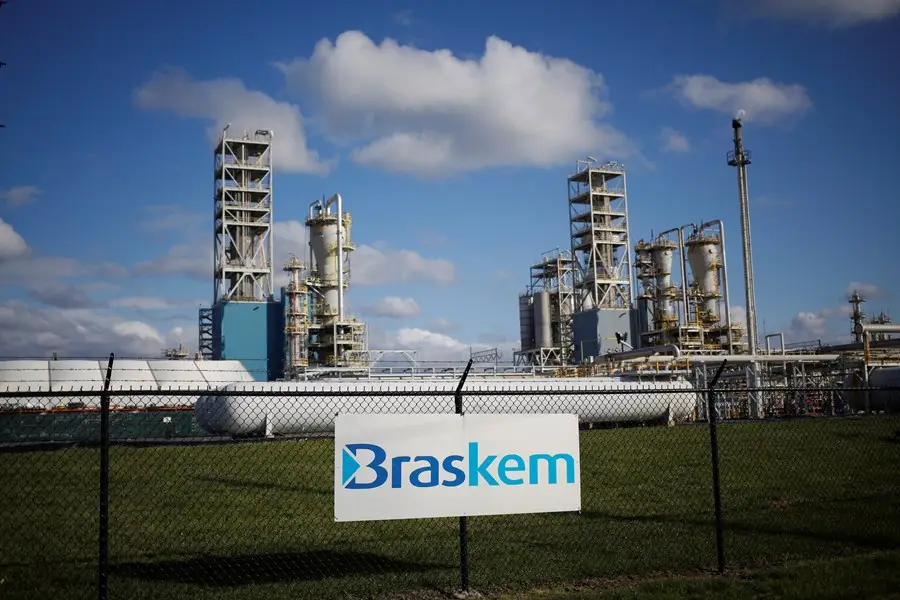
Braskem Q4 2025 Earnings: What Happened
Braskem S.A. (BRKM5) is Latin America’s largest petrochemical company and the 8th-largest global resin producer, operating 36 industrial plants across Brazil, the United States, Mexico, and Germany with annual production capacity exceeding 16 million tons of thermoplastic resins and other petrochemicals. The company controls Brazil’s three largest petrochemical complexes (Camaçari/BA, Mauá/SP, Triunfo/RS) and is the world’s leading biopolymer producer through its 200,000-ton Green PE plant using sugarcane-based ethanol. Controlled by Novonor (formerly Odebrecht) with a 50.1% voting stake — pledged as collateral for R$15 billion in bank debt — and with Petrobras holding 47% voting rights, Braskem is simultaneously navigating the worst petrochemical cycle in decades, R$15+ billion in Alagoas environmental liabilities, and an unresolved ownership transition. Braskem earnings for Q4 2025 are covered by The Rio Times as part of its Latin American financial news reporting on B3-listed industrial companies.

The R$10.3 billion quarterly loss — among the largest ever reported by a Brazilian company — requires decomposition. The recurring EBITDA of R$598 million was actually slightly above the year-ago level. The chasm between EBITDA and the bottom line is filled by non-cash items: asset impairments reflecting the sustained depression in petrochemical asset values, provisions for Alagoas environmental remediation, currency translation effects on the predominantly US dollar-denominated debt, and depreciation on the massive fixed-asset base.
BRKM5 preferred shares trade on B3 with ADRs (BAK) on NYSE. The stock has been deeply depressed, reflecting the cyclical downturn, leverage concerns, and ownership uncertainty. Nelson Tanure entered exclusive 90-day negotiations with Novonor for the controlling stake, but four creditor banks hold veto power. The PRESIQ (Special Regime for the Chemical Industry) legislative program and recent import tariff increases provide some protection for domestic operations, but the fundamental challenge — naphtha-based production competing against ethane-advantaged and state-subsidized Chinese capacity — is structural.
Key Drivers Behind Braskem’s Q4 2025 Results
Global Petrochemical Spread Compression
The core issue is China’s massive petrochemical capacity expansion, which has created global oversupply in polyethylene, polypropylene, and PVC. China has been building ethylene and PE plants at a scale that exceeds global demand growth, compressing spreads across the entire chain. For Braskem, which relies predominantly on naphtha feedstock (more expensive than the ethane used by US competitors or the state-subsidized inputs available to Chinese producers), this spread compression is existential. Q4 resin spreads declined approximately 13% quarter-over-quarter, with PE-Nafta and PE-Ethane spreads both falling roughly 15%. The seasonal weakness of Q4 exacerbated an already dire structural environment.
Volume Decline and Revenue Pressure
Total sales volume of 2.31 million tons fell 4% sequentially and 5% year-over-year, reflecting both weaker demand and the impact of planned maintenance shutdowns. The 7% revenue decline to R$16.1 billion ($3.06B) captures the dual headwind of lower volumes and compressed pricing. In Brazil, plant utilization of 74% is well below the 85%+ levels that generate meaningful operating leverage, while Mexico’s utilization plunged 35% due to scheduled plant shutdowns. The geopolitical uncertainties cited by management — conflicts and the tariff war — added an additional layer of unpredictability to an already depressed market.
Alagoas Liabilities and Ownership Overhang
The Maceió ground subsidence disaster — caused by Braskem’s salt mining operations, forcing 60,000 residents to evacuate — has generated R$15+ billion in cumulative spending since 2019 and remains an ongoing obligation. A R$1.2 billion settlement with Alagoas state (payable in 10 annual installments, mostly after 2030) was reached in Q3 2025, but the cavity stabilization process could span decades. This liability overhang — combined with the Novonor control-stake sale process and Petrobras’s strategic ambiguity as the second-largest shareholder — creates a governance uncertainty that depresses the equity valuation beyond the cyclical downturn alone.
Live Company IntelligenceBraskem S.A — the full investor dossier
Valuation & profitability
Price & risk
$3.5252-wk high
$13.78
Revenue trend · 6y
Ownership
Dividend
Braskem Q4 2025 Financial Detail
The leverage of 14.74x is staggering but needs context. With 92% of debt denominated in US dollars and an average maturity of approximately 9 years (68% maturing from 2030 onwards), Braskem has limited near-term refinancing risk. The US$2.1 billion cash position covers approximately 47 months of maturities (excluding a US$1.0 billion standby credit facility). The leverage ratio is astronomical primarily because the EBITDA denominator has collapsed — not because debt has grown dramatically. If recurring EBITDA were to recover to the US$2+ billion levels seen in 2021–2022, leverage would normalize to 3–4x on the current debt load.
Full-year 2025 tells the deterioration story clearly: recurring EBITDA fell 45% from R$5.76 billion to R$3.15 billion ($599M), while the net loss of R$9.87 billion ($1.88B) actually improved 13% from 2024’s R$11.32 billion loss — reflecting fewer non-cash charges rather than operational improvement. The company continues to burn cash, with the combination of low EBITDA, interest payments on US$9.4 billion in gross debt, and ongoing Alagoas remediation costs exceeding operating cash generation.
Management Signals from Braskem
Key Facts
— Management’s attribution of the weak quarter to “geopolitical uncertainties, conflicts, and the tariff war, combined with seasonality” correctly identifies the macro headwinds but understates the structural dimension: China’s capacity expansion is not cyclical — it represents a permanent shift in global petrochemical supply that will compress spreads for years. The question for investors is whether Braskem can survive the trough long enough for either a cyclical recovery, a resolution of the ownership overhang, or policy support (PRESIQ, import tariffs) to improve the competitive position.
— The 14th debenture issuance in December 2025 and maintenance of the US$1 billion standby credit facility demonstrate that Braskem retains access to capital markets despite the distressed financial profile. The company’s long-dated debt maturity structure (68% from 2030 onwards) provides breathing room — the immediate risk is not a debt maturity wall but rather the cumulative cash burn from operating below breakeven EBITDA levels while servicing the debt and funding Alagoas obligations.
What to Watch Next for Braskem
The Novonor control-stake resolution is the governance catalyst. Nelson Tanure’s exclusive negotiation period with Novonor for the 50.1% voting stake could result in a new controlling shareholder — subject to veto by the four creditor banks (Itaú, Bradesco, Santander, Banco do Brasil) and Petrobras’s preemptive rights. A change of control could unlock strategic options (feedstock diversification, asset sales, Petrobras co-investment) that the current paralyzed governance structure prevents.
Global petrochemical spread recovery is the operational catalyst. The current downcycle has been prolonged by Chinese overcapacity, but industry observers note that Chinese capacity additions are decelerating and that demand growth in India and Southeast Asia could gradually absorb the surplus. Any spread recovery from trough levels would translate into dramatic EBITDA improvement given Braskem’s massive installed capacity and high operating leverage.
The PRESIQ legislation and import tariff regime provide domestic protection. Brazil’s Special Regime for the Chemical Industry offers tax incentives for expanding production capacity, while recent tariff increases on imported resins partially shield domestic producers from the worst effects of Chinese dumping. The durability and expansion of these protective measures will significantly influence Braskem’s domestic competitive position and investment case.
Braskem Quarterly Results (Q4 2025 vs Q4 2024)
| Metric | Q4 2024 | Q4 2025 | Chg |
|---|---|---|---|
| Net Revenue | R$17.3 bn | R$16.1 bn ($3.06B) | -7% |
| Recurring EBITDA | R$557 mn | R$598 mn ($113.7M) | +7.4% |
| Net Loss (Attributable) | -R$5.64 bn | -R$10.28 bn (-$1.96B) | +82% |
| Leverage (ND/EBITDA) | 7.42x | 14.74x | — |
| Sales Volume | 2.43 mn tons | 2.31 mn tons | -5% |
Braskem Annual and Strategic Summary (FY2025)
| Metric | Value |
|---|---|
| FY Net Loss | -R$9.87 bn (-$1.88B) (2024: -R$11.32 bn) |
| FY Recurring EBITDA | R$3.15 bn ($599M) (-45%) |
| Gross Debt | Cash | US$9.4 bn | US$2.1 bn |
| Debt Profile | 92% USD | ~9 yr avg | 68% post-2030 |
| Alagoas Total Spend | R$15+ bn ($2.85B) since 2019 |
| Production Capacity | 16+ mn tons/yr | 36 plants | 4 countries |
| BR Utilization | Feedstock | ~74% | Primarily naphtha |
| Ownership Status | Novonor 50.1% | Petrobras 47% (voting) |
Risks Facing Braskem
The petrochemical downcycle may persist for years. China’s capacity additions, while decelerating, have structurally shifted the global supply curve. Until significant capacity is permanently retired — either through economic obsolescence of older plants or policy-driven shutdowns — spreads are unlikely to return to the levels that allowed Braskem to generate US$2+ billion in annual EBITDA. The company’s naphtha feedstock dependence puts it at a structural cost disadvantage versus US ethane-based and Middle Eastern gas-based producers.
At 14.74x leverage, Braskem is in financial distress territory by any conventional measure. While the long-dated debt maturity profile prevents an imminent liquidity crisis, sustained cash burn would eventually erode the US$2.1 billion cash position. A credit rating downgrade could trigger accelerated repayment clauses or restrict access to working capital facilities, creating a negative spiral. The Alagoas liabilities (R$15+ billion cumulative, with decades of remediation ahead) add a contingent dimension that is difficult to model.
The ownership uncertainty paralyzes strategic decision-making. With Novonor seeking to sell, Petrobras holding preemptive rights, four banks wielding vetoes, and Nelson Tanure negotiating — all while the company navigates the worst cyclical downturn in its history — Braskem’s ability to make bold strategic moves (feedstock diversification, asset sales, JV restructuring) is severely constrained. Resolution of the ownership question is a necessary precondition for any comprehensive strategic repositioning.
Global Petrochemical Sector Context
Key Facts
— The global petrochemical industry is enduring its deepest margin compression since 2008–2009. China’s investment in ethylene and downstream capacity — part of a deliberate self-sufficiency strategy — has added tens of millions of tons of production capacity to a market where demand growth is slowing. The result is structural oversupply that has driven PE-Naphta spreads to levels that barely cover variable costs for many producers, let alone contribute to fixed-cost recovery or debt service.
— For Latin American producers, the challenge is compounded by feedstock disadvantage. Braskem’s dependence on naphtha — derived from crude oil and priced at a premium to natural gas-based ethane — means its cost curve position is structurally higher than US producers (who benefit from cheap shale gas) and Chinese producers (who benefit from state subsidies and integrated refining-petrochemical complexes). Brazil’s PRESIQ regime and import tariffs provide partial protection, but they cannot fully offset a 30–40% feedstock cost disadvantage.
— Braskem’s R$10+ billion quarterly loss is extreme but not without precedent in the cyclical petrochemical industry. The sector has historically moved from deep troughs to strong recoveries as capacity exits accelerate during downturns and demand eventually catches up with supply. The question specific to Braskem is whether the company’s balance sheet — with US$9.4 billion in gross debt, R$15+ billion in Alagoas liabilities, and an unresolved ownership structure — can sustain the company through a potentially multi-year trough until the cycle turns. For investors, this is a binary bet: either the cycle turns and the stock re-rates dramatically, or the financial pressures force a restructuring that dilutes or wipes out equity holders.
Braskem earnings | BRKM5 Q4 2025 results | Brazil petrochemical polyethylene resins | Latin American industrial company | Latin American financial news | The Rio Times
This article was produced by The Rio Times’ automated newsroom system. How we use AI · Report an error · Editorial responsibility: Matthias Camenzind, Editor-in-Chief