Barbados Leader Defends 0.25% Disaster Levy
Barbados wants to pay for storm protection before disaster strikes, and its prime minister says everyone who earns should chip in.

Politics: Barbados
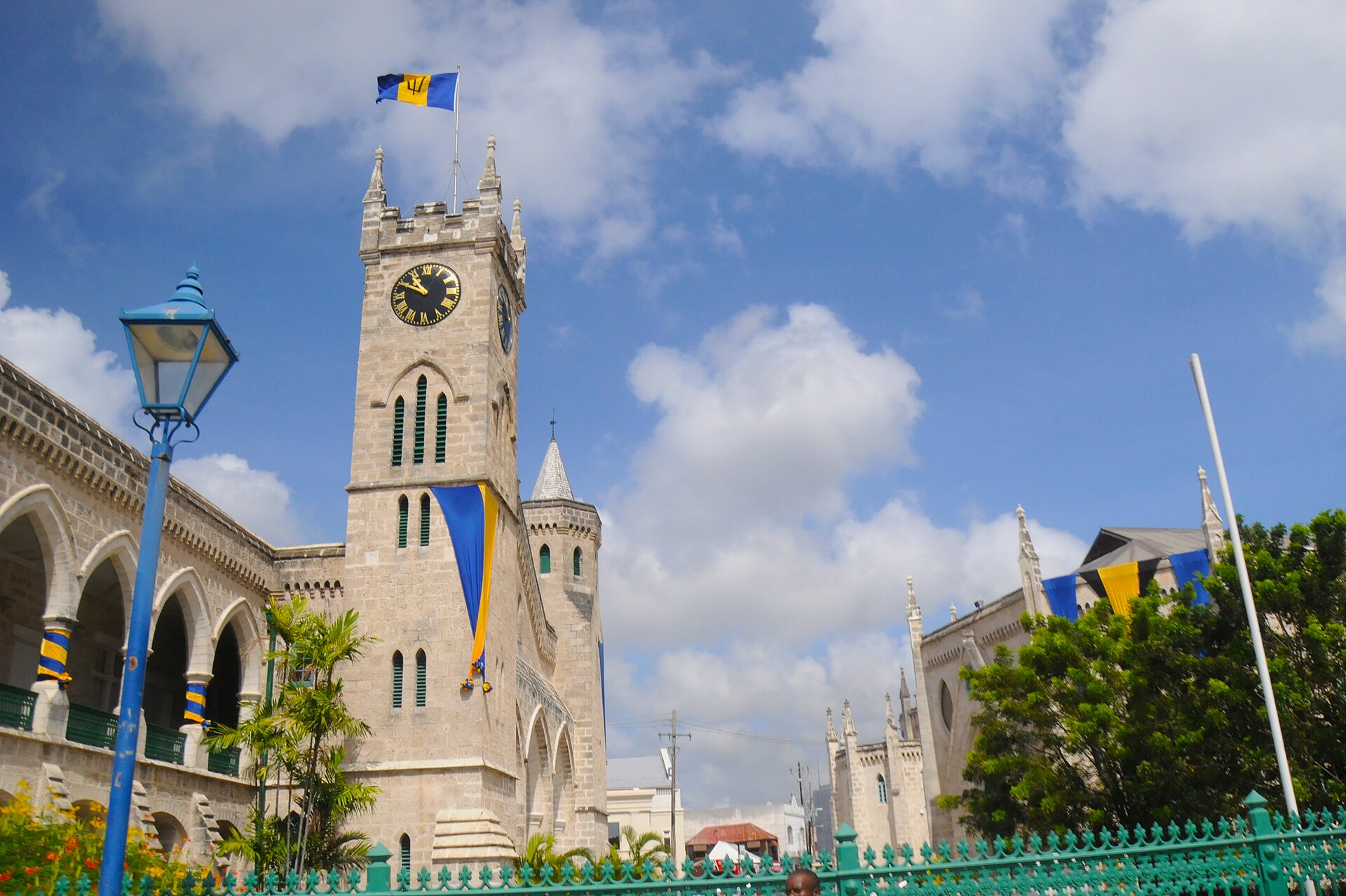
Barbados Prime Minister Mia Mottley defended a 0.25% disaster levy, a rate first set in the 2025 budget, on Tuesday 24 November 2026, while debating a bill to create a national fund against hurricanes and other shocks. The Resilience and Regeneration Fund Bill, brought by Finance Minister Ryan Straughn, is before the House of Assembly, the lower chamber of Barbados’s Parliament.
For US readers, the bill shows how a small island in hurricane country plans to pay for storm risk as insurance gets harder to buy. Mottley noted rising insurance premiums and shrinking reinsurance, the cover that insurers buy for themselves, including in Florida and California.
Key Facts
- What. A 0.25% disaster levy on pay, defended in debate on a national resilience fund bill.
- Where. Barbados House of Assembly, the lower chamber of the island’s Parliament.
- When. Tuesday 24 November 2026; the date of the vote is not known.
- Who. Prime Minister Mia Mottley and Finance Minister Ryan Straughn, who brought the bill.
- As of. 25 November 2026, 07:00 GMT
Barbados wants to pay for storm protection before disaster strikes, and its prime minister says everyone who earns should chip in.
The idea did not start on Tuesday. Barbados Today, a Barbadian news outlet, reported on 11 March 2025 that the 2025 budget measures repurposed the Catastrophe Fund, the island’s earlier hurricane-relief fund, as the Resilience and Regeneration Fund from 1 April and raised the employee and self-employed contribution from 0.1% to 0.25%.
Mottley said the bill is among the most important measures the chamber has faced since Barbados became independent, and that it shifts the focus from recovery to prevention. She told the House: “Helping to prevent damage or minimise damage before a disaster is far more effective than seeking to recover post-disaster.”
The new fund would cover more than the 2006 Catastrophe Fund, which paid out after an event. Mottley said it would also respond to pandemics, cyberattacks and economic shocks, on top of hurricanes and floods.
Mottley defended a proposed 0.25% contribution for employees and the self-employed, matched by employers, with no income ceiling. She said: “This is a solidarity levy, and the reality is that people pay out of each dollar.”
She added: “Those who have put in more have to pay so that those who are less protected can gain ultimately.” In return, households earning Bds$75,000 (Barbados dollars) or less a year (about US$37,500) could receive grants before a disaster to strengthen their homes.
The report puts those grants at up to Bds$200,000 (about US$100,000). Families could also borrow up to Bds$25,000 (about US$12,500) at 1% interest for water tanks, generators or renewable energy.
Homeowners with property valued at Bds$200,000 (about US$100,000) or less could get reconstruction grants of up to Bds$200,000 (about US$100,000) after a catastrophe, minus any insurance payout so nobody is paid twice. Small businesses and self-employed people with turnover of Bds$500,000 (about US$250,000) or less, in good standing with the Barbados Revenue Authority, the tax agency, could get support during a severe cash-flow shock.
The Barbados dollar is pegged at 2 to US$1 by the Central Bank of Barbados, the rate used throughout this article. The State would commit 0.35% of the previous year’s gross domestic product (GDP) each year, plus disaster clauses in its debt contracts that free up cash for two years after a major shock.
We could not check the reported 0.35% State share against the bill text. Mottley listed safeguards: the fund would be modelled on the National Insurance Scheme, the island’s pension and benefits system, with independent committees to assess physical and economic claims.
No more than 40% could be invested outside the CARICOM Single Market and Economy, the Caribbean trade bloc’s common market, and annual audits would be laid before Parliament. The prime minister also urged Barbadians to check their roofs and hurricane straps before the next hurricane season.
Several points remain open. We have not seen the bill text, and neither the cost of the scheme nor how much the levy would raise is known.
Frequently Asked Questions
What is the Resilience and Regeneration Fund?
It is a proposed national fund to help Barbados prevent and recover from hurricanes, floods and other shocks, according to Barbados Today’s account of Mottley’s speech. It aims to act before a disaster rather than only after it.
Who would pay the levy?
As reported, employees and the self-employed would pay, matched by employers, with no income ceiling. The State would add its own yearly commitment.
Why does this matter outside Barbados?
It shows a tourism-reliant Caribbean island trying to cut storm costs as insurance tightens. The final bill text will show how far that plan goes.
Sources
Prime Minister Mia Mottley’s speech to the House of Assembly, 24 November 2026, as reported by Barbados Today (reporter Ricardo Roberts) and CBC Barbados, 24 November 2026 · Resilience and Regeneration Fund Bill, 2026 (text not seen) · 2025 Barbados budget measures, effective 1 April 2025, as reported by Barbados Today on 11 March 2025 · Central Bank of Barbados, exchange rate peg of Bds$2 to US$1
This article was produced by The Rio Times’ automated AI newsroom. Editorial responsibility: Matthias Camenzind, Publisher and Editor-in-Chief. The Rio Times also runs Ask Rio Times, which answers from 100,000+ of our own articles, the daily Latin America Power Map, and prediction-market odds on elections and markets.. How we use AI · Report an error