Argentina’s $3.50 Coffee: Inflation Tamed, But Prices Soar
Argentina, once synonymous with runaway inflation, now holds the title of the most expensive country in Latin America. A cup of coffee in Buenos Aires costs $3.50, far above the $1.50 in Bogotá or São Paulo and $2.50 in Mexico City or Santiago.
This stark price disparity reflects the economic policies of President Javier Milei, whose administration has drastically altered Argentina’s financial landscape. Milei, elected in 2023 amid economic chaos, inherited an inflation rate of 211% and monthly price hikes exceeding 10%.
His campaign promises included dollarization and closing the Central Bank, but his government ultimately pursued a more orthodox approach under Economy Minister Luis Caputo.
Policies like “zero emission” (halting money printing) and a controlled exchange rate brought inflation down to 2.7% by December 2024. However, these measures also created unintended consequences.
The artificially strong peso, maintained by limiting currency exchange and setting a fixed 1% monthly rise in the dollar exchange rate, has distorted dollar-denominated prices. While inflation in pesos has slowed, it persists, driving up prices for foreign visitors and locals alike.
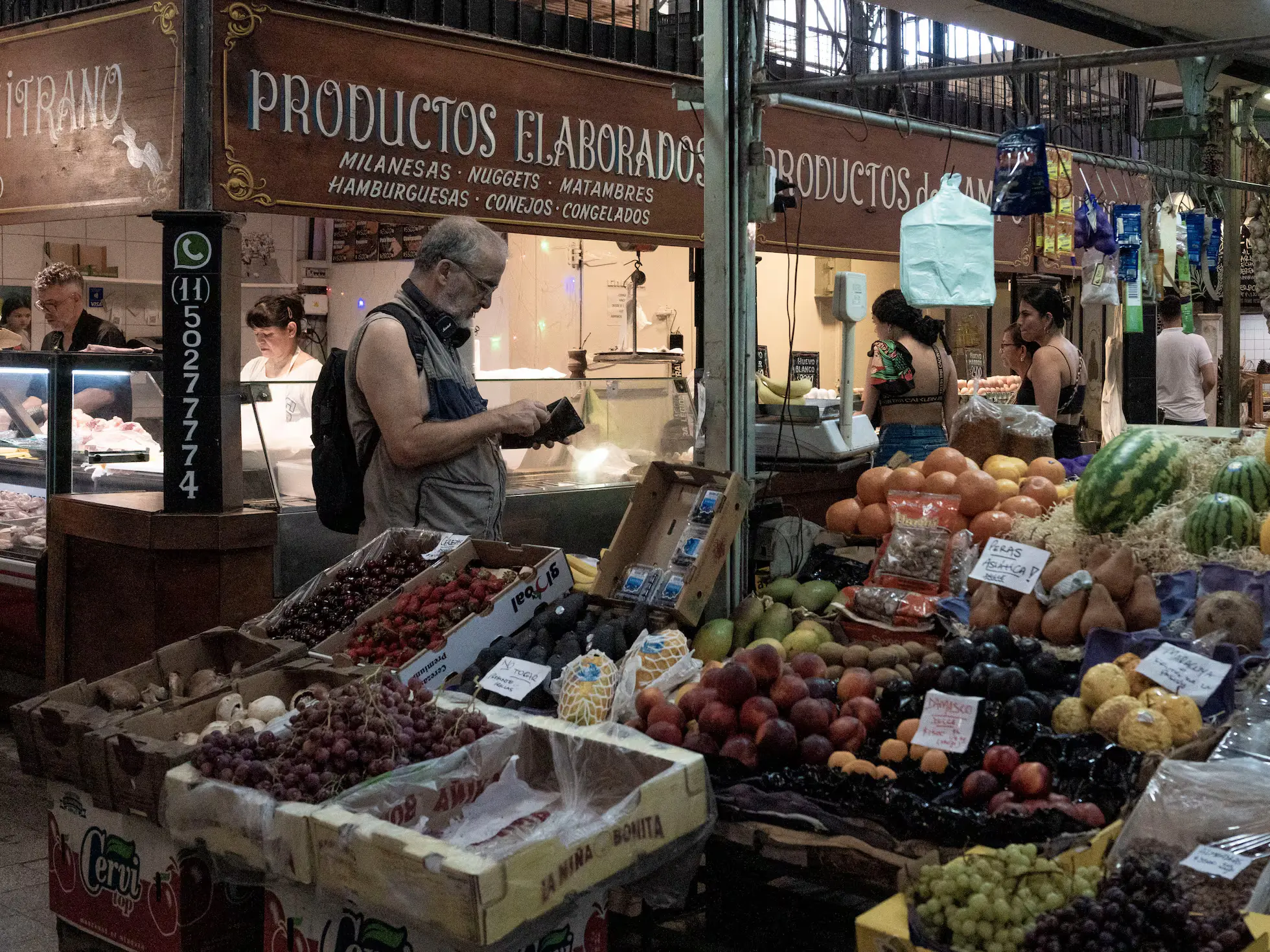
Everyday goods reflect this trend: parking costs $4.50 per hour in Buenos Aires compared to $2 in Mexico City or Bogotá, while a midday restaurant menu averages $18 versus $7 across other major Latin American cities.
Protected sectors like clothing, electronics, and automobiles further inflate costs due to limited competition. Even basic items like milk and Coca-Cola are significantly pricier than regional norms.
Argentina Faces Economic Paradox
Despite these high costs, Argentina’s minimum wage remains low—slightly above Brazil’s but far below Chile’s or Mexico’s—leaving many Argentines struggling to keep up. The sharp rise in prices has driven middle- and upper-class Argentines to shop abroad or online.
Relaxed import tariffs have made foreign goods more accessible. Meanwhile, neighboring countries like Brazil, Uruguay, Chile, and Paraguay have seen an influx of Argentine shoppers escaping domestic costs.
Milei’s policies have stabilized inflation and achieved fiscal discipline, including Argentina’s first budget surplus in over a decade. However, economists warn that the strong peso risks trade imbalances.
This could potentially necessitate future devaluations. For now, Argentina’s economic paradox persists: inflation tamed but life more expensive than ever for its citizens and visitors alike.
More: Argentina news in English, every day from The Rio Times.
This article was produced by The Rio Times’ automated newsroom system. How we use AI · Report an error · Editorial responsibility: Matthias Camenzind, Editor-in-Chief
In depth