Argentine Court Jails 15 Officers for Life
Forty-three years after the generals left power, an Argentine court has again sentenced former officers to life for kidnapping, torture and murder.

Justice: Argentina
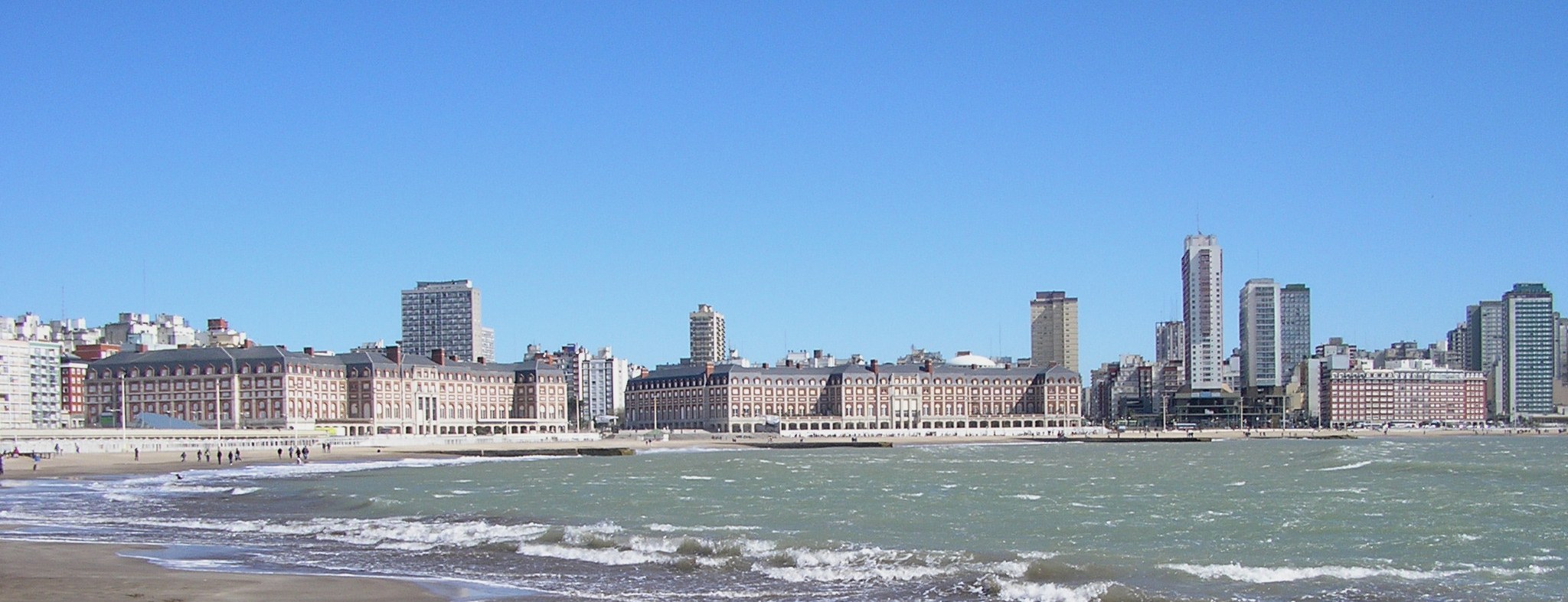
A federal court in Mar del Plata, on Argentina’s Atlantic coast, sentenced 15 former military and coast guard officers to life in prison on Friday 27 November 2026. The men were convicted of crimes against humanity committed under the 1976–1983 military dictatorship.
It was the third trial in the Subzona 15 case, named for the military sub-zone that covered Mar del Plata and the surrounding area. Prosecutors had asked for life terms.
Key Facts
- Who. 15 former Army, Navy and coast guard officers, convicted of crimes against humanity.
- What. Life sentences from a federal court in Mar del Plata.
- When. Friday 27 November 2026; written reasoning due 26 February 2027.
- Power Index. Argentina ranks 4th of 14 in The Rio Times Latin America Power Index, with 60.2 points (November 2026 edition).
- As of. 28 November 2026, 18:30 GMT
Forty-three years after the generals left power, an Argentine court has again sentenced former officers to life for kidnapping, torture and murder.
Argentina’s generals seized power in 1976 and ruled until 1983, and the security forces kidnapped, tortured and killed opponents in secret detention centres. The official report Nunca Más (Never Again), published in 1984, documented the disappearances, and the 1985 trial of the military juntas put their commanders in the dock.
Courts across the country have kept judging local cases ever since, because crimes against humanity do not expire under universal rules. An earlier Subzona 15 trial ended in 2020 with 28 life sentences, and the 15 handed down on Friday add to them.
The court is Tribunal Oral Federal N° 1 de Mar del Plata, a federal trial court that sits in the city. Judge Nicolás Toselli presided, with judges Enrique Méndez Signori and Minguillón.
The trial began in October 2024 with 20 defendants. Press reports in Argentina say one defendant died and others were removed from the case for health reasons, which leaves the 15 men now convicted.
The court judged crimes against 119 victims, including illegal detention with violence and threats, torture and murder. Press reports in Argentina add that ten of the defendants were also convicted of rape and sexual abuse of women in captivity.
Abuelas de Plaza de Mayo, a rights group that searches for children stolen during the dictatorship, was a plaintiff in the case. In its statement of 27 November 2026, it listed the killings of two pregnant women, Nora Elba Bargas and Esther Liliana Lavalle, who disappeared.
The defendants were former members of the Army, the Navy and the Naval Prefecture, Argentina’s coast guard. Five of them are Eduardo Jorge Blanco, Jorge Luis Toccalino, Rubén Miguel Fernández, Carlos Víctor Milanese and Carlos Alberto Suárez.
Press reports in Argentina say all of the men had already been sentenced to life in other trials. The new verdict therefore adds further convictions to penalties they already carry.
Toselli read the verdict on 27 November, press reports say, and he spoke about the size of the case. “We cannot fail to point out the scale and complexity of the case,” he said.
He added that the proceeding reached beyond the sub-zone to “different key areas of the Navy’s Task Force 6”, a naval command unit. That widens the picture from local officers to the command structure of the armed forces.
No appeal has been reported so far, and the defence arguments have not been published. How dictatorship-era trials are treated under President Javier Milei is a live political question (background on the dictatorship archives).
Even so, these cases are run by independent courts and prosecutors, not by the government. The verdict text is not online, so the findings on each defendant cannot yet be checked line by line.
The court will publish its full reasoning on 26 February 2027, according to the statement of Abuelas de Plaza de Mayo. Until then the written grounds for each sentence stay unpublished.
The same court is due to try next the “flights of death” case, in which prisoners were drugged and thrown into the sea from aircraft. At its centre are 14 people whose bodies washed up on the Buenos Aires coast between 16 and 20 December 1978.
Press reports in Argentina say the nine accused are a former criminal judge, a former police doctor, a former municipal official of General Lavalle and six former police officers. They face charges of homicide or, alternatively, cover-up, and about 100 witnesses are expected, though no start date has been announced.
For readers abroad, the verdict shows that Argentine courts are still closing dictatorship cases more than four decades after the generals left power. The coming months will show whether the defence appeals and what the written reasoning says about the Navy’s role.
Frequently Asked Questions
Can the verdict be appealed?
No appeal has been reported so far. The written reasoning, due early next year, will show what the defence can challenge.
Why are dictatorship trials still held?
Crimes against humanity do not expire under universal rules, so courts keep judging cases from those years. Each trial adds to the public record of what happened.
What happens next in this court?
The same court is due to try the “flights of death” case. No start date has been announced.
Sources
Primary sources: Tribunal Oral Federal N° 1 de Mar del Plata, verdict of 27 November 2026 (text not published online); Abuelas de Plaza de Mayo statement of 27 November 2026 (abuelas.org.ar); federal prosecutors’ office (fiscales.gob.ar); federal judiciary (pjn.gov.ar).
Connected Coverage
This article was produced by The Rio Times’ automated AI newsroom. Editorial responsibility: Matthias Camenzind, Publisher and Editor-in-Chief. The Rio Times also runs Ask Rio Times, which answers from 100,000+ of our own articles, the daily Latin America Power Map, and prediction-market odds on elections and markets.. How we use AI · Report an error