Algeria Deploys Fighter Jets to Niger After Coup Attempt
Algeria · SECURITY
Key Facts
- —Failed coup Mutineers calling themselves the Armed Forces for the Restoration of the Fatherland (FARP) attacked Niamey on the night of 28–29 August 2026, but loyal forces and Russia’s Africa Corps repelled them.
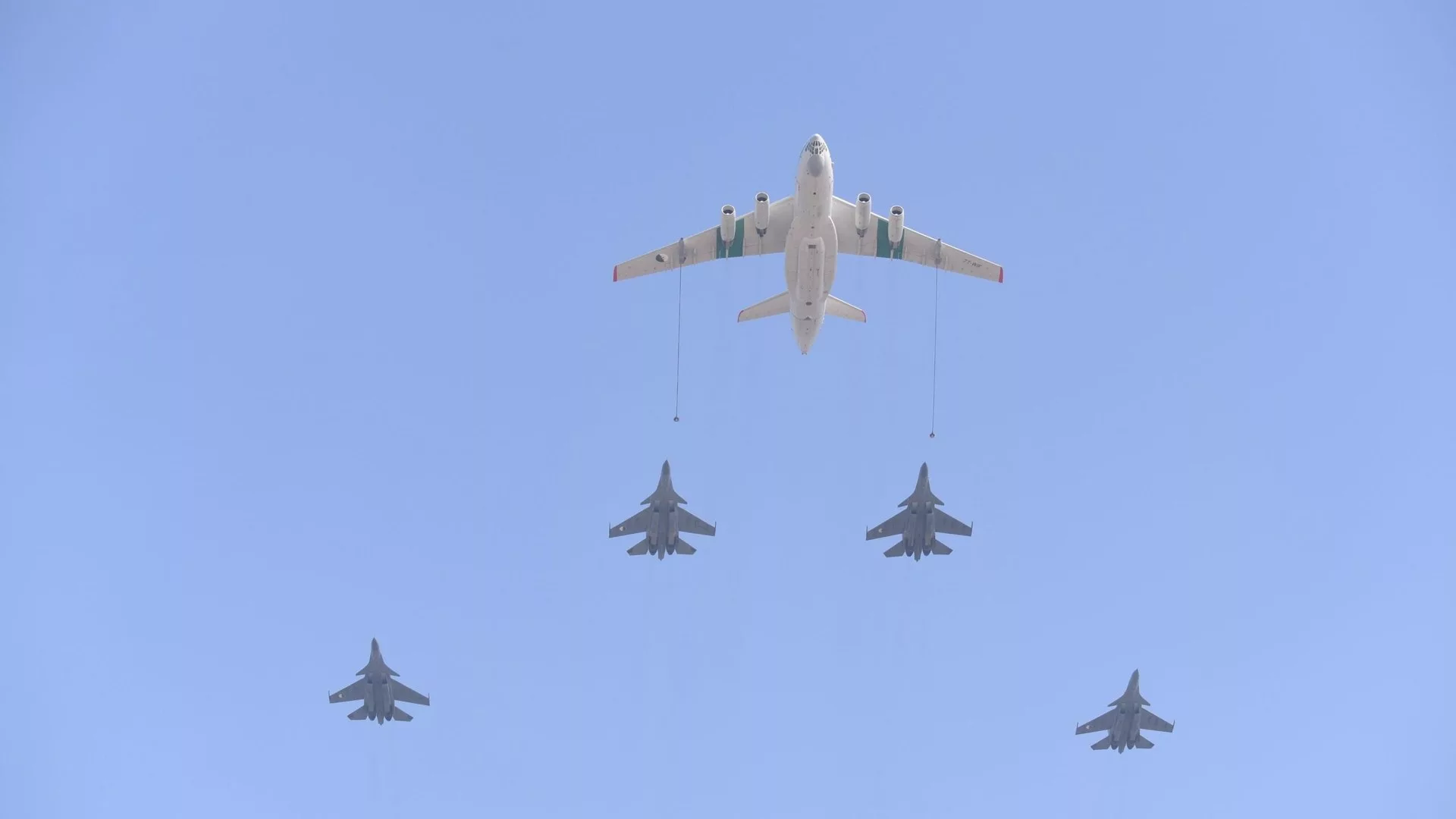
- —Deployment Algeria sent four Su-30MKA fighter jets in two patrols, plus an Il-78 tanker and an Il-76 transport, to Niamey on 30 August 2026.
- —Constitutional basis Article 31 of the 2020 constitution permits participation in peacekeeping within UN, African Union, and Arab League frameworks; Article 91 requires two-thirds parliamentary approval for overseas deployments.
- —Doctrinal shift Le Monde and TV5 Monde describe the deployment as a first since 1973 and a break with traditional non-intervention, but Algiers frames it as bilateral cooperation.
- —Niger’s request Algeria’s defense ministry says the deployment followed a request from Nigerien authorities and President Abdelmajid Tebboune’s instructions.
- —Regional context Russia’s Africa Corps provided decisive ground and air support in Niger, and Algeria arrived the day after fighting ended.
Algeria sent Su-30 jets to Niger on 30 August 2026, its first combat-aircraft deployment abroad since 1973. The move follows a failed coup and marks a shift in regional strategy.
Algeria deployed combat aircraft to Niger for the first time since 1973, following a failed coup in Niamey. Four Su-30MKA jets, an Il-78 tanker, and an Il-76 transport landed at Air Base 101 on 30 August.
The Algerian Defense Ministry says the move responds to a Nigerien request and Tebboune’s instructions. It frames it as bilateral strategic cooperation.
Doctrinal Break, Analysts Say
For decades, Algeria’s military avoided foreign deployments, but Le Monde and TV5 Monde call this a historic shift. They note it is the first combat-aircraft deployment abroad since 1973, when Algeria sent jets to Egypt.
Algeria has not published a new doctrine document. The defense ministry’s communiqué of 30 August describes only support for Niger’s army at its request.
Constitutional Framework
The 2020 constitution created a legal pathway for overseas operations, unlike the 2016 text, which had no clause on foreign deployment. Article 31 allows participation in peacekeeping within UN, African Union, or Arab League frameworks.
Article 91, paragraph 2, requires the president to obtain approval from two-thirds of each parliamentary chamber before sending army units abroad. No parliamentary vote has been reported, and the government has not invoked Article 91.
What Algeria Sent
The package includes two patrols of Su-30MKA fighter jets, one Il-78 refueling aircraft, and one Il-76 transport, according to Opex360. Earlier in August, Algeria delivered four helicopters to Niger, including Mi-24V attack helicopters.
The jets carry air-to-air missiles and support personnel. The Il-78 tanker extends their operational range, a key capability for sustained patrols.
Mission Profile
Algeria’s defense ministry says the mission is ‘support for the Nigerian army,’ without detailing combat roles. No sorties have been reported, suggesting a deterrence and stabilization role.
Russia’s Africa Corps provided ground and air support during the coup attempt, widely credited as decisive. Algeria arrived the day after the fighting ended.
First Since 1973
Algeria sent a MiG-21/Su-7 squadron and an armored brigade to Egypt in 1973, and forces in 1967. Therefore, this is not the first foreign deployment ever, but the first combat-aircraft deployment abroad since 1973.
TV5 Monde calls it unprecedented since independence, but that is inaccurate. Le Monde correctly notes the 1973 precedent.
The Failed Coup
Mutineers from special forces called the Armed Forces for the Restoration of the Fatherland attacked targets on 28–29 August. At least three Presidential Guardsmen were killed.
Loyal forces and Russia’s Africa Corps regained control within 24 hours. Dozens of mutineers were arrested, and President Tiani remains in power.
Regional Reactions
The AES alliance (Mali, Burkina Faso, Niger) called the coup attempt a betrayal by a group of soldiers and a destabilization plot. Mali and Burkina Faso backed Tiani.
Algeria expressed full solidarity with Niger, and Russia’s defense ministry confirmed its involvement. No African Union statement has been issued, as Niger remains suspended since 2023.
Airspace and Background
In a separate context, Algeria reopened its airspace to Malian traffic in July 2026 after about 15 months of closure. The closure followed Algeria’s downing of a Malian Bayraktar Akinci drone in April 2025 near Tin Zaouatine.
Mali filed a case at the International Court of Justice on 4 September 2025 over that incident. These events highlight tense regional relations.
Frequently Asked Questions
What did Algeria send to Niger?
Algeria sent four Su-30MKA jets, an Il-78 tanker, and an Il-76 to Niamey. This happened on 30 August 2026 after a failed coup.
Is this Algeria’s first foreign deployment?
No, it is the first combat-aircraft deployment since 1973, when Algeria sent jets to Egypt. It is also the first under the 2020 constitution.
Why did Algeria deploy to Niger?
Algeria says it responded to a request from Niger’s authorities. Analysts view it as a shift toward regional security engagement.
What was the failed coup?
On 28–29 August 2026, mutineers called FARP attacked key sites in Niamey. Loyal forces and Russia’s Africa Corps repelled them.
Is there a constitutional basis?
Yes, Article 31 allows peacekeeping participation under UN, AU, or Arab League frameworks. Article 91 requires parliamentary approval for overseas deployments, but no vote has been reported.
Connected Coverage
Sources: Le Monde; TV5 Monde; Opex360; Algeria’s Ministry of National Defense communiqué; El Khabar; Journal Officiel de la République Algérienne; Fides News Agency
This article was produced by The Rio Times’ automated newsroom system. How we use AI · Report an error · Editorial responsibility: Matthias Camenzind, Editor-in-Chief