Sub-Saharan Towns Poorer Than Countryside
The report’s own message is that location matters more than size: towns on trade corridors can grow, while isolated ones may only add people without adding prosperity. That is why it urges investment by location, not blanket aid to every town.

Africa: Poverty and Cities
Households in the average-size town across 13 Sub-Saharan African countries have about 10% lower real spending per adult (spending adjusted for local prices) than rural households, and a poverty rate 4.6 percentage points higher, the World Bank, the international development lender, said in a report released on 29 October 2026. The result cuts against the common belief that leaving a village for a built-up place lifts a family’s living standard.
Large cities show the opposite pattern in the same data, with city households clearly ahead of rural ones. For investors and aid donors who back urban projects in Africa, the gap shows where city growth is creating better jobs and where it is only adding people.
Key Facts
- Who. The World Bank Group, in its report on urban growth in Sub-Saharan Africa.
- What. Average-size towns trail rural areas on real spending per adult and on poverty, after adjusting for education.
- Where. Household surveys in 13 countries, from Angola to Tanzania, covering 129,096 households.
- Scale. Sub-Saharan Africa had 15,162 towns in 2025, and more than half formed after 2000.
- As of. 20 November 2026, 13:00 GMT.
The report’s own message is that location matters more than size: towns on trade corridors can grow, while isolated ones may only add people without adding prosperity. That is why it urges investment by location, not blanket aid to every town.
The comparison comes from chapter 1 of Sub-Saharan Africa’s Urban Awakening: Catalyzing Economic Growth and Job Creation, which matches household survey data from Angola, Burkina Faso, Chad, Côte d’Ivoire, Ethiopia, Gabon, Guinea, Guinea-Bissau, Malawi, Mauritania, Niger, Senegal and Tanzania. Nigeria, Kenya and South Africa are not in that sample, so the figures do not describe their towns.
Poverty is measured at the bank’s line of US$3.65 a day per person, valued in 2017 prices and adjusted for what money buys in each country. The bank says its comparison also adjusts for differences in schooling between households, so a town’s lower spending is not simply a story of less education.
Cities look very different in the same chapter. Real spending per adult in an average-size city is 8.3% above rural households, in a country’s largest non-capital city 17.4% above, and in a capital city 41.3% above.
The bank describes towns as small, still partly rural and overlooked. Many sit far from dense economic activity, so they lack the roads, services and market access that raise productivity.
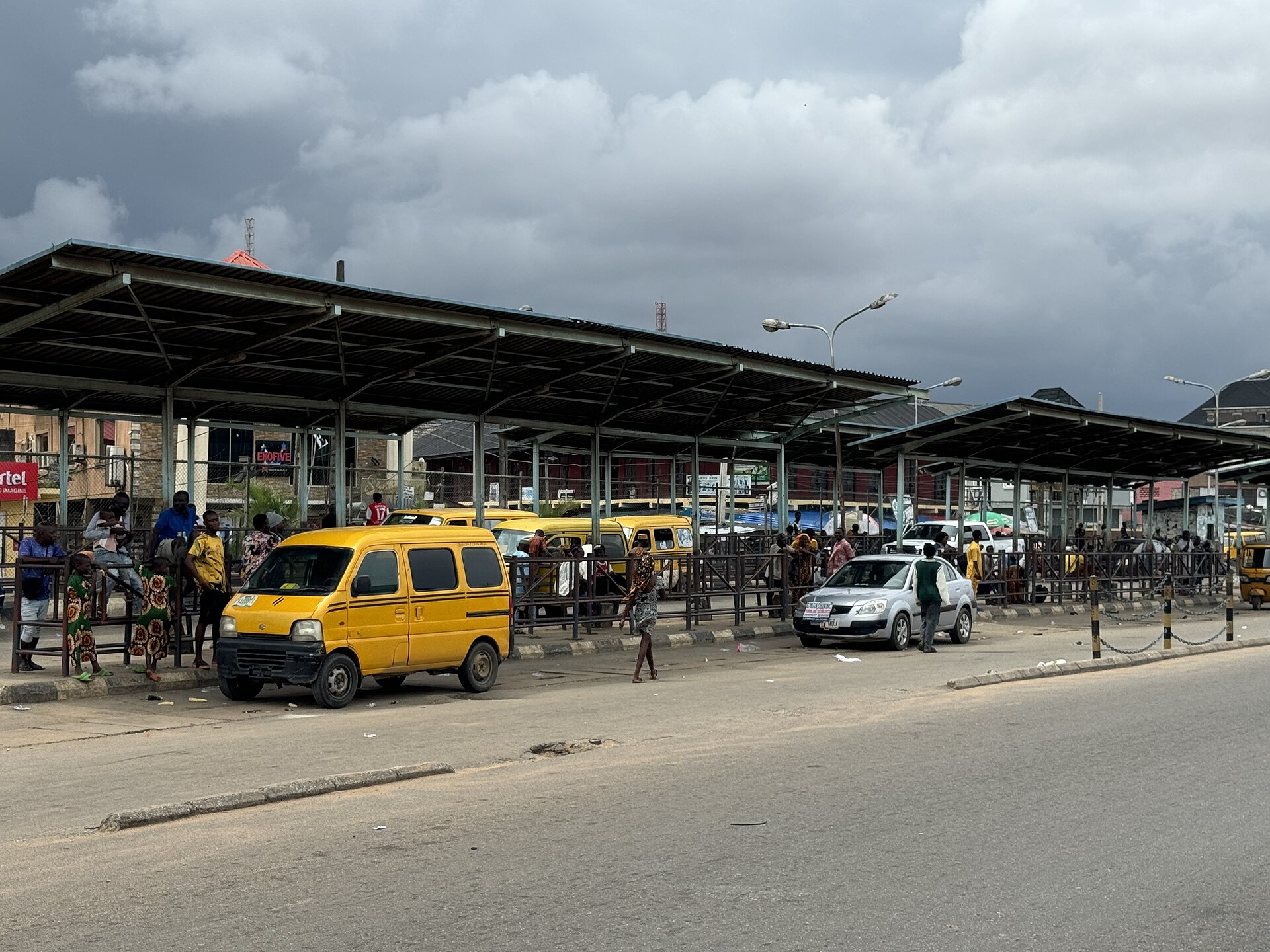
Population growth can hide the weakness. The bank says towns with poor locations can keep growing through births alone while productivity stalls, and it notes that the share of people in Sub-Saharan Africa living in towns fell from 22% to 18% between 2005 and 2025 as some towns became cities or merged into them.
Towns are numerous and young, with 15,162 counted in 2025 and about 56% of them formed since 2000. They hold about 245 million people today, and the bank projects nearly 404 million by 2050, when their built-up area will have more than doubled.
The bank does not argue that urbanisation fails. It recommends a selective approach, with investment in towns along transport corridors and near other economic activity, and schools and health care in isolated towns so that residents can reach better labour markets elsewhere.
Mark Roberts, the bank’s lead urban economist and lead author of the report, said in the bank’s press release that growth will deliver only if cities have the institutions and resources to manage it. “Stronger urban governance, more predictable financing, and greater accountability are essential,” he said.
The survey sample leaves large parts of the continent untested, and the town figure is an average that hides sharp differences between places. The bank itself says outcomes differ widely across towns and calls for a differentiated approach.
Chapter 1 also defines towns differently from the 15,162 count in chapter 4, so the two sets of figures are not directly comparable.
Related coverage: the World Bank’s growth forecast for Africa and Liberia’s jobless growth. More from Africa coverage.
Frequently Asked Questions
Does this mean towns are poorer than villages everywhere in Africa?
No. The result is an average across 13 countries, and the bank stresses that outcomes differ sharply from one town to another. It also leaves out North Africa, which the report does not cover.
What does the World Bank want governments to do?
It wants governments to back towns on transport corridors with roads, planning and finance, and to help people in isolated towns reach jobs elsewhere through schools and health care.
How does the bank define poverty in this comparison?
It counts people living below a fixed daily amount, adjusted for what money buys in each country, so that figures can be compared across borders.
Sources: World Bank Group, Sub-Saharan Africa’s Urban Awakening: Catalyzing Economic Growth and Job Creation (report, chapters 1 and 4, and press release of 29 October 2026), https://www.worldbank.org/en/publication/africa-urban-awakening.
This article was produced by The Rio Times’ automated AI newsroom. Editorial responsibility: Matthias Camenzind, Publisher and Editor-in-Chief. The Rio Times also runs Ask Rio Times, which answers from 100,000+ of our own articles, the daily Latin America Power Map, and prediction-market odds on elections and markets.. How we use AI · Report an error