Modern Art Museum Hosts 36th Panorama of Brazilian Art, Theme is “Sertão”
RIO DE JANEIRO, BRAZIL – The 36th edition of the exhibition, inaugurated on Saturday, August 17th, at the Museu de Arte Moderna (Modern Art Museum — MAM), in Parque Ibirapuera, São Paulo, is entitled “Sertão” (Backlands).
The concept is based on the etymology of the word that, according to curator Julia Rebouças, goes beyond its most common use that associates the term with the semi-arid Northeast.
“This concept comes from my prior research project. I’m from Sergipe, I’ve lived in and know part of this region that we regard as a synonym of the “sertão”, the semi-arid interior of the Northeast”, she explained on the source of reasons for the exhibition’s concept.

“Sertão is not exactly a territory, it is not a region, it is not a climate, it is not a biome, it is not a Brazilian dry forest,” said Julia. The meaning of the word, according to her, is much broader. “This territory is opposed to the coast, inland, uncolonized, which has not yet been cleared. This land that we have not yet reached.”
Based on this, the curator started to look for works that addressed the topic. Early career artists were selected with an established trajectory in various styles such as painting, sculpture, photography, video, and installation.
Experimentation
Among the common points shared by the artists present at the show, Julia emphasizes the need for experimentation and the presentation of specific proposals.
Some works, such as Ana Lira’s, discuss the relationship between humankind and nature. With a photographic production and publications portraying collective construction processes, the artist from Pernambuco followed the work of farmers experimenting in the semi-arid Northeast.
However, some proposals go through very different situations. “Many artists express the need to rejoice, to celebrate. Many of them speak of a denial of dominant systems of knowledge or power, not expecting resolutions to come from above, creating paths from existing conditions,” says the curator. The central point, she says, is the real impact on the world.
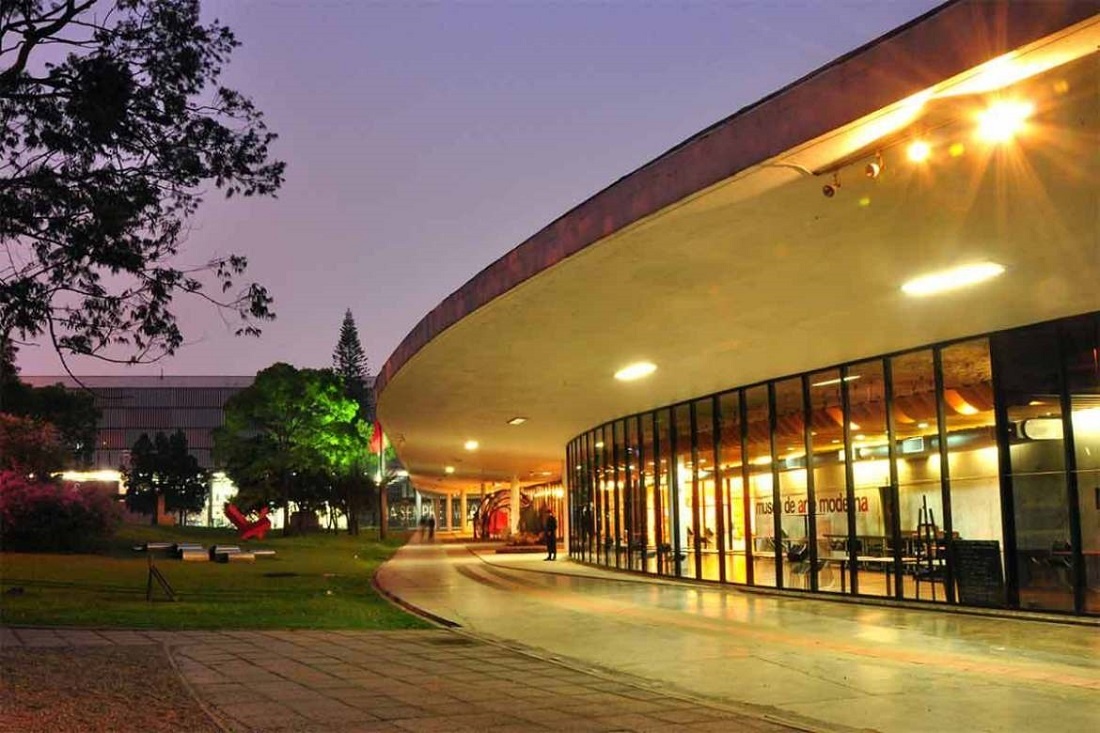
Public space is another mark that the curator identifies in most projects. “Understanding the shared space as the location where this new socialization takes place. There’s much of the streets and the city in the exhibition,” she said.
Raphael Escobar, who works in contexts of social vulnerability, as street dwellers and youths in conflict with the law, is part of this urban reading.
From essays conducted with the help of drug users from various parts of Greater São Paulo, the artist’s work identifies the adulterated materials used in blends made by traffickers into illicit substances sold in the metropolis.
The work explains how the risks of these contaminants increase according to the social class and purchasing power of drug users.
Indigenous peoples
Entertainment, culture, and politics are intertwined in the material developed by “Rádio Yandê”. Founded in 2013, the indigenous radio station broadcasts a program to inform native peoples and contribute to the training of non-indigenous people.
The content includes the contemporary musical production of various peoples, many of whom express themselves through hip hop.
Within a similar context, the “Fulni-ô” Film Collective presents an audiovisual production on the struggle of the Fulni-ô people in their territories in the semi-arid part of Pernambuco.
More: Brazil news in English, every day from The Rio Times.
This article was drafted with automated assistance and reviewed before publication. How we use AI · Report an error · Editorial responsibility: Matthias Camenzind, Editor-in-Chief