Zambia Tells UAE Investors Inflation Kept Falling Through Its Election
Zambia · ECONOMY
Key Facts
- —The country Zambia is a landlocked southern African nation of about 22 million people. Its economy, about US$29 billion in 2025, is slightly smaller than Iceland’s.
- —Why it matters Copper earns most of Zambia’s export income. The country defaulted on its foreign debt in 2020, then restructured it with creditors including China.
- —Why now President Hakainde Hichilema won a second term in the 13 August election and is courting Gulf capital for mines, power and hospitals.
- —What happened In Abu Dhabi on Tuesday, 29 September, Hichilema told investors inflation kept falling through the election. It reached 6.1% in September.
- —The numbers Zambian and UAE parties signed memoranda of understanding worth more than US$2.1 billion, led by a US$2 billion medical city planned for Lusaka.
- —What it means for you Slower inflation makes costs easier to plan for firms and residents. But the Abu Dhabi deals are non-binding, and power shortages remain the main constraint.
- —Still open Whether the pledges become projects, and whether Zambia agrees a new International Monetary Fund (IMF) programme by the end of 2026, as its finance minister hopes.
Zambia inflation kept falling through the August election, President Hakainde Hichilema told investors in Abu Dhabi. He pitched his copper-rich country as a steady home for Gulf capital.
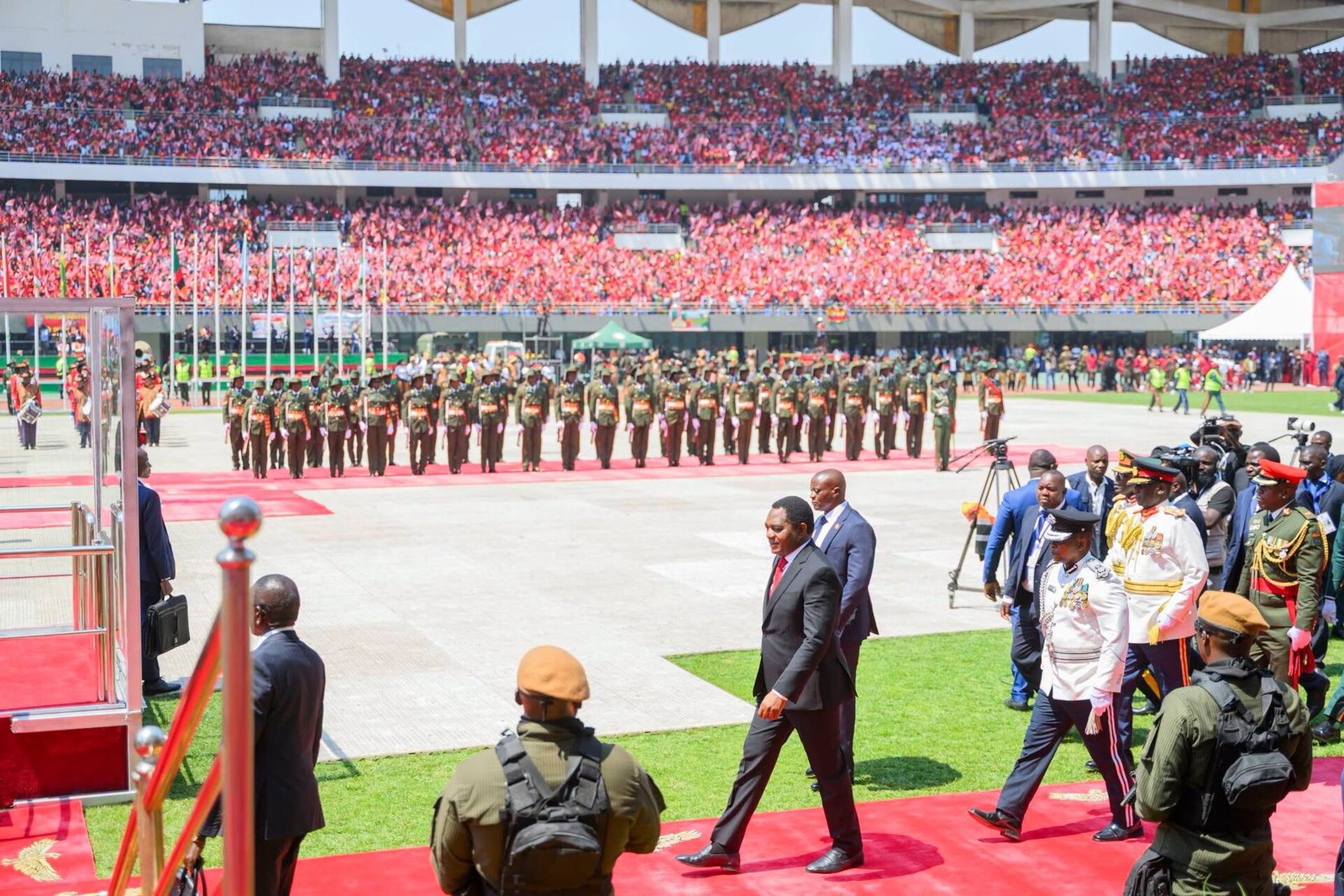
Zambia is a landlocked country of about 22 million people in southern Africa and one of the continent’s biggest copper producers. Its president, Hakainde Hichilema, won a second five-year term in the 13 August election with about 60% of the vote.
On Tuesday he took his economic record to a Zambia–UAE Business Forum in Abu Dhabi, capital of the United Arab Emirates (UAE). He said inflation kept falling during the campaign, as deals worth more than US$2.1 billion were signed.
The inflation record behind the pitch
Official Zambia inflation figures from the Zambia Statistics Agency (ZamStats) put the annual rate at 6.1% in September 2026. That was down from 6.2% in August and 6.5% in July.
Business media described the September reading as the lowest in about eight years. In mid-2021, before the previous election, inflation stood above 24%.
Hichilema argued that the trend proved his government stayed disciplined in an election season. Parliament and the cabinet had been dissolved ahead of the vote, leaving him to run government largely alone, he said.
Falling inflation means prices are rising more slowly, not that they are falling. Food inflation eased to 5.8% in September from 6.0% in August, according to ZamStats, the national statistics office.
Finance Minister Situmbeko Musokotwane said on Friday that the slowdown meant the rise in the cost of living was being arrested. ZamStats also reported that the economy grew 7.2% in the second quarter of 2026.
What was signed in Abu Dhabi
The UAE president, Sheikh Mohamed bin Zayed Al Nahyan, invited Hichilema for a two-day working visit on 29 and 30 September. It included bilateral talks, the business forum and meetings with Emirati investors.
Memoranda of understanding worth more than US$2.1 billion were signed at the forum, the state broadcaster ZNBC reported. Memoranda are statements of intent, not binding contracts or committed funding.
The largest is a US$2 billion deal with DIHAD Sustainable Project Management, a UAE firm, for a medical city in Lusaka. Health Minister Roma Chilengi signed it.
The Health Ministry said the project would include a national paediatric heart centre and a kidney transplant centre. The aim is to cut the number of Zambians travelling abroad for complex treatment.
Copper needs power
Hichilema used the forum to link Zambia’s mining ambitions to its energy problem. He said producing three million tonnes of copper a year would require about 8,000 megawatts of electricity.
Zambia relies heavily on hydropower, and a severe drought in 2024 caused long daily power cuts. Power supply is the central test of whether investment pledges turn into production.
Gulf capital is already in copper: Abu Dhabi’s International Resources Holding bought a majority stake in Mopani Copper Mines in 2024. Hichilema met its chief executive during the visit, Mwebantu reported.
The meeting came as ZCCM Investments Holdings, Zambia’s state mining company, accused IRH of breaching the Mopani deal, Bloomberg reported. Its 18 September letter warned it could pursue contractual remedies if talks fail.
Debt, ratings and the International Monetary Fund
Zambia defaulted on its sovereign debt in 2020 and later restructured it. S&P Global Ratings lifted the country out of default status in November 2025.
Its last International Monetary Fund programme ended in January 2026 after disbursing about US$1.7 billion, Reuters reported. The IMF is the Washington-based lender of last resort to governments.
Musokotwane told Reuters in July that he hoped to agree a new IMF programme before the end of 2026. He said some investors feel more comfortable when such a programme is in place.
Hichilema reappointed Musokotwane as finance minister in September after the election. Investors read that as a sign of policy continuity.
Copper, China and the Gulf
The IMF has warned that geopolitical fragmentation and weaker global demand could depress copper prices. That would hit Zambia’s export earnings, public finances and the investment case Hichilema is making.
China remains a major creditor and mining investor, while Western governments back rail links to export Zambian copper. Gulf states are now adding their own money to the mix.
For readers tracking the intersection of money, power and minerals, the Zambia–UAE moment fits the pattern covered in Africa: The New Scramble.
What to watch next
The immediate test is whether the memoranda signed in Abu Dhabi become binding contracts. Investors will look for timelines, financing structures and power supply guarantees.
The central bank, the Bank of Zambia, is expected to weigh another interest-rate cut after the latest inflation data, Bloomberg reported. Lower rates would ease borrowing costs for firms.
Copper prices remain the wildcard. If global demand weakens, Zambia inflation data will matter less than the strain on export earnings and public finances.
Frequently Asked Questions
What did Hakainde Hichilema tell UAE investors about Zambia inflation?
He said Zambia kept inflation falling through the August election, showing discipline in an election season. Official data show annual inflation fell from 6.5% in July to 6.1% in September 2026.
How much were the agreements signed in Abu Dhabi worth?
Memoranda of understanding worth more than US$2.1 billion were signed at the Zambia–UAE Business Forum on 29 September. The largest is a US$2 billion plan for a medical city in Lusaka. Memoranda are not binding contracts.
Why does copper matter to Zambia’s public finances?
Copper earns most of Zambia’s export income. The IMF has warned that geopolitical fragmentation and weaker global demand could depress copper prices, which would strain public finances.
Does Zambia have an IMF programme?
Its last IMF programme ended in January 2026 after disbursing about US$1.7 billion. Finance Minister Situmbeko Musokotwane hopes to agree a new one before the end of 2026.
Connected Coverage
Sources
- diggers.news
- diggers.news
- diggers.news
- diggers.news
- mwebantu.com
- diggers.news (Bloomberg)
- polity.org.za (Reuters)
- reuters.com
- imf.org
- worldbank.org
This article was produced by The Rio Times’ automated newsroom system. How we use AI · Report an error
In depth
LatAm Markets: Live Signals → — real-time movers, turnover leaders and FX across Latin America.
Read More from The Rio Times