Madagascar Minister Meets Starlink as Internet Price Cut Strains Networks
Madagascar · EXPAT
Key Facts
- —The country Madagascar is a large Indian Ocean island off south-east Africa with about 33 million people. Its economy, about US$20 billion a year, is smaller than Vermont’s.
- —Why it matters Only about one person in five uses the internet. The ITU, the UN telecoms agency, says mobile data there costs three times its affordability benchmark.
- —Why now Cheaper data is driving up traffic. On Monday 28 September, the telecoms minister met Starlink’s owner, SpaceX, in Los Angeles to discuss extra capacity.
- —What happened Under a December 2025 deal, a 1,000-ariary (about US$0.23) bundle grew from 200 MB to 1 GB, half for night-time use.
- —Who is involved The three dominant operators, Yas (formerly Telma), Airtel and Orange, and the Ministry of Digital Development, Posts and Telecommunications.
- —What it means for you Visitors and residents get more data for the same money. The government itself warns of congestion, especially in the capital, Antananarivo.
- —Still open No Starlink agreement was announced. New fibre routes are still being built, and each operator sets the size of its own price cuts.
Madagascar’s push for cheaper mobile data is raising usage faster than its networks can grow. The government is now turning to new fibre and to Starlink to keep connections from clogging.
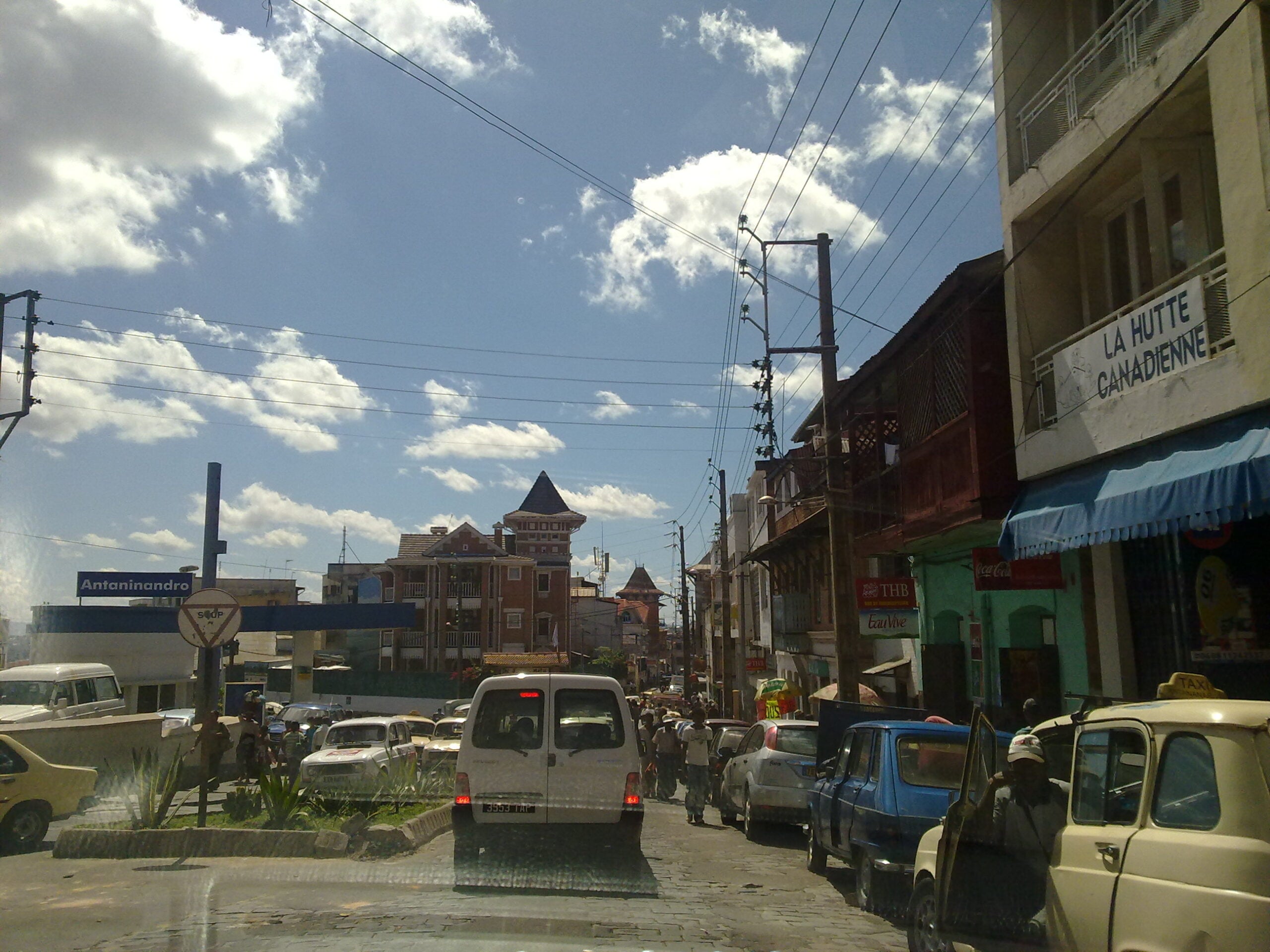
Madagascar is a large island nation of about 33 million people off south-east Africa. It cut the price of mobile data in December 2025 after a standoff with its three main operators.
Nine months on, the Madagascar internet price cut is pushing traffic up faster than networks can expand. On Monday, the telecoms minister met Starlink executives in Los Angeles to discuss extra capacity.
Conversions in this article use 4,400 ariary, Madagascar’s currency, to the US dollar. That is the open.er-api.com rate on 30 September 2026.
Why the minister went to Starlink
Telecoms Minister Mahefa Andriamampiadana met SpaceX and Starlink executives in Los Angeles on Monday 28 September. SpaceX, which runs the Starlink satellite internet service, had invited him.
According to his ministry, the talks covered Starlink’s planned V3 satellites. The ministry says each will receive up to 1 terabit per second of data, ten times the current V2 generation.
The ministry framed the meeting around demand. It said new capacity must absorb growing internet use and improve quality, especially in Antananarivo and other large cities.
No agreement was announced. In late 2025, officials had already cited Starlink’s arrival in the country, licensed in 2024, as a spur to competition.
What the December 2025 deal changed
The government had pushed for months to lower data costs, amid social-media anger at the three dominant operators. They are Yas (formerly Telma), Airtel and Orange.
On 1 December 2025, the Ministry of Digital Development, Posts and Telecommunications said operators had agreed to cut prices that week. Each would set the size of its cut according to its technical and economic capacity.
The clearest result is on entry-level bundles. A package costing 1,000 ariary (about US$0.23) that once gave 200 MB now gives 1 GB, split between day and night.
The ministry says the aim goes beyond a one-off discount. It wants the money people spend on data to buy more communication, knowledge and economic opportunity.
A standoff over taxes
Before the deal, operators asked the state to scrap taxes worth about 215 billion ariary (about US$48.9 million). These included excise duty, a tax on mobile transactions and a tax on cheap phones.
The government first refused and warned of sanctions. The secretary-general of the Ministry of Economy and Finance said losing that revenue would hit education and health budgets.
In December the government softened. It said it would not oppose tax relief as long as the state budget did not suffer.
Operators, for their part, pledged to pay 400 billion ariary (about US$90.9 million) in taxes in 2026. The ministry said any savings from tax relief must go into service quality, network investment and cheaper tariffs.
A history of price controls and reversals
The December deal followed earlier attempts to steer prices. In April 2024, authorities set a floor price of US$0.95 for 1 GB of data, up from US$0.45.
The government scrapped that floor in May 2024. It said operators were keeping prices artificially high, against commitments made during negotiations.
In late October 2025, ARTEC, the communications regulator, urged operators to cut tariffs quickly. It cited many public complaints about the cost of mobile data.
The pressure came during a change of power. A military-led transitional government took over in October 2025 after youth-led protests and the removal of President Andry Rajoelina.
Why cheaper data strains the networks
Cheaper bundles encourage people to stream more video and use more online services. For operators, that means more traffic and a risk of congestion if capacity does not keep pace.
Access is still narrow. The World Bank puts internet use at about 19% of the population in 2024, or roughly one person in five.
Cost remains the main barrier. The ITU found Malagasy users spent 6.28% of average income on mobile internet in 2023, against its 2% affordability target.
Fibre projects already under way
Several projects aim to add capacity on the ground. A public fibre programme known as MRTAM II plans links between Mahajanga, Antananarivo, Antsirabe, Fianarantsoa, Manakara and Taolagnaro.
Orange Madagascar opened a 558-kilometre fibre link between Antananarivo and Mahajanga in December 2025. Airtel holds permits for routes from Antananarivo to Toamasina and from Bongatsara to Antsirabe.
The government is also studying shared infrastructure that several operators could use. It says it remains open to new partners.
The expat read-through
For residents and visitors, the gain is concrete: more data for the same money on entry-level bundles. That matters for remote work, mobile banking and small online businesses.
The risk is quality. The ministry itself flags congestion in Antananarivo and other big cities, so test peak-time speeds before relying on one network.
Satellite service is an option for those who can afford the equipment. Whether Starlink’s next generation reaches Madagascar at scale, and at what price, is still open.
What to watch next
Three things will show whether the Madagascar internet price cut holds. They are the pace of fibre roll-out, any deal with Starlink and the fate of the operators’ tax demands.
Each operator still decides how far to cut. Prices and quality may therefore differ depending on which network a customer uses.
Frequently Asked Questions
When did internet prices fall in Madagascar?
Operators began cutting prices in early December 2025, after a ministry statement on 1 December announced the deal. Each operator set the size of its own cut.
How much cheaper is mobile data in Madagascar now?
On one entry-level bundle, 1,000 ariary (about US$0.23) now buys 1 GB instead of 200 MB. Half of that gigabyte is for night-time use.
Why did Madagascar’s telecoms minister meet Starlink?
Cheaper data is driving up traffic and the risk of congestion. On 28 September 2026 he discussed Starlink’s next-generation satellites with SpaceX in Los Angeles; no deal was announced.
Which operators are involved?
The three main operators are Yas (formerly Telma), Airtel and Orange. Each agreed to lower prices but sets the scale of its own cuts.
Sources
This article was produced by The Rio Times’ automated newsroom system. How we use AI · Report an error
LatAm Markets: Live Signals → — real-time movers, turnover leaders and FX across Latin America.
Read More from The Rio Times