Ecuador Growth Forecast Raised to 2.7% as Trade and Mining Lead
Economy · Ecuador
Key Facts
- —What happened Ecuador’s central bank lifted its 2026 projection to 2.7 percent on 15 September 2026, from 2.5 percent in April.
- —Which industries lead Trade contributes 0.57 percentage points of growth, mining and quarrying 0.46, food manufacturing 0.30 and construction 0.20.
- —How the year is going The economy grew 2.1 percent in the second quarter against a year earlier, but shrank 1.3 percent on the quarter.
- —The catch Mining exports should jump 24.7 percent this year, then rise only 2.7 percent in 2027 as reserves run down.
- —What could reverse it The bank lists mining project uncertainty, insecurity, fiscal pressure and a strong El Niño among the risks to its own numbers.
Ecuador’s growth forecast for 2026 now sits at 2.7 percent, and the central bank says trade and mining do the heaviest lifting. The mines behind it are a shorter story than the number suggests.
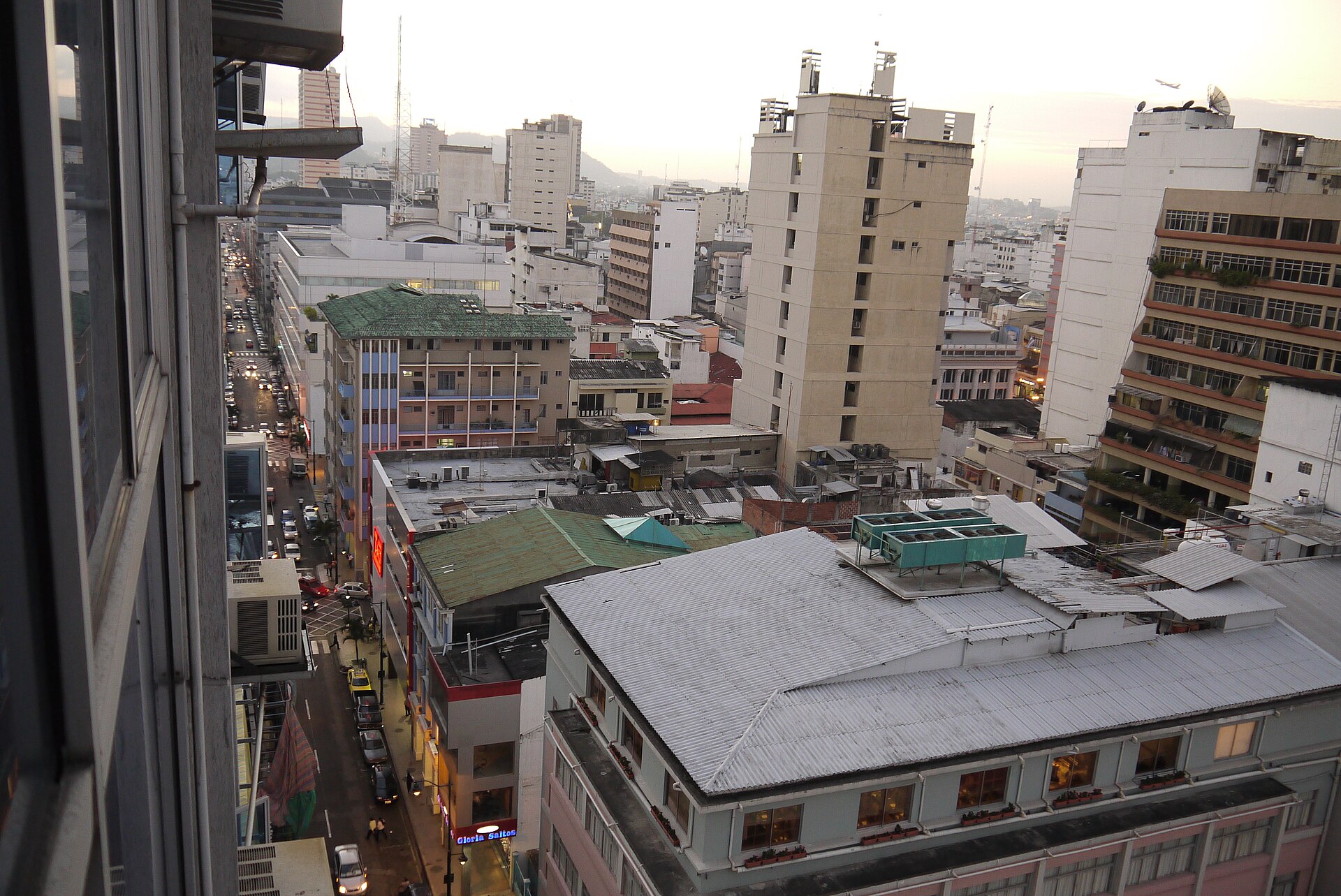
Ecuador’s growth forecast for 2026 has been lifted to 2.7 percent by its central bank. That is up from the 2.5 percent the same bank projected in April 2026.
The Banco Central del Ecuador is the country’s central bank and its official statistics agency. It published the revision on Tuesday 15 September 2026.
Ecuador has used the US dollar as its currency since the year 2000. That removes exchange-rate risk for a foreign investor, and it also removes the cushion a weaker currency can give.
Where the growth is supposed to come from
The forecast sits inside a report called the Programación Macroeconómica 2026-2030. It ranks every industry by how much it adds to the year’s growth.
Trade leads, contributing 0.57 percentage points of growth. Mining and quarrying follow with 0.46 points, food manufacturing with 0.30 and construction with 0.20.
Measured by speed rather than size, the order flips. Mining and quarrying grow fastest at 6.8 percent, ahead of electricity and water supply at 5.8 percent.
Trade itself grows only 3.9 percent in the bank’s projection. It still leads on contribution, because it is a far larger slice of the economy.
A private analyst names the same three broad sectors from different data. The economist Alberto Acosta Burneo, who edits the newsletter Análisis Semanal, calls trade, mining and manufacturing the economy’s hot spots.
His analysis was reported by El Universo on Tuesday 29 September 2026. He works from electronic invoices collected by the tax agency, so he is measuring sales rather than output.
His manufacturing category is the whole of it, not the food branch the central bank singles out. Both readings put trade first by size and mining first by speed.
Mining sales rose 96.9 percent in August 2026, faster than any other branch. Trade sold about US$2,300 million more than a year earlier, the largest gain in cash terms.
What the newest figures actually show
On Friday 25 September 2026 the bank published national accounts for the second quarter. The economy grew 2.1 percent against the same quarter of 2025.
Against the first quarter of 2026, though, it shrank 1.3 percent. Investment fell 4.0 percent over those three months and household spending fell 0.9 percent.
Fifteen of twenty industries grew year on year. Financial and insurance activities led at 12.5 percent, adding about 0.6 percentage points on their own.
A monthly activity index the bank calls the IMAEc rose 7.9 percent in July 2026 from a year earlier. The bank put that down mainly to a recovery in oil activity.
The combined oil and mines sector grew 102.0 percent that month and supplied 4.1 of those 7.9 points. Non-oil activity grew 3.0 percent.
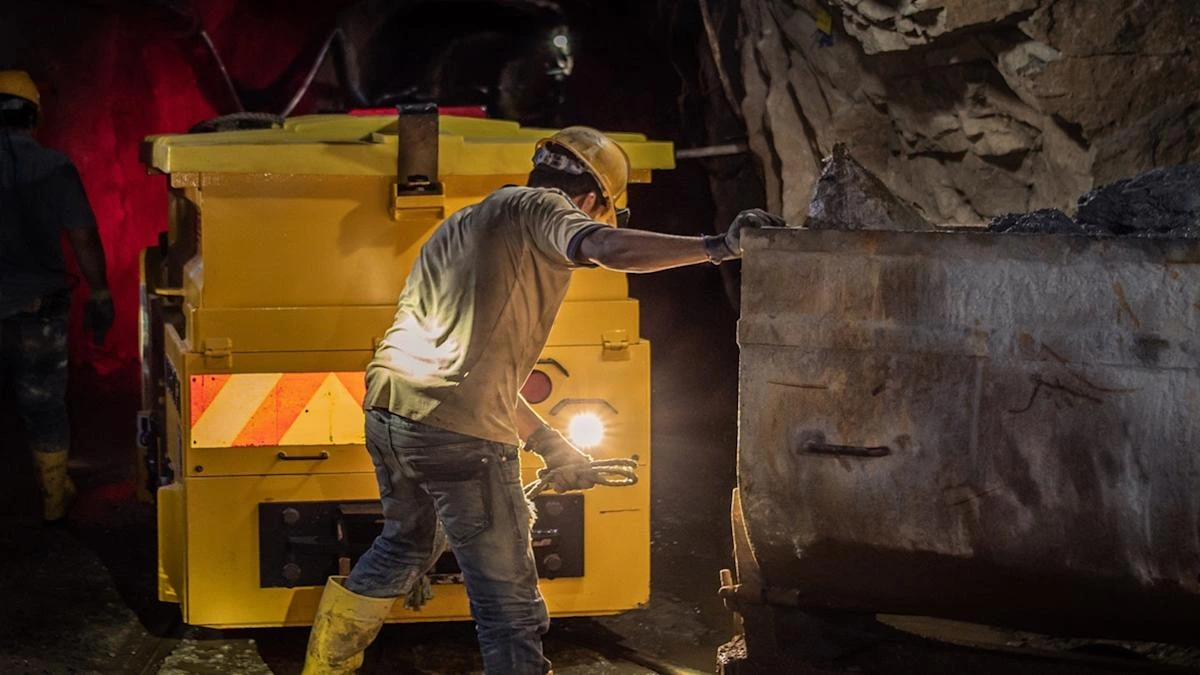
The mining part, with names
Ecuador has two large mines in production, both in the southern province of Zamora Chinchipe. Fruta del Norte produces gold and Mirador produces copper concentrate.
Fruta del Norte is operated by Aurelian Ecuador, a subsidiary of the Canadian company Lundin Gold. Mirador is operated by Ecuacorriente, which is Chinese-owned.
The central bank expects mining exports worth US$5,192 million in 2026, a rise of 24.7 percent. It credits higher output at those two mines and high international prices.
Six further projects sit behind them at various stages. They include Cascabel in Imbabura, Cangrejos in El Oro, Curipamba-El Domo in Bolívar and Warintza in Morona Santiago.
Not all of the six are moving. San Carlos-Panantza has been suspended for years amid social conflict.
The most contested project of all is Loma Larga, in the southern highland province of Azuay. It belongs to Dundee Precious Metals, a Canadian miner.
Ecuador’s energy ministry suspended work there in August 2025 and later withdrew its authorisation, Primicias reported. Technical reports from Cuenca city hall and the Azuay prefecture had warned of risks to the Quimsacocha water sources.
President Daniel Noboa said in September 2025 that he would not continue with the project. Noboa began a four-year term on 24 May 2025, after a shorter term won in 2023.
Primicias described Loma Larga in May 2026 as still caught in a legal, social and environmental dispute. No decision reversing the withdrawal has been reported.
The central bank names the underlying cause in its own report. Projects have run into disputes over missing or insufficient consultation, work in sensitive areas and effects on communities.
Indigenous and environmental organisations filed constitutional challenges against Ecuador’s mining law reform in March 2026. No ruling on those challenges has been reported.
What could tip it the other way
The bank publishes its own list of things that could pull the year below 2.7 percent. Mining project uncertainty is on it, beside insecurity, fiscal pressure and external financing risk.
Violence has eased without going away. Ecuador recorded 5,676 intentional homicides from January to August 2026, down 6.4 percent on the same months of 2025.
Those are interior ministry figures, reported by Primicias on 22 September 2026. Guayaquil and Durán drove the fall, while 81 municipalities recorded more killings than a year before.
Electricity is the risk that has improved most. National generation ran above 3,300 gigawatt hours a month by July 2026, close to record levels, after the shortages of 2024.
Hydroelectric plants supplied 78 percent of that output. That also leaves the system exposed to whatever the weather does next.
The bank also ran an El Niño test, which it calls a sensitivity exercise rather than a prediction. A moderate event would cut 2027 growth by 0.5 percentage points, a strong one by 1.4 points.
By August 2026 the chance of a strong or very strong ocean event was above 90 percent. The bank cited the United States climate prediction centre.
The projection also rests on a price. The bank assumes Ecuadorean crude averages US$75.3 a barrel in 2026, then falls 12.3 percent in 2027.
Fiscal pressure is the quieter risk. Grace periods agreed in earlier debt restructurings expire from 2026, so Ecuador must repay principal as well as interest.
Its creditors include private bondholders, the International Monetary Fund, the Inter-American Development Bank and the World Bank.
How it compares with the outside forecasts
Three institutions have published a 2026 number for Ecuador, and they sit close together. The central bank says 2.7 percent, the International Monetary Fund 2.5 percent and the United Nations body ECLAC 2.4 percent.
The IMF figure comes from its World Economic Outlook of 14 April 2026, an upgrade from 2.0 percent. ECLAC gave 2.4 percent for 2026 in its annual survey, published on 20 August 2026.
ECLAC is the United Nations Economic Commission for Latin America and the Caribbean. It expects the region as a whole to grow 2.2 percent this year.
Its table also puts Ecuador’s 2027 growth at 2.5 percent. The central bank’s own medium-term average for 2027 to 2030 is 2.5 percent.
So the published range for Ecuador runs from 2.4 to 2.7 percent. The country grew 3.7 percent in 2025 on both ECLAC’s and the central bank’s figures, so 2026 is a step down.
The short life of the mining boost
The Ecuador growth forecast leans on mining at exactly the moment mining output is about to flatten. Mining exports rise 24.7 percent in 2026 and then 2.7 percent in 2027, on the bank’s own table.
Fruta del Norte faces reserve depletion from 2027, the report says. What comes after that depends on Mirador holding steady and on projects that have already postponed their timetables.
For a resident or an investor the practical reading is narrow. Ecuador is growing, in dollars, at a pace three separate forecasters now put between 2.4 and 2.7 percent.
Whether the next stage arrives on schedule is a question about courts, consultations and permits. Those are the parts of the story no projection can settle.
More: Ecuador coverage, every day from The Rio Times.
Frequently Asked Questions
What is the Ecuador growth forecast for 2026?
The Banco Central del Ecuador, the country’s central bank, projects growth of 2.7 percent in 2026. It published that figure on 15 September 2026, raising it from the 2.5 percent it had projected in April 2026. Two outside institutions are slightly lower. The International Monetary Fund gave 2.5 percent in its World Economic Outlook of 14 April 2026, and the United Nations commission ECLAC gave 2.4 percent in its annual survey of 20 August 2026.
Which sectors are driving the growth?
The central bank ranks trade first, contributing 0.57 percentage points of growth. Mining and quarrying come second at 0.46 points, food manufacturing third at 0.30 and construction fourth at 0.20. Measured by growth rate instead, mining and quarrying are fastest at 6.8 percent, followed by electricity and water supply at 5.8 percent and construction at 4.8 percent.
Which mines are actually producing in Ecuador?
Two. Fruta del Norte, a gold mine operated by Aurelian Ecuador for the Canadian company Lundin Gold, and Mirador, a copper mine operated by the Chinese-owned Ecuacorriente. Both are in Zamora Chinchipe province in the south. Six further projects are at earlier stages, and two are stalled: San Carlos-Panantza, suspended amid social conflict, and Loma Larga in Azuay, whose authorisation the energy ministry withdrew in 2025.
Does dollarisation change how this growth feels?
Ecuador has used the US dollar as its currency since the year 2000, so there is no exchange rate to move. A foreign resident or investor carries no currency risk on income or savings held there. The other side is that Ecuador cannot devalue to absorb a shock, so adjustment falls on prices, wages and public spending instead. That is part of why the central bank places fiscal pressure on its list of risks.
Sources: Banco Central del Ecuador on the revision to 2.7 percent, the bank’s Programación Macroeconómica 2026-2030 report, Banco Central del Ecuador on second-quarter national accounts, Banco Central del Ecuador on record quarterly exports, ECLAC on its August 2026 regional survey, El Universo on the sales data behind the three sectors, El Universo on the producing mines and the projects behind them, Primicias on the stalled projects, including Loma Larga, Primicias on homicide figures to August 2026, Primicias on the IMF projection of April 2026, Ecuavisa on the challenge to the mining law, France 24 on the 2025-2029 presidential term
Read More from The Rio Times