Colombia IMF Review Sought Early as Debt Nears Its 71% Legal Ceiling
Economy · Colombia
Key Facts
- —What happened Colombia’s government asked the International Monetary Fund on 28 September 2026 to bring forward its regular economic review.
- —How big the gap is The country’s fiscal watchdog projects a 2027 central government deficit near 10% of GDP and net debt around 67.3%.
- —Who is asking President Abelardo de la Espriella, in office since 7 August 2026, blames the hole on the previous government.
- —The catch This is the Fund’s routine Article IV check-up, not a loan, and no financing arrangement has been announced.
- —What comes next The Fund expects a finance ministry delegation in Washington next week; no mission date has been published.
Colombia wants its IMF review brought forward, and has now asked the Fund formally. It is a health check on the public accounts, not a loan.
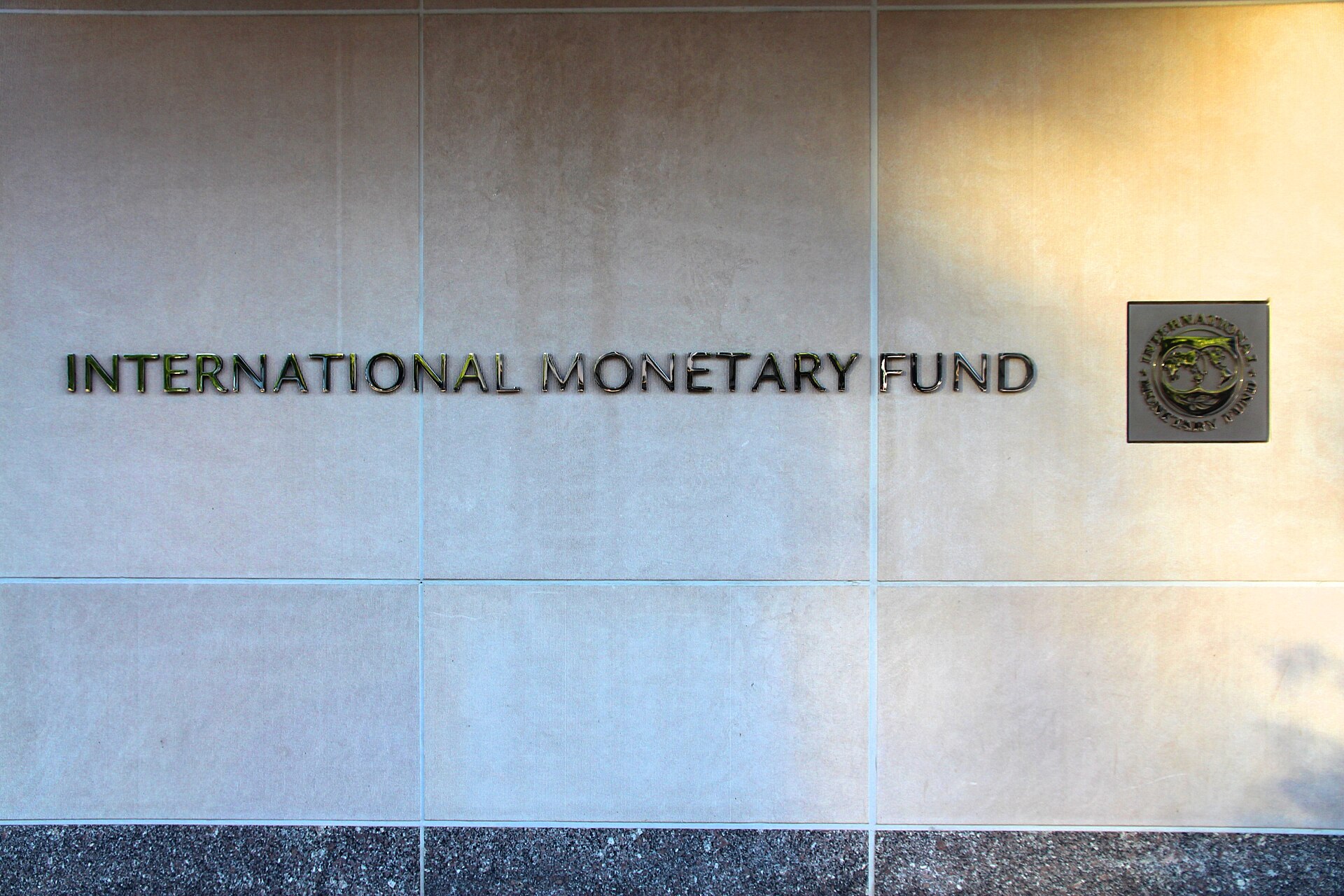
A Colombia IMF review is now formally on the table. The finance ministry asked the International Monetary Fund on Monday 28 September 2026 to bring forward its regular examination of the economy.
The request is for what the Fund calls an Article IV consultation. That is the health check it carries out on each member country, normally once a year.
Colombia is one of Latin America’s largest economies. It exports oil, coal and coffee, and borrows regularly on international bond markets.
What the Colombia IMF review actually is
Miguel Gómez Martínez, the minister of finance and public credit, said the Fund had been asked to come sooner. He called the consultation a key instrument for anchoring confidence, in remarks reported by Infobae.
No loan was requested. Neither the ministry’s statement nor the Fund’s own comments mention an amount, a type of arrangement or a date for one.
Reuters has reported that Colombia and the Fund also discussed possible financing. It cited three people with knowledge of the talks, one saying it was too early to discuss any programme’s size.
The instruction to approach the Fund came in a televised address on Sunday 27 September 2026, which we covered at the time. The ministry’s request is the first formal step that followed.
The arithmetic behind the request
The central government deficit was 6.4% of gross domestic product in 2025, down from 6.7% in 2024. The finance ministry confirmed that outturn in its financial plan in March 2026.
The improvement is narrower than it looks. Stripping out interest payments, the primary deficit widened from 2.4% to 3.5% of GDP over the same year.
The Comité Autónomo de la Regla Fiscal is the independent committee that polices Colombia’s budget rules. For 2027 it sees a total deficit close to 10% of GDP and net debt around 67.3%.
It published those figures on 10 September 2026, putting the 2027 primary deficit, before interest, near 4.5% of GDP.

The rule that returns in 2028
Colombia’s fiscal rule sets a net debt anchor of 55% of GDP and a hard ceiling of 71%. Both were written into Law 2155 of 2021.
The rule’s parametric mechanism is suspended. On 10 June 2025 the government’s fiscal policy council, known as Confis, activated an escape clause for three years.
The committee had advised against it. Its published view was that the clause is not meant for a purely fiscal imbalance.
Next year is the last one the clause covers. The committee calculates that holding net debt at 67.3% of GDP would need a primary surplus above 2% of GDP in 2028.
The government has announced an adjustment worth 2.2% of GDP. About two thirds of it would come from spending measures, according to the committee.
Where the ratings stand
Two of the three large agencies already rate Colombia below investment grade. Fitch Ratings cut it to BB on 16 December 2025, with a stable outlook.
S&P Global Ratings cut Colombia to BB- on 8 April 2026, also with a stable outlook. That is three notches below investment grade.
Moody’s Ratings still has Colombia at Baa3, the lowest investment grade, with a stable outlook set on 26 June 2025. In cutting it from Baa2 the agency pointed to the suspension of the fiscal rule.
What is holding up, and what is not
Not every line is deteriorating. Gross tax receipts to July 2026 reached COP 197.5 trillion (about US$59.0 billion), 10.4% more than a year earlier.
Peso figures here are converted at 3,349.63 to the US dollar. That is the rate certified by Colombia’s financial regulator for 29 September 2026.
The committee that published that figure added a caveat. Without the temporary emergency levies, the take would have fallen 1.2% in real terms.
The foreign side of the debt is lighter. External borrowing fell to 12.6% of GDP in July 2026 as the peso strengthened.
It is now 21.0% of gross debt, the lowest share since the records began in 2001. A stronger peso cuts the local-currency value of that foreign debt.
The strain shows in shorter money. Short-term treasury paper stands at 17.3% of domestic debt, against a five-year average of 12.2%.
Cash is thinner too. The Treasury’s peso holdings closed August at COP 15.1 trillion (about US$4.5 billion), against COP 26.7 trillion (about US$8.0 billion) in July.
Interest is the line that moves fastest. It rose from 1.8% to 2.7% of GDP between August 2025 and August 2026, while primary spending fell.
A contested inheritance
The framing is political as well as fiscal. De la Espriella, a lawyer who took office on 7 August 2026, describes the situation as a crisis he inherited.
His predecessor rejects that account. On 29 September 2026 Gustavo Petro, whose record is under attack, urged him not to hand Colombia to the Fund.
Petro denies leaving the accounts in the red. He attributes the gap to the fuel-price subsidy.
The committee sits between the two. It criticised the previous government for suspending the rule.
It has since welcomed the new administration’s more realistic figures. It also warns that the path drawn for 2027 is worse than the one it replaces.
What happens next
Nigel Clarke, a deputy managing director of the Fund, was in Bogotá from 25 to 28 September 2026. He met Vice-President José Manuel Restrepo, Minister Gómez and the central bank governor, Leonardo Villar.
Clarke said timely and credible action to reduce the imbalances could help strengthen confidence. He also pointed to Colombia’s record of resilience and its independent central bank.
The Fund said it expects a finance ministry delegation in Washington next week. The date of the Article IV mission itself has not been published.
Colombia is not starting from an existing programme. It cancelled its Flexible Credit Line with the Fund on 1 October 2025.
The Fund’s board last discussed the Colombian economy on 29 September 2025. That was the most recent Article IV consultation.
For residents and investors, nothing changes on the ground this week. A Colombia IMF review cannot by itself close a deficit.
What it can deliver is an outside set of numbers placed beside the government’s own.
More: Colombia coverage, every day from The Rio Times.
Frequently Asked Questions
What does the Colombia IMF review involve?
It is the International Monetary Fund’s regular health check on a member country. A staff team visits, reviews the economy and the budget, and reports to the Fund’s board. The board discussed Colombia under Article IV on 29 September 2025. Colombia has now asked for the next one to be brought forward. A consultation carries no money and no conditions.
Has Colombia asked the IMF for a loan?
Not as of 29 September 2026. The finance ministry’s request is for the Article IV mission to come sooner. Neither the ministry nor the Fund has announced an amount, a facility or a timetable for financing. Reuters has reported that possible financing was discussed, citing three unnamed people with knowledge of the talks. A formal negotiation would require a separate staff mission.
What is Colombia’s fiscal rule and why does it matter?
Law 2155 of 2021 sets a net debt anchor of 55% of gross domestic product and a legal ceiling of 71%. The government’s fiscal policy council suspended the rule for three years in June 2025. The independent fiscal committee had objected. It returns in 2028. The committee projects net debt near 67.3% of GDP in 2027, which leaves little room below the ceiling.
What are Colombia’s credit ratings today?
Fitch Ratings has Colombia at BB with a stable outlook, set on 16 December 2025. S&P Global Ratings has it at BB- with a stable outlook, set on 8 April 2026. Both are below investment grade. Moody’s Ratings still has it at Baa3, the lowest investment grade, with a stable outlook set on 26 June 2025.
Sources: Comité Autónomo de la Regla Fiscal, Comunicado No. 37 on the 2027 budget and the deficit path, Comunicado No. 38 on tax receipts, debt structure and the Treasury cash position, Ministerio de Hacienda y Crédito Público on the minister and the budget, Superintendencia Financiera de Colombia, official exchange rate series, IMF Press Release No. 25/324 on the cancelled credit line, IMF country page on the 2025 Article IV consultation, Infobae on the minister’s request to bring the mission forward, Semana on the Fund’s response and the Bogotá visit, El Heraldo on the Washington meetings, La República on the request and earlier Colombian programmes, Reuters on reported financing discussions, Portafolio on the 2025 deficit outturn, Portafolio on the committee’s objection to the escape clause, La FM on the three-year suspension of the fiscal rule, Semana on the debt anchor and the debt limit, El Colombiano on the Fitch downgrade, El Espectador on the S&P downgrade, La República on the Moody’s downgrade to Baa3, El Espectador on Gustavo Petro’s reply
This article was produced by The Rio Times’ automated newsroom system. How we use AI · Report an error
In depth
Read More from The Rio Times