Zambia Election Puts US$13 Billion Debt Recovery to the Test

ZAMBIA · ECONOMY
Key Facts
The date: Zambians vote on 13 August 2026, with President Hakainde Hichilema facing a fragmented opposition led by Brian Mundubile.
Inflation at an eight-year low: Annual inflation slowed to 6.5% in June 2026, its lowest level in more than eight years.
Copper is flat, not climbing: Output reached 447,181.93 tonnes in the first half of 2026, against 445,176.59 tonnes a year earlier — a rise of 0.45%.
The debt that defined the era: Zambia’s restructuring covered roughly US$13 billion of default-era debt after it chose the path of negotiation with creditors in 2021.
The opposition’s line: Brian Mundubile argues the macroeconomic gains have not reached households, asking how the government can boast of reserves “when your people are going hungry”.
What is at stake for investors: Zambia is Africa’s second-largest copper producer, and its rebound has rested on high copper prices as much as on policy.
The Zambia election on 13 August 2026 is, in practice, a referendum on the country’s debt recovery. The macroeconomic numbers have improved sharply since the 2020 default, and the central campaign question is why so few households can feel it.
What the Zambia election is really about
Zambia defaulted in 2020 and then chose a long, disciplined route out: restructuring, fiscal transparency and sustained engagement with international creditors. That process has largely worked on its own terms.
Inflation slowed to 6.5% in June 2026, the lowest reading in more than eight years. Reserves have been rebuilt, and the country has re-established a working relationship with the institutions that matter.
Polls and investors widely expect President Hakainde Hichilema to defeat an opposition that has struggled to unite. His challenger, Brian Mundubile, leads a fragmented field.
The argument is therefore not about the direction of policy. It is about who has felt the benefit of it.
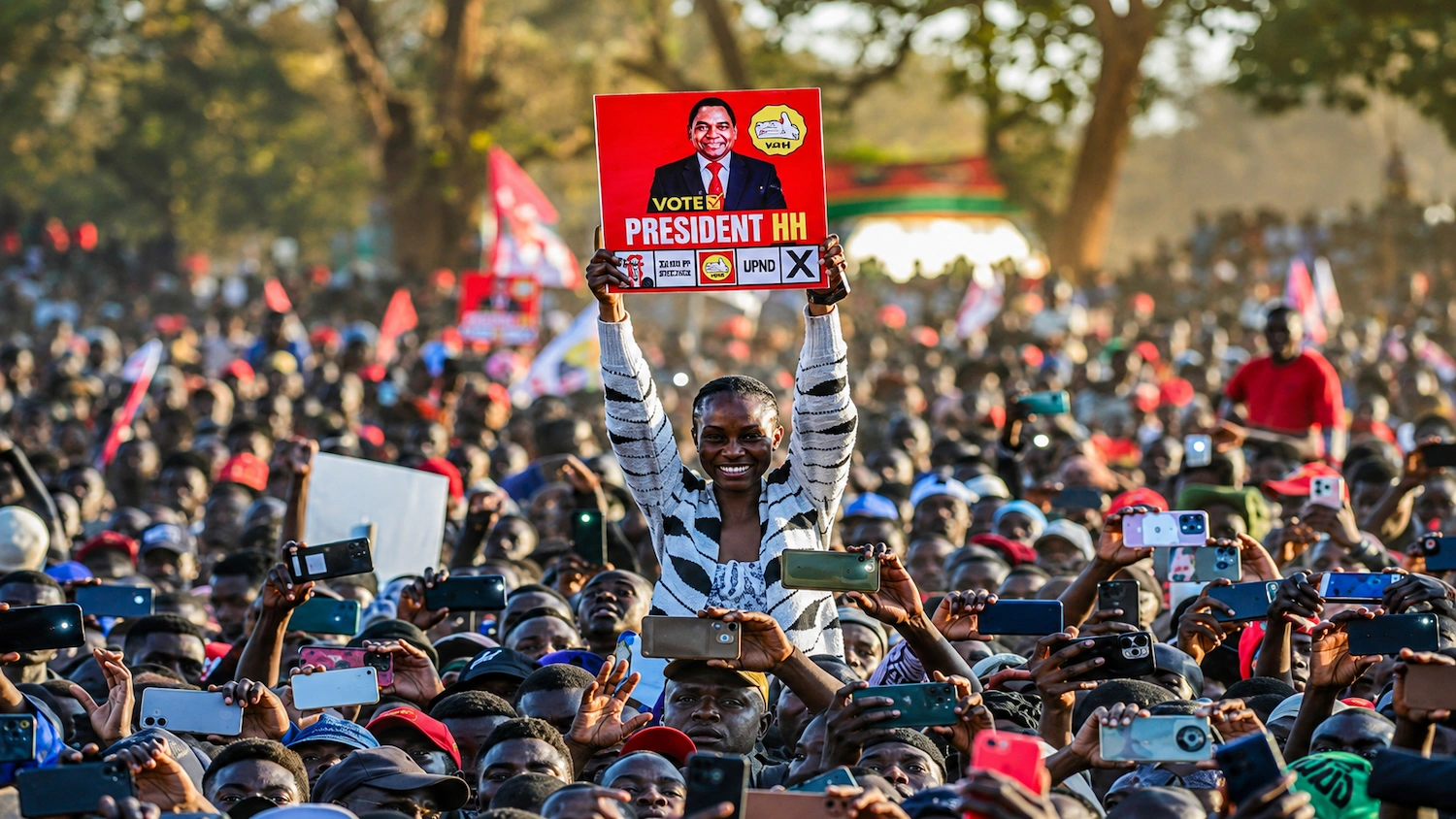
The gap between the data and the kitchen table
Zambia’s recovery reads well in aggregate. Households report something different, and many say they are still squeezed by the cost of living.
That gap is the whole campaign. Mundubile has put it in the bluntest available terms, asking how the government can boast of building foreign reserves “when your people are going hungry”.
It is a familiar tension in post-restructuring economies. Stabilisation shows up first in reserve levels and inflation prints, and only later, if at all, in wages and prices at the market.
For a government seeking re-election, that lag is politically expensive. The improvements are real, but they are not yet the kind voters can spend.
Live Market IntelligenceCommodities — Live Market Board
Rio Times · Live Market Intelligence
Commodities — Live Market Board
-5.38%
| Instrument | Last | Change | YoY | Prev. | High | Low | Volume |
|---|---|---|---|---|---|---|---|
| GOLD | 4,073 | +0.85% | +1.32% | 4,038 | 4,079 | 4,002 | 117,083 |
| SILVER | 54.49 | +0.70% | +17.02% | 54.11 | 54.64 | 52.71 | 34,428 |
| BRENT | 109.58 | -5.38% | +66.99% | 115.81 | 111.92 | 109.00 | 34,268 |
| WTI | 100.12 | -1.61% | +63.30% | 101.76 | 102.82 | 99.77 | 201,568 |
| COPPER | 6.65 | +2.24% | +29.44% | 6.51 | 6.66 | 6.54 | 37,751 |
| LITHIUM | 62.43 | +1.89% | +5.14% | 61.27 | 62.62 | 61.56 | 130,024 |
| IRON ORE | 161.91 | — | +53.37% | 161.91 | 161.91 | 1 | |
| SOY | 1,250 | +0.70% | +17.12% | 1,241 | 1,262 | 1,249 | 156,494 |
| CORN | 450.25 | -1.04% | +5.01% | 455.00 | 455.00 | 449.75 | 143,350 |
| WHEAT | 614.75 | -0.20% | +16.87% | 616.00 | 618.50 | 610.00 | 51,884 |
| COFFEE | 294.35 | -2.19% | -24.54% | 300.95 | 304.90 | 289.05 | 16,022 |
| SUGAR | 19.26 | +0.84% | +33.20% | 19.10 | 19.42 | 19.03 | 74,161 |
| COCOA | 5,581 | +1.66% | -9.72% | 5,490 | 5,622 | 5,444 | 13,619 |
| ORANGE JUICE | 143.20 | +5.45% | -26.07% | 135.80 | 148.80 | 142.50 | 1,394 |
| COTTON | 77.90 | -1.47% | +20.66% | 79.06 | 81.07 | 80.01 | 20,308 |
| BEEF | 230.73 | +0.33% | +0.83% | 229.98 | 231.58 | 229.75 | 13,888 |
| CATTLE | 346.40 | -1.00% | +0.26% | 349.90 | 349.70 | 346.33 | 5,755 |
| USD/BRL | 5.34 | -1.32% | -0.84% | 5.42 | 5.42 | 5.30 | — |
Copper is holding the recovery up, and it is barely growing
Zambia’s rebound has leaned heavily on copper, and specifically on high copper prices. That makes the production numbers the most important economic data in the country.
Output reached 447,181.93 tonnes in the first half of 2026, according to Ministry of Mines and Minerals Development Permanent Secretary Dr Hapenga Kabeta. The comparable figure a year earlier was 445,176.59 tonnes.
That is a rise of 0.45%. Aggregated across large-scale and small-scale mines, it is close enough to flat that the distinction matters little.
The ministry credits Kansanshi, Lumwana, Lubambe, First Quantum Minerals and Konkola Copper Mines with most of the increase. Against a stated national ambition of one million tonnes, the current run rate leaves a wide gap.
The implication is uncomfortable but clear. If the recovery has been carried by price rather than volume, it is exposed to a market Zambia does not control.
The numbers to watch after 13 August
Whoever wins inherits the same arithmetic. Copper carries the economy, and copper volumes are essentially flat.
The stated national ambition is one million tonnes a year. A first half of 447,181.93 tonnes annualises well short of that, which means the target depends on new capacity rather than on better performance from existing mines.
The second number is the remainder of the creditor process. Restructuring roughly US$13 billion of default-era debt was the achievement of the last term, and the parts still outstanding will define the room the next government has to spend.
The third is whether disinflation holds. Reaching 6.5% in June was the lowest reading in more than eight years, but a single print is not a trend, and food and fuel costs can undo it quickly.
None of these depend much on who wins. They depend on copper prices, creditor patience and weather — which is precisely why the campaign has been fought over the cost of living instead.
What the vote means beyond Zambia
Zambia was the first African sovereign to default in the pandemic era, which made its restructuring a test case watched closely by creditors and by other borrowers. How that story ends politically matters well beyond Lusaka.
If a government that delivered textbook stabilisation struggles at the ballot box, the lesson other African finance ministers draw will not be an encouraging one. Orthodox adjustment is difficult to sell when its benefits arrive slowly.
For investors, the immediate questions are narrower: policy continuity, the pace of remaining creditor negotiations, and whether copper volumes finally start to move.
The answer to the first arrives on 13 August. The answer to the third will take considerably longer.
Frequently Asked Questions
When is the Zambia election?
Zambians vote on 13 August 2026. President Hakainde Hichilema faces a fragmented opposition led by Brian Mundubile.
How much has Zambia’s inflation fallen?
Annual inflation slowed to 6.5% in June 2026, its lowest level in more than eight years.
Is Zambia’s copper production growing?
Only marginally. Output reached 447,181.93 tonnes in the first half of 2026 against 445,176.59 tonnes a year earlier, a rise of 0.45%.
How much debt did Zambia restructure?
Zambia’s restructuring covered roughly US$13 billion of debt from the era of its 2020 default.
Why is the election important for investors?
Zambia is Africa’s second-largest copper producer and the first African sovereign to default in the pandemic era, making it a test case for orthodox debt restructuring.
Connected Coverage
Zambia sits at the centre of the competition for critical minerals we track in Africa: The New Scramble. The country’s power build-out is moving faster than its mines, as we reported in Zambia’s jump from 88 MW to 841 MW of solar, while Kenya shows the alternative funding route in its turn towards domestic borrowing.
Sources: Brian Mundubile.
This article was produced by The Rio Times’ automated newsroom system. How we use AI · Report an error · Editorial responsibility: Matthias Camenzind, Editor-in-Chief