USA & Canada Intelligence Brief — Thursday, October 15, 2026
Executive Summary
USA & Canada Intelligence Brief for October 15: Washington escalates 51st state rhetoric, Ottawa suspends trade talks, Ontario warns of permanent tariffs.
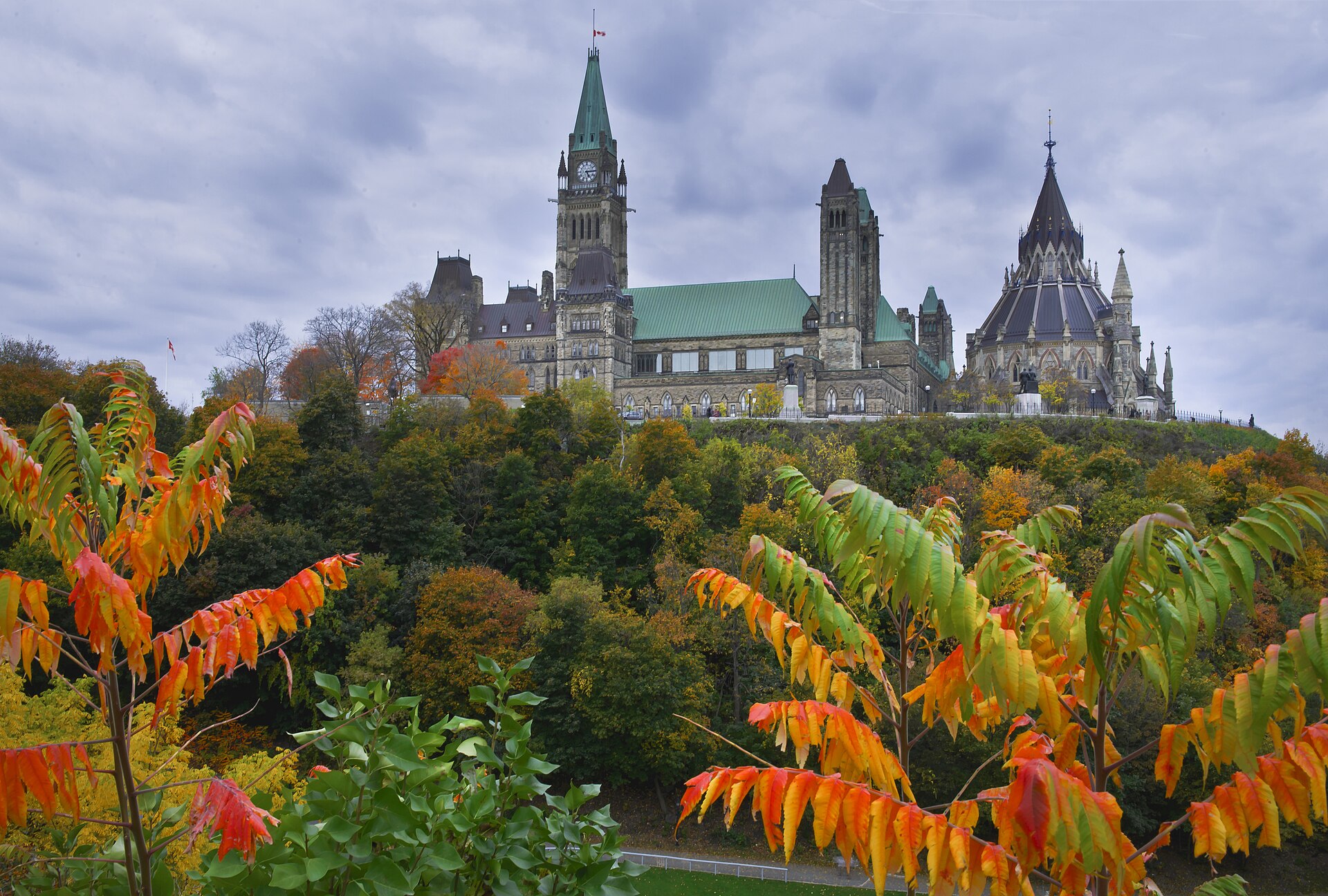
North America’s temper on Thursday is confrontational and increasingly personal, with Washington treating Canada as a political subordinate rather than a sovereign partner. President Donald Trump’s “51st state” remark in Bullhead City, Arizona, on 14 October 2026 and Ambassador Pete Hoekstra’s warning to Canadian politicians to keep out of US midterm politics have fused trade grievances with sovereignty rhetoric. The region feels less like an alliance under strain and more like two governments testing how far coercion can go before the relationship breaks.
The register is blunt, public and designed to mobilise domestic audiences on both sides of the border. Trump renewed complaints about Canadian dairy tariffs and car manufacturing at the Arizona rally, while Hoekstra said US officials were closely watching Canadian politicians for possible interference in the approaching midterm elections. Canadian leaders are responding with symbolic defiance, from British Columbia Premier David Eby’s “never the 51st state” border signs to Ontario Premier Doug Ford’s warning that US protectionism may be permanent.
The through-line is a bilateral relationship being redefined as a contest over political obedience, not merely a dispute over tariffs. Ottawa has suspended formal trade talks since August and is seeking broader cooperation with the European Union, while the Conservative opposition carries its tariff-free auto message directly into Michigan and Detroit. Beneath the official anger, however, Statistics Canada’s reported rise in cross-border travel shows that practical interdependence still exceeds the governments’ willingness to acknowledge it.
Key Facts
Sovereignty rhetoric. Trump said Canada would become the 51st state at a 14 October Arizona rally.
Election warning. Ambassador Hoekstra told Canadian politicians to keep out of US politics on 14 October.
Trade measures. Canadian counter-tariffs cover C$27.6 billion of US imports at 15, 25 or 50 per cent.
US inflation. September CPI rose to 3.7 per cent from 3.4 per cent in August.
Cross-border travel. Canadian residents made 1.9 million return US trips in September, up 6.8 per cent.
Washington: Coercion Becomes The Official Tone
Trump’s Arizona rally remark on 14 October 2026 that Canada would “end up being the 51st state” transforms a trade dispute into a sovereignty challenge. He tied the claim to longstanding grievances over dairy policy, automotive production and the broader bilateral trade relationship, according to AM800 CKLW. The statement signals that Washington is no longer treating Canadian concessions as a negotiating goal but is instead questioning Canada’s political independence itself.
Ambassador Hoekstra reinforced that posture on the same day by saying US officials were closely watching Canadian politicians for possible interference in the US midterm elections. The National Observer reported that Hoekstra characterised the surveillance as close monitoring, while AM800 CKLW said he told Canadian politicians to “keep your nose out” of US politics. For a US reader, the warning matters because it frames Canadian political activity as a domestic security concern, not a foreign-policy difference.
The inflation data released on 14 October adds economic pressure to the political confrontation. The September CPI rose to 3.7 per cent from 3.4 per cent in August, giving Republicans a sharper cost-of-living argument three weeks before the midterms. Washington’s assertiveness toward Canada is therefore not only ideological but also politically useful at home.
Ottawa: Defiance And A Search For Alternatives
Prime Minister Mark Carney’s government is responding to Washington’s pressure with public defiance and strategic diversification. The National Observer reported on 15 October 2026 that Carney ordered Canada’s negotiating team to call off formal trade talks in August after rejecting US demands as unreasonable. The suspension remains in place, leaving the two countries without a formal channel for resolving the tariff dispute.
Ottawa is also broadening its relationships beyond the United States. A draft Canada–EU joint statement being prepared ahead of a summit later in October reportedly includes digital security, critical resources and a possible Canadian water-bomber fleet. The move signals that Canada is preparing for a prolonged confrontation by seeking alternative strategic and commercial partners.
For a US reader, Ottawa’s posture matters because it suggests that Canadian patience with Washington’s demands has limits. The suspension of trade talks and the pursuit of European cooperation indicate that Canada is willing to absorb economic pain rather than accept what it considers unreasonable terms. That stance could complicate US supply chains and diplomatic coordination if the dispute persists.
Ontario: Preparing For Permanent Protectionism
Premier Doug Ford told a Toronto business audience on 14 October 2026 that Canada should not assume the bilateral trade relationship would return to its former condition after a change of US administration. Head Topics reported Ford’s view that US protectionist measures had bipartisan support and could outlast President Trump. The warning reflects a growing Canadian acceptance that the current tariff regime may become structural rather than temporary.
Ontario is also contesting the latest US softwood-lumber duty decision. Ministers Kevin Holland, Mike Harris and Vic Fedeli issued a statement on 14 October opposing the revised 24.75 per cent duty rate, calling the tariffs unjustified and urging their removal, according to Today’s Northumberland. The ministers argued that the duties were increasing costs for American families and businesses, framing the dispute as harmful to both countries.
For a US reader, Ford’s warning matters because it signals that Canadian provincial leaders are preparing their economies for a future without predictable US market access. The softwood-lumber fight shows that even reduced duty rates are politically unacceptable in Ontario, suggesting that any future negotiation will face domestic resistance to compromise.
Michigan: Poilievre Takes The Fight South
Conservative Leader Pierre Poilievre was touring Michigan and the Detroit area on 14 and 15 October 2026, advocating a tariff-free automotive sector, according to AM800 CKLW. His presence places Canadian opposition politics directly inside the US industrial and electoral conversation, challenging the Liberal government’s more confrontational posture. Poilievre is presenting himself as the leader who can restore cross-border economic cooperation.
The tour coincides with Ambassador Hoekstra’s warning to Canadian politicians to stay out of US politics, creating a direct tension between Poilievre’s outreach and Washington’s demand for distance. Poilievre’s message is aimed at American auto workers and executives who depend on integrated supply chains, but it also risks being read in Washington as interference. The episode illustrates how Canadian domestic politics has become entangled with US electoral concerns.
For a US reader, Poilievre’s Michigan tour matters because it previews a possible future Canadian government’s approach to trade. A Conservative leader who campaigns on tariff-free auto trade may be more willing to accommodate US demands, but his presence in the American industrial heartland also blurs the line between negotiation and political campaigning.
British Columbia: Symbolic Resistance To Annexation Rhetoric
Premier David Eby has responded to Trump’s “51st state” rhetoric with a symbolic declaration that British Columbia is “never the 51st state,” according to AM800 CKLW. The border signs are a direct rebuttal to Washington’s sovereignty challenge, turning a provincial identity into a political statement. Eby’s move reflects a broader Canadian mood of defiance against what is seen as American disrespect.
The gesture is small in practical terms but significant in its emotional register. It signals that Canadian leaders are willing to use public symbolism to defend national identity, even as formal trade talks remain suspended. For a US reader, the episode shows how deeply Trump’s rhetoric has penetrated Canadian political culture, transforming a trade dispute into a test of national pride.
The cross-border travel data from Statistics Canada complicates the picture of total rupture. Canadian residents made 1.9 million return trips from the United States in September 2026, an increase of 6.8 per cent from a year earlier, according to Medicine Hat News. The numbers suggest that ordinary Canadians are not yet treating the political conflict as a reason to sever personal and consumer ties with the United States.
What This Means From Latin America
The escalating US–Canada trade conflict has direct implications for North American supply chains that include Mexico and other Latin American economies. Ontario Premier Doug Ford’s emphasis on the integrated automotive sector and Pierre Poilievre’s tariff-free auto message both point to the vulnerability of cross-border production networks. If the dispute persists, firms may reassess sourcing and production across the continent, potentially shifting investment toward Mexico or other Latin American locations.
The reported Canada–EU draft cooperation on critical resources could also intensify competition for minerals and energy investment involving Latin American producers. While no new Latin America-specific measures were announced on 14–15 October, the broader realignment of North American trade relationships creates uncertainty for regional exporters. Latin American governments will be watching whether the US–Canada rupture opens new opportunities or simply adds to global trade fragmentation.
What We Are Watching
- Thursday 15 October, 13:30 Lisbon: US retail sales — September forecast at 0.3 per cent against 1.4 per cent in August; a test of whether consumer spending is holding up amid rising prices and political uncertainty.
- Thursday 15 October, 13:30 Lisbon: US initial jobless claims — forecast at 200,000 against 197,000; a signal of whether the labour market is softening ahead of the midterms.
- Friday 16 October, 14:15 Lisbon: US industrial production — September reading; a measure of manufacturing resilience under tariff pressure.
- Monday 19 October, 13:30 Lisbon: Canada inflation rate — September inflation reading against 3.0 per cent in August; a key input for the Bank of Canada’s policy stance.
- Late October: Canada–EU summit — draft statement covers digital security, critical resources and water bombers; a test of Ottawa’s diversification strategy.
Background: USMCA 2026 Trade Pact Guide.
Background: Oil and Energy in Latin America 2026: A Guide.
Frequently Asked Questions
Why did President Trump call Canada the 51st state?
Trump told supporters at a rally in Bullhead City, Arizona, on 14 October 2026 that Canada would eventually become the 51st state, citing Canadian dairy tariffs, car manufacturing and other trade grievances. The remark was reported by AM800 CKLW and marked an escalation from economic pressure to sovereignty rhetoric.
What did Ambassador Pete Hoekstra say about Canadian politicians?
Hoekstra said on 14 October 2026 that US officials were closely watching Canadian politicians for possible interference in the US midterm elections. He told Canadian politicians to keep their noses out of US politics, according to AM800 CKLW and the National Observer.
What are the current US and Canadian tariff measures?
Canadian countermeasures effective 8 September 2026 cover C$27.6 billion of US-origin imports with surtax rates of 15, 25 or 50 per cent, according to KTVZ.
Is cross-border travel declining because of the trade dispute?
Statistics Canada reported that Canadian residents made 1.9 million return trips from the United States by automobile and air in September 2026, an increase of 6.8 per cent from September 2025. The figures, reported by Medicine Hat News, suggest that political hostility has not yet translated into complete social or consumer disengagement.
This article was produced by The Rio Times’ automated newsroom system. How we use AI · Report an error · Editorial responsibility: Matthias Camenzind, Editor-in-Chief