US Inflation Hits 3.7% as Gold, Silver Fall

UNITED STATES · INFLATION · MARKETS
US consumer prices rose 3.7% in the 12 months to September, faster than economists expected, and US stocks, gold and silver fell after the release on Wednesday. The Bureau of Labor Statistics said prices rose 0.6% in the month, led by a 9.1% jump in gasoline, while core prices, which leave out food and energy, rose 0.3%.
The report raised the odds that the Federal Reserve lifts rates again at its meeting on 27–28 October, a second increase in a row. That matters for anyone with a mortgage, a car loan, savings or a retirement account, and for investors in dollar-sensitive Latin American markets.
Key Facts
- —Headline inflation Consumer prices rose 0.6% in September and 3.7% over 12 months, up from 3.4% in August.
- —Core inflation Prices excluding food and energy rose 0.3% in the month and 2.6% over 12 months, up from 2.4%.
- —Against forecasts Both annual rates came in 0.1 point above forecasts of 3.6% and 2.5%; core prices rose 0.3% in the month against 0.2% expected.
- —Biggest drivers Gasoline rose 9.1% and accounted for more than half of the monthly increase; shelter rose 0.4% and airline fares 1.2%, while food prices were unchanged.
- —Market reaction (12:07 p.m. ET) The S&P 500 was down 0.9% and the Nasdaq-100 1.5%; the iShares Silver Trust fell 6.0% and the SPDR Gold Shares fund 2.0%, while the euro fell 0.7% against the dollar.
- —Fed next meeting 27–28 October, with the decision on 28 October; the target range is 3.75%–4.00% after a quarter-point increase on 16 September.
- —Prediction markets Kalshi gives a quarter-point Fed hike in October 37% and Polymarket 35.5%, up from 20% and 18.5% before the report (14 October, 12:22 p.m. ET).
The Numbers
The Consumer Price Index rose 0.6% in September after 0.4% in August, after adjusting for seasonal swings, and 3.7% over 12 months, up from 3.4%, the Bureau of Labor Statistics (BLS) said at 8:30 a.m. Eastern Time (ET). Core prices rose 0.3% for a second month and 2.6% over 12 months, up from 2.4%, against forecasts of 3.6% for the headline rate, 2.5% for core and a 0.2% monthly core rise.
Pay did not keep up. Real average hourly earnings, which adjust pay for inflation, fell 0.5% in September and 0.7% over 12 months, according to a separate BLS release.
What Drove Prices
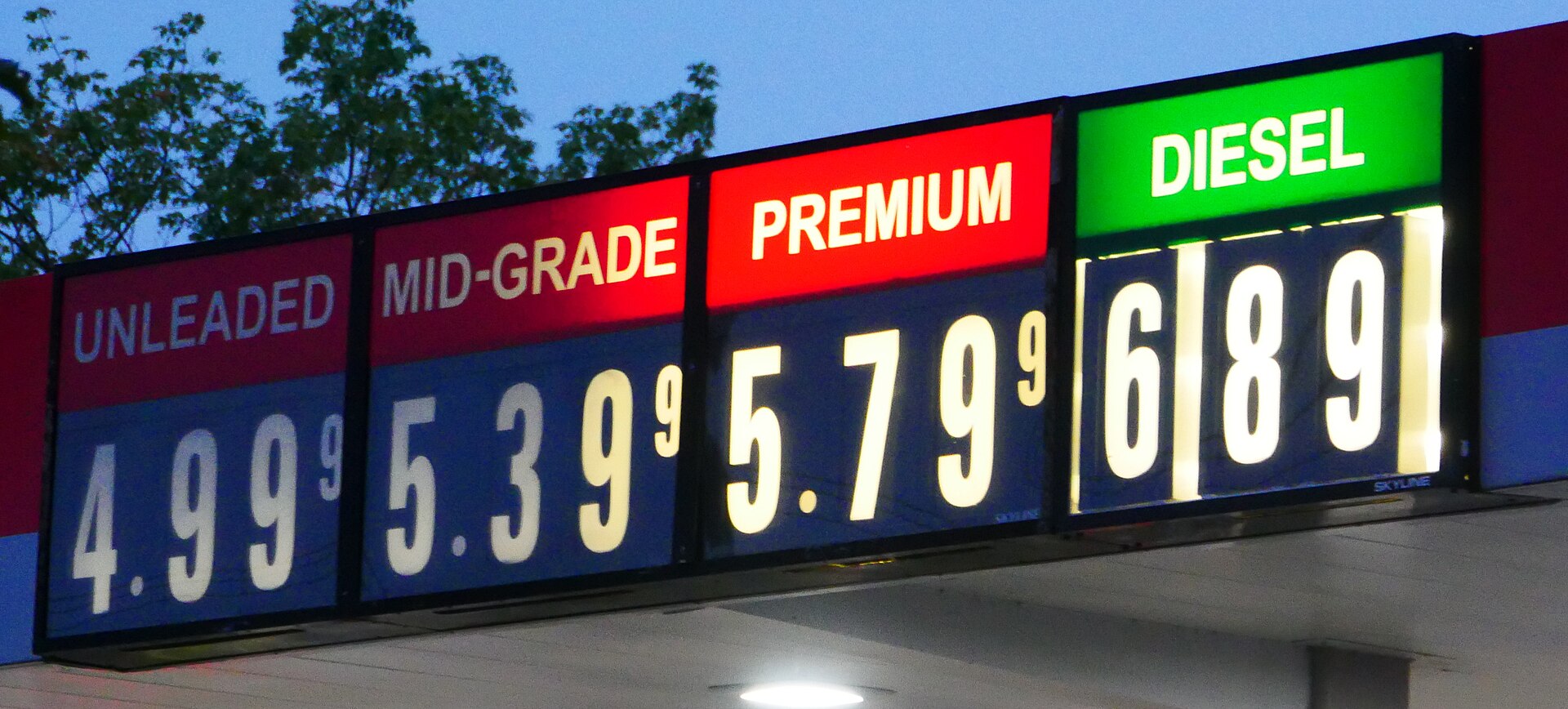
Gasoline was the main driver. Its index rose 9.1% in September and accounted for more than half of the monthly increase, while the energy index rose 5.2% and is up 20.4% from a year earlier.

Shelter, the largest component of the index, rose 0.4% and is up 3.2% over 12 months. Food prices were unchanged on the month, as a 0.1% fall in grocery prices offset a 0.2% rise in restaurant meals.
Core goods prices rose 0.3%, with used cars and trucks up 0.7% and apparel up 0.3%. Household furnishings and operations were unchanged.
Services excluding energy rose 0.4% in September, after 0.3% in August and 0.2% in July, and airline fares rose 1.2% in the month and 22.4% over the year. Jeffrey Roach, chief economist at LPL Financial, said in comments reported by InvestmentNews that “inflation pressures are broadening beyond energy”.
Live Market IntelligenceCommodities — Live Market Board
Rio Times · Live Market Intelligence
Commodities — Live Market Board
-0.03%
| Instrument | Last | Change | YoY | Prev. | High | Low | Volume |
|---|---|---|---|---|---|---|---|
| GOLD | 4,461 | +1.78% | +33.20% | 4,383 | 4,503 | 4,421 | 139,824 |
| SILVER | 65.59 | +1.26% | +73.05% | 64.77 | 66.98 | 64.81 | 46,406 |
| BRENT | 88.88 | -0.03% | +34.42% | 88.91 | 90.07 | 88.12 | 29,713 |
| WTI | 83.11 | -0.11% | +31.57% | 83.20 | 84.35 | 82.40 | 166,848 |
| COPPER | 6.61 | +0.03% | +46.70% | 6.61 | 6.71 | 6.61 | 39,543 |
| LITHIUM | 75.20 | +1.47% | +62.95% | 74.11 | 75.80 | 75.08 | 89,275 |
| IRON ORE | 161.91 | — | +58.10% | 161.91 | 161.91 | 1 | |
| SOY | 1,184 | +3.20% | +17.05% | 1,148 | 1,199 | 1,168 | 163,179 |
| CORN | 480.50 | +10.02% | +29.34% | 436.75 | 480.75 | 459.50 | 341,248 |
| WHEAT | 655.00 | +3.93% | +29.70% | 630.25 | 657.75 | 631.50 | 128,793 |
| COFFEE | 317.25 | -5.51% | +0.67% | 335.75 | 321.20 | 313.55 | 21,747 |
| SUGAR | 16.43 | -1.79% | -3.01% | 16.73 | 17.11 | 16.22 | 171,992 |
| COCOA | 5,719 | +3.18% | -34.96% | 5,543 | 5,779 | 5,574 | 26,773 |
| ORANGE JUICE | 138.55 | -0.47% | -45.38% | 139.20 | 141.05 | 137.50 | 703 |
| COTTON | 85.03 | +2.33% | +26.78% | 83.09 | 82.90 | 81.96 | 16,546 |
| BEEF | 223.60 | -3.93% | -5.18% | 232.75 | 226.40 | 223.00 | 16,126 |
| CATTLE | 339.10 | -3.16% | -1.82% | 350.17 | 345.50 | 338.60 | 10,164 |
| USD/BRL | 5.16 | +0.01% | -5.13% | 5.16 | 5.18 | 5.14 | — |
How Markets Reacted
Stocks fell, and the technology-heavy Nasdaq-100 fell most. At 12:07 p.m. ET, according to market data provider EODHD, the S&P 500 was down 0.9% at 7,732.02, the Nasdaq-100 1.5% and the Dow Jones Industrial Average 0.2%, while the Cboe Volatility Index, a gauge of expected stock swings, rose 6.9% to 16.32.
The dollar gained. The ICE US Dollar Index, which measures the dollar against six major currencies, rose 0.7% to 102.86 at 12:12 p.m. ET, and at 12:22 p.m. the euro was down 0.7% at US$1.1119.
Treasury yields swung. The 10-year yield, as tracked by Cboe’s index, ranged between 5.18% and 5.33% and stood at 5.25% at 12:07 p.m. ET, according to Yahoo Finance, close to the 5.21% the US Treasury recorded for Tuesday.
What It Means for the Fed
The Federal Reserve raised its target range by a quarter point to 3.75%–4.00% on 16 September in a 12–0 vote, saying inflation “remains elevated”. Its next meeting is on 27–28 October, and the last of the year is on 8–9 December.
CME Group’s FedWatch tool, which reads odds from fed funds futures, showed about a 50% chance of an October hike after the release, against about 24% on Tuesday, in readings reported by Seeking Alpha and InvestmentNews. Those readings may have moved since, and prediction markets have given back part of their early jump.
What Prediction Markets Say
- October, Kalshi: a quarter-point hike at 37%, from 20% at 8 a.m. ET and 48% at 9 a.m.; about 10.7 million contracts traded, 1.5 million in 24 hours. Kalshi is regulated in the US by the Commodity Futures Trading Commission.
- October, Polymarket: a quarter-point hike at 35.5%, from 18.5% at 7:55 a.m. ET and a peak of 51.5% at 9:15 a.m.; US$38.8 million traded, US$4.1 million in 24 hours.
- December: a quarter-point hike at the 8–9 December meeting at 80% on Kalshi and 79.5% on Polymarket, from 75% and 75.5% before the report.
- All of 2026: three increases in total, September’s and two more, at about 22% on Polymarket, from 12%, and about 25% on Kalshi, from about 11%.
Read at 14 October, 12:22 p.m. ET. These are bets, not polls and not a forecast by the Fed or by this newsroom, and our morning report on the jump in Fed hike odds tracks the first move.
Why we show this: prediction markets turn real-money bets into a live probability that moves within minutes of the news, which is why investors, campaigns and newsrooms in the United States now follow them closely. We show them next to polls and official results, never instead of them.
Gold and Silver
Silver took the hardest hit. Spot gold, the price for immediate delivery, fell US$85.00, or 2.0%, to US$4,075.10 an ounce at 12:21 p.m. ET and spot silver 6.0% to US$55.49, according to Kitco; our Gold & Silver report of 13 October covers the run-up.
At 12:07 p.m. ET the SPDR Gold Shares fund was down 2.0%, the iShares Silver Trust 6.0% and the VanEck Gold Miners fund 4.6%. Gold pays no interest, so the prospect of higher US rates and a firmer dollar, which makes metal priced in dollars dearer for other buyers, tends to weigh on it.
Latin America
Latin American assets followed. At 12:22 p.m. ET the Mexican peso was 0.7% weaker at 18.49 per dollar and Brazil’s real 0.2% weaker at 5.04, while shortly after noon Brazil’s main stock index, the Ibovespa, was down 0.5% at 205,924 and Mexico’s main index, the IPC, 0.3% at 66,738.
Our analysis: higher US rates raise the return on dollar assets and the cost of dollar debt, which tends to pull money out of emerging-market currencies and shares, including the peso and the real. For the run-up, see our Brazil Market Report of 13 October and our Mexico Market Report of 12 October.
What It Means for US Readers
Borrowing costs are already high. Freddie Mac’s survey put the average 30-year fixed mortgage rate at 7.40% on 8 October, up from 7.28% a week earlier, and regular gasoline averaged US$4.331 a gallon in the week of 12 October, US$1.27 more than a year earlier but 2.3 cents below the week before, according to the Energy Information Administration.
Savers can earn more on deposits while rates stay high, but real hourly pay is 0.7% lower than a year ago. Retirement accounts hold stocks and bonds, and Wednesday’s moves show how quickly stocks and rate expectations can shift around a single report.
What Is Not Known
It is not known whether the Fed will treat a month driven mainly by gasoline as a trend. Policymakers will not see October’s consumer prices before they decide, because that report comes out on 10 November.
Market prices can also reverse quickly. Prediction-market odds of an October hike reached about half within an hour of the release and fell back to just over a third by midday, so the day’s reaction may still change; our Fed and US economy page follows it.
Frequently Asked Questions
What Was US Inflation in September 2026?
Consumer prices rose 3.7% over the 12 months to September and 0.6% in the month, the Bureau of Labor Statistics said on 14 October. Core inflation, which excludes food and energy, was 2.6% over 12 months and 0.3% in the month.
Why Did Gold and Silver Fall After the Inflation Report?
Gold and silver fell as the report raised the chance of another Fed rate increase and the dollar firmed; higher rates and a stronger dollar tend to weigh on metals that pay no interest. Spot gold was down 2.0% and spot silver 6.0% at 12:21 p.m. ET.
Will the Fed Raise Rates in October?
The Fed announces its decision on 28 October, at the end of its two-day meeting. At 12:22 p.m. ET, Kalshi priced a quarter-point hike at 37% and Polymarket at 35.5%, and these prices are bets, not forecasts.
How Does the Inflation Report Affect Mortgage Rates?
Higher inflation can keep Treasury yields and mortgage rates high, because markets expect the Fed to hold rates up for longer. Freddie Mac’s average 30-year fixed rate was 7.40% on 8 October.
Sources: US Bureau of Labor Statistics, Consumer Price Index, September 2026 · BLS, Real Earnings, September 2026 · Federal Reserve, FOMC statement of 16 September 2026 · Federal Reserve, FOMC calendar · CME FedWatch · US Treasury, daily yield curve rates · US Energy Information Administration, gasoline prices · Freddie Mac, Primary Mortgage Market Survey · Kitco, spot gold and silver · EODHD market data and economic calendar (14 October 2026) · Yahoo Finance (Cboe 10-year yield index, ICE US Dollar Index) · Kalshi and Polymarket public market data (read 14 October 2026, 12:22 p.m. ET).
This article was produced by The Rio Times’ automated newsroom system. How we use AI · Report an error · Editorial responsibility: Matthias Camenzind, Editor-in-Chief
LatAm Markets: Live Signals → — real-time movers, turnover leaders and FX across Latin America.