CANADA · ANALYSIS
Key Facts
- —What is happening Canada imposed 15%, 25% and 50% counter-tariffs on C$27.6 billion of U.S.-origin goods effective September 8, 2026, after Washington escalated its own tariffs.
- —Why it matters The measures raise costs for U.S. exporters, Canadian importers and consumers on both sides of the border while the USMCA review remains unresolved.
- —The numbers Canada taxes C$27.6 billion of U.S. goods at 15%, 25% or 50%, while the United States applies 50% tariffs on roughly US$20 billion of Canadian goods as of October 2026.
- —What to watch The USMCA six-year review began July 1, 2026.
- —What it means for you U.S. exporters in steel, aluminum, appliances, furniture, apparel and agricultural equipment face higher landed costs in Canada and may lose market share to non-U.S. suppliers.
Canada’s counter tariffs on US goods now impose 15%, 25% or 50% surtaxes on C$27.6 billion of American imports, effective September 8, 2026. For U.S. exporters, importers and investors, the measures signal that North American trade rules can no longer be taken for granted.
Canada is the United States’ largest export market for many manufactured goods, and the two economies share deeply integrated supply chains in autos, metals, energy and agriculture. This analysis explains the counter-tariff list, the rates, the actors and the economic stakes, drawing on the USA-Canada Intelligence Brief published on October 15, 2026.
How Canada’s Counter-Tariff Regime Works
Canada’s measures are not a blanket tax on all U.S. imports. They are targeted surtaxes applied to specified goods originating in the United States, with rates of 15%, 25% or 50% depending on the product category.
The Department of Finance Canada announced the framework on August 25, 2026, and it took effect at 12:01 a.m. on September 8, 2026. The stated policy is to match the corresponding U.S. tariff rate for rate.
The surtax is calculated on the good’s value for duty, before GST or HST and other domestic taxes. A C$1,000 U.S.-origin product subject to a 25% surtax therefore incurs C$250 in counter-tariff before sales taxes are added.
The Canada Border Services Agency collects the measures at the border. Importers must verify both the product’s origin and its Harmonized System classification, because the official list is organised by tariff item and HS heading.
Goods already in transit to Canada on September 8, 2026, were excluded from the new counter-tariffs, providing a limited transition window for exporters and importers.

The Counter-Tariff List and Exact Rates
The complete Canadian list is organised by tariff item and HS heading. The descriptions below are indicative; the tariff item controls liability for any specific shipment.
The three principal rates apply to different product groups, reflecting the corresponding U.S. duty on Canadian goods.
- 15%: Applied to selected U.S. products covered by the newer retaliation list where Washington’s corresponding tariff is 15%.
- 25%: Applied extensively to products covered by earlier Canadian retaliation and to U.S. autos, parts and other goods facing a corresponding American 25% duty. This category includes appliances, dairy products such as cheese, fish and seafood, and certain steel and aluminum derivatives.
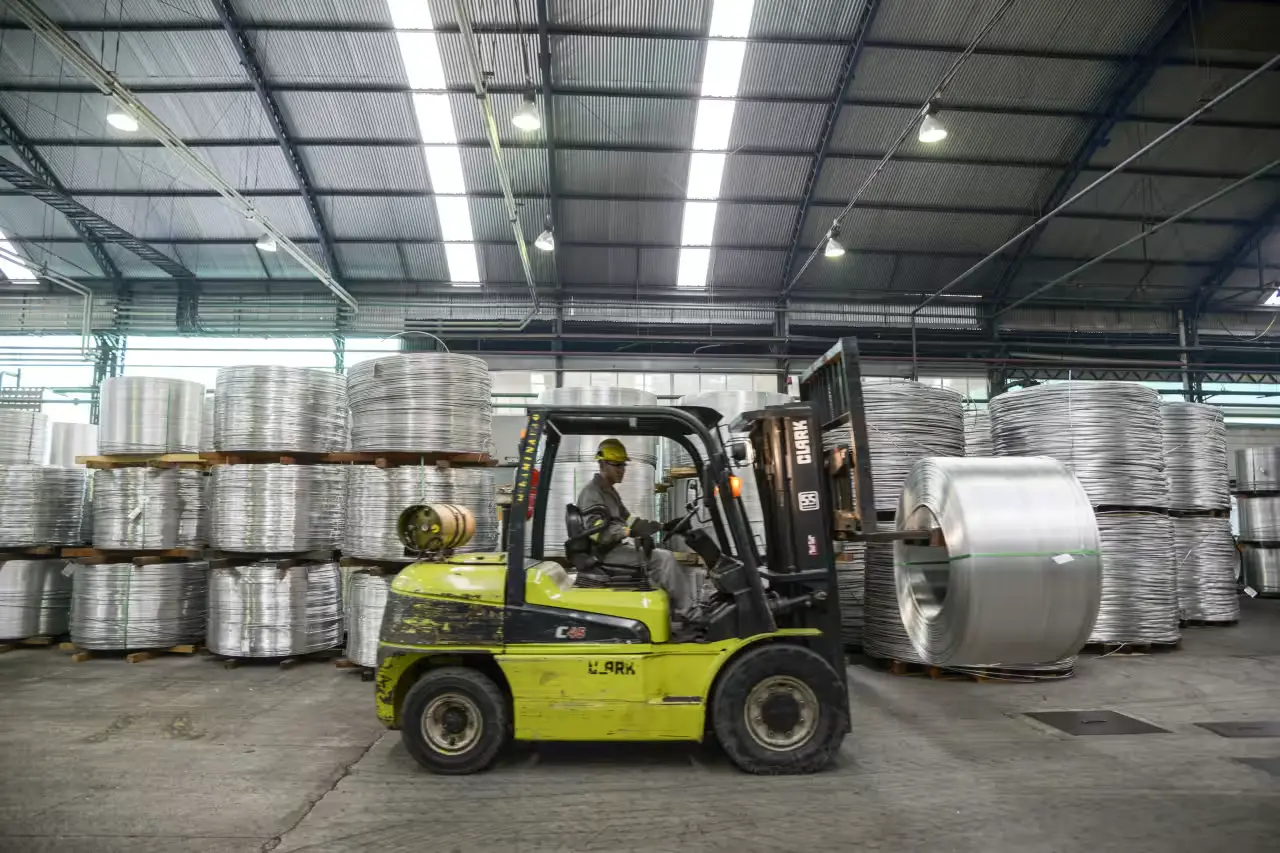
- 50%: Applied to steel, aluminum, copper and related products in categories where U.S. Section 338 exposure reaches 50%. This category also includes furniture and clothing or apparel.
Existing Canadian tariffs on U.S. vehicles continue to apply, while newer measures cover additional categories such as appliances, machinery, paper, plastics and electronics.
The main targeted sectors include steel and aluminum, copper and derivative metal products, dairy, appliances, agricultural equipment, pulp and paper, wood products, plastics, electronics, furniture, apparel, personal-care products, athletic equipment, and selected vehicles and automotive products.
What the United States Imposed First
Washington’s escalation preceded Ottawa’s response.
A 10% Section 301 forced-labour tariff has applied to most Canadian goods since July 24, 2026.
Section 338 tariffs of 50% apply to alcohol, dairy, paper and wood products, selected metals and other goods. The Congressional Research Service says these began applying to Canadian goods on August 22, 2026.
Section 338 tariffs do not apply to goods already subject to Section 232 duties, but they stack with the 10% Section 301 tariff. For Canadian exporters, USMCA compliance still protects many goods from general tariffs, but it does not necessarily protect products subject to sector-specific Section 232 or Section 338 measures.
The practical distinction is crucial for businesses on both sides of the border. A product may qualify for USMCA preference yet still face a sector-specific tariff that erodes its competitiveness.
The Actors and What Each Wants
Canadian officials said last-minute American demands had undermined a nearly completed agreement.
François-Philippe Champagne is Canada’s Minister of Finance and National Revenue; Dominic LeBlanc is Minister responsible for Canada-U.S. Trade. Anita Anand, Minister of Foreign Affairs, handles Canada-U.S. diplomatic relations.
Mexico remains engaged with the United States and Canada through the CUSMA joint review and trilateral trade discussions. Mexico has not indicated it will coordinate a joint retaliation strategy with Ottawa.
Tiff Macklem, Governor of the Bank of Canada, leads the central bank as it assesses the inflationary and growth effects of the tariff dispute.
The USMCA Review and Its Timetable
The review is governed by Article 34.7.
The timetable is straightforward. The three parties held the mandatory joint review on July 1, 2026.
Mexico remains engaged with Washington, pursuing a bilateral negotiating channel while keeping the possibility of a longer agreement open.
For investors, the main risk is not necessarily an immediate collapse of USMCA preferences. It is a prolonged period in which preferential access technically survives while tariffs, rules of origin, annual reviews and sector-specific exemptions remain politically negotiable.

Who Pays and What It Costs
Legally, the tariff is collected from the importer. Economically, the cost is divided among exporters, importers, retailers, workers and consumers.
For a Canadian importer buying a U.S. product valued at C$1 million, a 15% tariff adds C$150,000, a 25% tariff adds C$250,000, and a 50% tariff adds C$500,000. The importer may absorb the charge, negotiate a lower price from the U.S. supplier, switch suppliers or pass the cost to customers.
In integrated sectors such as autos, metals, machinery, food processing and construction, the same product may cross the border several times. This multiplies the effect of duties and customs compliance costs.
The Canadian measures cover C$27.6 billion of U.S. goods, while the United States has imposed a 50% tariff on roughly US$20 billion of Canadian goods in the latest escalation. These figures measure the value of affected trade, not the final economic loss.
The welfare cost is likely to be smaller than the gross tariff bill if companies substitute suppliers, but larger than the customs payment once lost sales, delays, administrative work and investment uncertainty are included.
Effects on U.S. Exporters and Consumers
U.S. exporters face three immediate risks. Higher landed prices make U.S. products less competitive against Canadian, Mexican, European and Asian alternatives. Exporters may cut prices to preserve market share, absorbing part of the tariff. Canadian manufacturers and retailers may redesign sourcing around domestic or non-U.S. suppliers.
The sectors most directly exposed are U.S. steel and aluminum producers, appliance manufacturers, agricultural-equipment companies, paper and pulp suppliers, electronics firms, furniture makers and consumer-goods exporters.
U.S. consumers can also face higher prices even when the tariff is imposed on Canadian imports. The United States relies on Canada for energy-related inputs, metals, lumber, food products, auto components and other intermediate goods.
Tariffs raise the cost of imported inputs; domestic producers may then raise prices because competing imports have become more expensive. The effect is particularly strong in industries with limited short-term alternatives.
Auto production illustrates the problem. A vehicle assembled in North America may contain components crossing the U.S.-Canada-Mexico border multiple times, and a tariff imposed at one stage raises the cost base for later stages.
Mexico’s Position and Latin America’s Stake
Mexico has sought to avoid being drawn directly into the U.S.-Canada confrontation. Mexico remains engaged with the United States and Canada through the CUSMA joint review and trilateral trade discussions.
Mexico’s negotiating priorities include reducing U.S. tariffs on steel and aluminum, reducing the 25% U.S. automotive tariff, preserving preferential access under USMCA, protecting North American manufacturing supply chains, and avoiding rules that would penalise Mexican production using non-North American inputs.
For Latin America, the dispute creates both risks and opportunities. Brazilian, Chilean, Colombian and Peruvian exporters may find openings in Canadian and U.S. markets as buyers seek alternatives to tariffed North American goods.
Yet the broader risk is that a prolonged North American trade conflict dampens growth across the hemisphere and disrupts supply chains that extend well beyond the three USMCA countries.
Scenarios: What Would Stabilise or Tip the Dispute
A stabilising scenario would involve Canada and the United States returning to negotiations before the end of 2026. If Washington moderates its demands and Ottawa restores the suspended talks, a deal could reduce or eliminate the counter-tariffs and provide a clearer USMCA extension path.
A second stabilising scenario would involve Mexico brokering a trilateral understanding. Because Mexico remains engaged with Washington, it could help create a framework that preserves USMCA preferences while addressing U.S. concerns about steel, aluminum and automotive content.
A tipping scenario would involve further U.S. escalation, such as expanding Section 338 tariffs or imposing new sector-specific measures. That would likely trigger additional Canadian retaliation and deepen the economic damage on both sides.
Another tipping scenario would involve the USMCA review collapsing into annual reviews without a long-term extension. That would leave preferential access technically alive but politically uncertain, discouraging investment in cross-border supply chains.
The most consequential risk is not a single tariff rate but the erosion of the assumption that North American trade rules are stable. Investors and companies are already pricing that uncertainty into their decisions.
What It Means for You
If you export U.S. goods to Canada, check whether your products fall under the counter-tariff list. The tariff item controls liability.
If you import Canadian goods into the United States, verify whether your products face Section 232 or Section 338 tariffs. USMCA compliance may protect you from general tariffs but not necessarily from sector-specific measures.
If you are an investor, the key risk is uncertainty over the USMCA review. CUSMA remains in force until 2036 and may be renewed at any time for another 16-year period.
If you are a consumer, expect higher prices on affected goods in both countries. Steel, aluminum, appliances, furniture, apparel and food products are among the categories most exposed.
If you are a business planning cross-border supply chains, consider diversifying sourcing. Canadian manufacturers and retailers are already looking at domestic, Mexican, European and Asian alternatives to U.S. suppliers.
What Is Not Known
It is not known whether Canada and the United States will resume bilateral trade talks before the end of 2026.
It is not known whether the USMCA will be renewed for 10 years, 16 years or some other period.
It is not known whether Mexico will eventually coordinate a joint retaliation strategy with Ottawa. Mexico City has pursued a bilateral negotiating channel with Washington and has not indicated it will join Canada’s countermeasures.
It is not known how much of the tariff cost will be absorbed by exporters, importers or consumers. The final economic burden depends on substitution possibilities, pricing power and supply-chain adjustments.
It is not known whether the remission process will provide meaningful relief for affected importers. Canada’s tariff-remission framework remains available, but requests are handled case by case through the Department of Finance.
What to Watch
Watch for any announcement of resumed Canada-U.S. trade talks. A return to negotiations would be the clearest signal that the counter-tariffs could be reduced or removed.
Watch the USMCA review process. The mandatory joint review occurred on July 1, 2026, and the parties must conduct annual reviews if they do not agree to extend the agreement.
Watch for updates to the Department of Finance Canada’s complete U.S.-products list. The list remains the operative reference for tariff items and rates.
Watch for any U.S. expansion of Section 338 tariffs. Further expansion would likely trigger additional Canadian retaliation.
Watch Mexico’s negotiations with Washington. As the only USMCA partner still actively negotiating with the United States, Mexico’s outcome could shape the broader North American trade framework.
Frequently Asked Questions
What are Canada’s counter tariffs on US goods?
Canada’s counter tariffs on US goods are surtaxes of 15%, 25% or 50% applied to specified U.S.-origin products, effective September 8, 2026. They cover C$27.6 billion of U.S. imports and are intended to match the corresponding U.S. tariff rate for rate.
Which US goods does Canada tax at 50%?
Canada applies a 50% surtax to steel, aluminum, copper and related products in categories where U.S. Section 232 or Section 338 exposure reaches 50%. The 50% category also includes furniture and clothing or apparel.
How much do Canada’s counter tariffs cost U.S. exporters?
Canada’s counter tariffs cover C$27.6 billion of U.S. goods, which is approximately US$20 billion as of October 2026. The actual cost to U.S. exporters depends on whether they absorb the tariff, cut prices or lose sales to non-U.S. competitors.
What is Mexico’s position on the Canada-U.S. tariff dispute?
Mexico has sought to avoid being drawn directly into the U.S.-Canada confrontation. Mexico remains engaged with the United States and Canada through the CUSMA joint review and trilateral trade discussions.
Do Canada’s counter tariffs apply to goods bought in the U.S. but made elsewhere?
No. Canada’s counter tariffs apply to goods originating in the United States, not merely products shipped through the United States. Goods bought in the U.S. but manufactured elsewhere are generally not covered if non-U.S. origin can be demonstrated.
Can importers request relief from Canada’s counter tariffs?
Yes. Canada’s tariff-remission framework remains available for requests for exceptional relief. Requests use the Department of Finance process and the subject line U.S. Remission.
Sources: riotimesonline.com, tradecommissioner.gc.ca, cbsa-asfc.gc.ca, trade.gov, cbsa-asfc.gc.ca, imco.org.mx. Retrieved 15 October 2026.
This article was produced by The Rio Times’ automated newsroom system. How we use AI · Report an error · Editorial responsibility: Matthias Camenzind, Editor-in-Chief