Green Card Holders Held Over Old Records
The Supreme Court has let officers act first and justify later, and families are now living with the result.

Migration: US and Latin America
US border officers are holding green-card holders who return from trips abroad when a records check turns up a criminal case that is decades old. Emiliano Andrade Covarrubias, a 56-year-old Mexican man from Dallas, died on 17 October 2026 in the custody of ICE, the US immigration enforcement agency, after such a stop at Laredo, Texas.
A green card gives its holder, formally a lawful permanent resident, the right to live and work in the United States for good. A US Supreme Court ruling on 23 June 2026 has made it easier for officers to treat those holders as new applicants at the border.
Key Facts
- Who. Emiliano Andrade Covarrubias, 56, died in ICE (US immigration enforcement) custody on 17 October 2026.
- What. Returning green-card holders are held at the border over decades-old criminal cases.
- Law. The Supreme Court ruled 6-3 on 23 June 2026 that officers need no high proof at the border.
- Where. Laredo, Texas, and other US border bridges and airports.
- As of. 24 November 2026, 12:00 GMT.
The Supreme Court has let officers act first and justify later, and families are now living with the result.
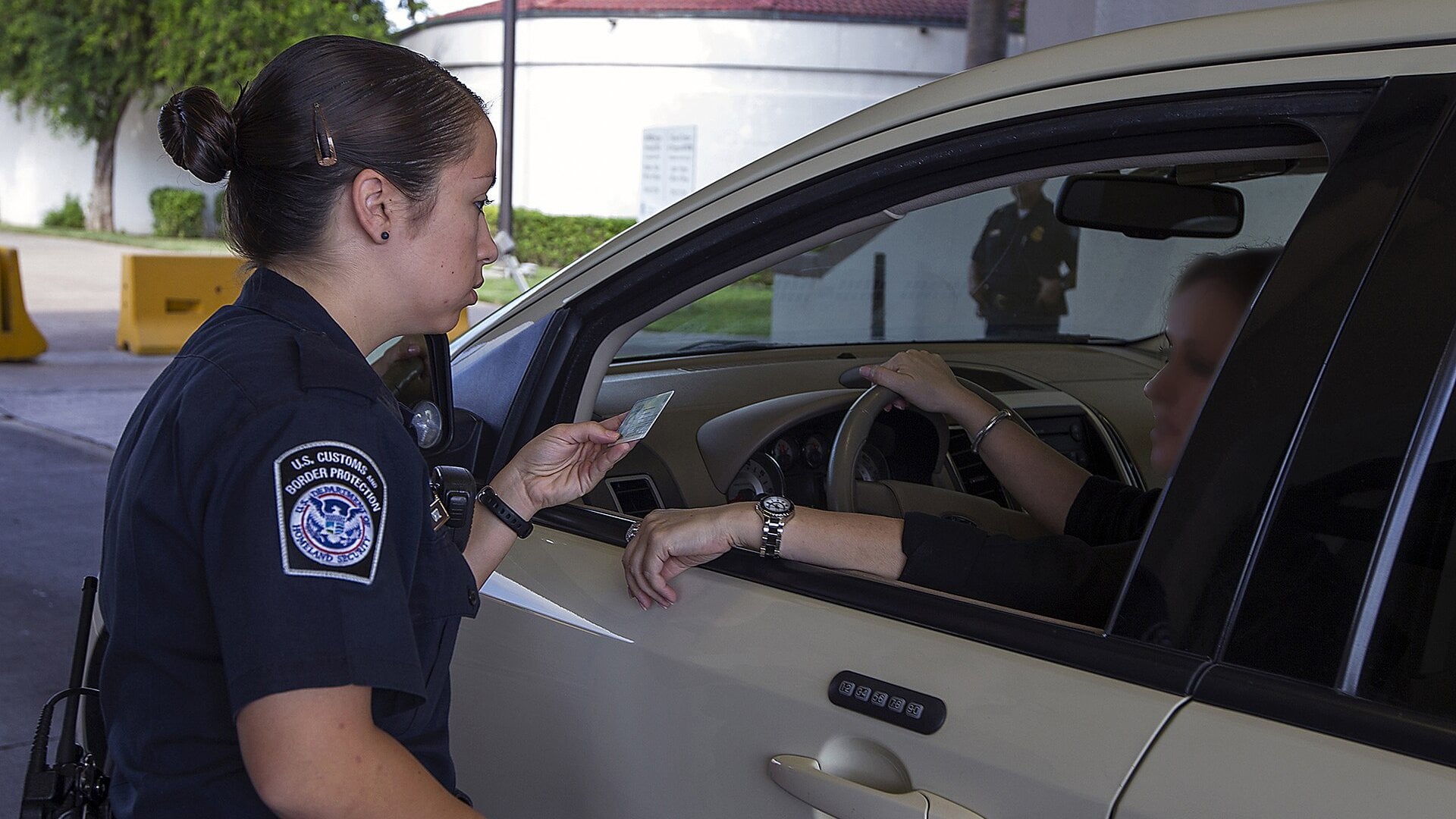
The Immigration and Nationality Act, the main US immigration law, says a returning green-card holder “shall not be regarded as seeking an admission”, as Justice Ketanji Brown Jackson noted in her dissent. The law lists six exceptions, including an absence of more than 180 days and having “committed” a crime involving moral turpitude, a legal label for offences seen as dishonest or seriously wrong.
The case concerned Muk Choi Lau, a Chinese citizen who became a permanent resident in 2007 and was charged in New Jersey on 7 May 2012 with trademark counterfeiting. When he flew back from China on 15 June 2012, an officer let him in on parole, a temporary entry without formal admission, pending trial.
Lau pleaded guilty in 2013, and the Second Circuit, a federal appeals court, later demanded “clear and convincing” evidence of the crime at the border. The Supreme Court rejected that by six votes to three, in an opinion by Justice Clarence Thomas, saying officers make “quick judgments on the spot” and the statute nowhere requires such proof.
The ruling does not strip anyone of a green card, and it did not decide whether Lau’s offence counts as moral turpitude. The Government began removal proceedings against Lau in 2014, and that is the step where guilt and status are decided.
Jackson, joined by Justices Sonia Sotomayor and Elena Kagan, warned of the border stage. “I worry that the Court has now handed the Government a massive blank check,” she wrote, adding that a resident later cleared would have little comfort after “years in legal limbo” or “worse, in detention”.
Andrade Covarrubias was stopped on 26 June 2026 on the Laredo bridge over a 2004 theft arrest. ICE said he did not disclose the arrest when he obtained status, while his daughter says staff withheld his medications.
He was found unresponsive at the Rio Grande Processing Center in Laredo and died. ICE said the cause of death is unknown pending an autopsy, while his daughter says staff would not give him his medications.
We covered the first reaction to the death in our earlier piece. Representative Henry Cuellar, a Laredo Democrat, said, “Any death in federal custody is a serious matter.”
The pool of travellers is large: the Office of Homeland Security Statistics, the Department of Homeland Security’s statistics office, has put the number of permanent residents between 12 and 14 million since 2015. Many Latin Americans already face fewer paths to status, as our look at Cuban green-card approvals and Dominicans waiting for interviews shows.
Officers can turn a returning resident away, detain them or admit them on parole, and Jackson noted that parole often comes with confiscation of the physical card. A resident with an old case should carry documents and speak to an immigration lawyer before travelling (this is not legal advice), and CBP, the US border agency, lists the accepted documents on its page for returning residents.
Congress requires ICE to publish a detainee death report within 90 days, which would fall by mid-January 2027.
Frequently Asked Questions
Can officers detain a green-card holder over an old offence?
Yes, in the cases the law lists, and the Supreme Court has now said officers need no special proof at the border. An immigration judge then decides whether the person can stay.
Does the ruling cancel a green card?
No. It changes how the border stop works, and the status itself is decided later in immigration court.
Where can a traveller read the official rules?
The Supreme Court opinion and the CBP page for returning permanent residents set out the text and the accepted documents.
Sources
Published Tuesday 24 November 2026 · Source: US Supreme Court, Blanche v. Muk Choi Lau, No. 25-429, decided June 2026; ICE statements of October 2026; statements by Representative Cuellar and the families; Supreme Court opinion · DHS Office of Homeland Security Statistics · ICE detainee death reporting · US Customs and Border Protection
This article was produced by The Rio Times’ automated AI newsroom. Editorial responsibility: Matthias Camenzind, Publisher and Editor-in-Chief. The Rio Times also runs Ask Rio Times, which answers from 100,000+ of our own articles, the daily Latin America Power Map, and prediction-market odds on elections and markets.. How we use AI · Report an error