U.S. Warships Enter Haiti as Government’s Final Days Approach
Key Points
- The U.S. just sent a guided-missile destroyer to Haiti as the country’s temporary government faces a Saturday deadline with no clear successor
- This deployment is part of a Caribbean military campaign that has killed over 117 people in strikes on boats—without publicly identifying any of the dead
- Haiti has become a test case for how the world responds when a nation collapses: nearly 6,000 died from gang violence last year while armed groups seized 90% of the capital
Something remarkable happened on Tuesday that received little global attention: the United States positioned a warship outside a nation whose government effectively expires in three days.
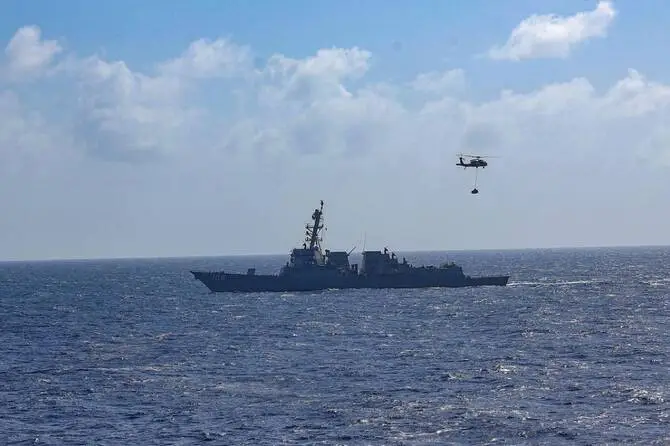
The USS Stockdale, a guided-missile destroyer bristling with advanced weapons systems, anchored in Port-au-Prince Bay alongside two Coast Guard cutters.
Haiti’s Transitional Presidential Council—nine unelected officials tasked with steering the country toward elections—loses its legal mandate on February 7. No election has occurred.
No successor exists. The council itself has splintered, with members attempting to oust the prime minister while Washington responds with sanctions. This is what state collapse looks like in slow motion.
Haiti, sharing an island with the Dominican Republic, has witnessed over 16,000 deaths from gang warfare since 2022. Armed groups now govern most of Port-au-Prince, collecting taxes, settling disputes, and deciding who lives or dies.
Intervention blurs protection and control
The UN documented 5,915 killed in 2025 alone. Some 1.3 million people—more than the population of Prague—have fled their homes.
The American ships form part of Operation Southern Spear, the largest U.S. military presence in the Caribbean since the Cuban Missile Crisis.
Officially an anti-drug campaign, it has killed at least 117 people in strikes on vessels the administration calls “narcoterrorist.” Human Rights Watch calls them extrajudicial killings. The government has not identified a single person killed.
The operation’s scope became clear on January 3, when U.S. forces captured Venezuelan President Nicolás Maduro in a predawn raid—now detained in New York on drug charges.
Supporters argue Washington is finally confronting cartels poisoning American cities. Critics see imperial overreach in a region the U.S. occupied repeatedly throughout the twentieth century, including Haiti from 1915 to 1934.
What happens Saturday remains unknown. But as Haitians face their uncertain future, American warships wait offshore—a reminder that in the Caribbean, the line between protection and control has never been entirely clear.
Related coverage: Brazil’s Morning Call | Chile’s Central Bank Holds Rates Steady but Reveals It Nearl This is part of The Rio Times’ daily coverage of global affairs and Latin American financial news.
This article was produced by The Rio Times’ automated newsroom system. How we use AI · Report an error · Editorial responsibility: Matthias Camenzind, Editor-in-Chief
Read More from The Rio Times