IBOV 205,835.29 ▼ 0.52% IPSA 11,164.13 ▲ 0.36% IPC MEX 65,312.46 ▲ 0.52% MERVAL 2,896,853 ▲ 0.95% COLCAP 2,589.04 ▲ 0.25% BVL PERÚ 60,220.93 ▲ 0.91% USD/BRL4.98▼ 0.12% USD/MXN18.03▲ 0.29% USD/CLP971.50▼ 0.11% USD/COP3,232▲ 0.75% USD/PEN3.44▼ 0.19% USD/ARS1,520— 0.00% USD/UYU40.09▲ 2.39% USD/PYG5,835▲ 3.05% USD/BOB11.90▲ 2.31% USD/DOP60.10▲ 3.37% USD/CRC454.50▲ 2.56% USD/GTQ7.64▲ 3.31% USD/HNL26.86▲ 0.87% USD/NIO36.62▲ 0.26% USD/VES871.68▼ 0.13% USD/PAB1.00— 0.00% USD/BZD2.00— 0.00% USD/JMD 157.28 — 0.00% USD/TTD6.68▲ 1.99% EUR/BRL5.58▼ 0.39% BRENT 88.88 ▼ 0.03% WTI 83.11 ▼ 0.11% IRON ORE 161.91 — — COPPER 6.61 ▲ 0.03% GOLD 4,461 ▲ 1.78% SILVER 65.59 ▲ 1.26% SOY 1,184 ▲ 3.20% CORN 480.50 ▲ 10.02% WHEAT 655.00 ▲ 3.93% COFFEE 317.25 ▼ 5.51% SUGAR 16.43 ▼ 1.79% ORANGE JUICE 138.55 ▼ 0.47% COTTON 85.03 ▲ 2.33% COCOA 5,719 ▲ 3.18% BEEF 223.60 ▼ 3.93% CATTLE 339.10 ▼ 3.16% LITHIUM 75.20 ▲ 1.47% PETR4 41.64 ▼ 0.05% VALE3 72.97 ▲ 0.83% ITUB4 38.60 ▼ 1.03% BBDC4 16.85 ▲ 0.36% ABEV3 14.89 ▼ 0.80% BBAS3 19.37 ▲ 0.47% B3SA3 14.26 ▼ 0.21% WEGE3 47.59 ▲ 0.49% PRIO3 59.14 ▼ 0.19% SUZB3 41.33 ▲ 2.35% RENT3 34.68 ▼ 0.09% AZZA3 15.89 ▼ 2.63% CSAN3 3.22 ▼ 1.83% RAIZ4 0.25 — 0.00% PCAR3 2.75 ▼ 0.36% GMAT3 3.65 ▼ 1.08% PSSA3 48.13 ▼ 0.54% CVCB3 1.33 ▼ 2.92% POSI3 3.36 ▲ 2.44% SLCE3 13.34 ▲ 0.30% NATU3 8.14 ▼ 0.73% IBOV 205,835.29 ▼ 0.52% IPSA 11,164.13 ▲ 0.36% IPC MEX 65,312.46 ▲ 0.52% MERVAL 2,896,853 ▲ 0.95% COLCAP 2,589.04 ▲ 0.25% BVL PERÚ 60,220.93 ▲ 0.91% USD/BRL 5.16 ▲ 0.01% USD/MXN 17.06 ▼ 0.24% USD/CLP 913.98 ▲ 0.04% USD/COP 3,140 ▲ 0.03% USD/PEN 3.36 ▼ 0.66% USD/ARS 1,493 ▲ 0.10% USD/UYU 40.27 ▲ 1.24% USD/PYG 5,939 ▲ 1.68% USD/BOB 11.64 ▼ 0.76% USD/DOP 58.34 ▲ 1.25% USD/CRC 445.92 ▲ 0.89% USD/GTQ 7.62 ▲ 2.21% USD/HNL 26.79 ▲ 1.57% USD/NIO 36.62 ▲ 0.69% USD/VES 762.44 ▼ 0.13% USD/PAB 1.00 — 0.00% USD/BZD 2.00 — 0.00% USD/JMD 157.28 — 0.00% USD/TTD 6.70 ▲ 0.61% EUR/BRL 5.95 ▲ 1.01% BRENT 88.88 ▼ 0.03% WTI 83.11 ▼ 0.11% IRON ORE 161.91 — — COPPER 6.61 ▲ 0.03% GOLD 4,461 ▲ 1.78% SILVER 65.59 ▲ 1.26% SOY 1,184 ▲ 3.20% CORN 480.50 ▲ 10.02% WHEAT 655.00 ▲ 3.93% COFFEE 317.25 ▼ 5.51% SUGAR 16.43 ▼ 1.79% ORANGE JUICE 138.55 ▼ 0.47% COTTON 85.03 ▲ 2.33% COCOA 5,719 ▲ 3.18% BEEF 223.60 ▼ 3.93% CATTLE 339.10 ▼ 3.16% LITHIUM 75.20 ▲ 1.47% PETR4 41.64 ▼ 0.05% VALE3 72.97 ▲ 0.83% ITUB4 38.60 ▼ 1.03% BBDC4 16.85 ▲ 0.36% ABEV3 14.89 ▼ 0.80% BBAS3 19.37 ▲ 0.47% B3SA3 14.26 ▼ 0.21% WEGE3 47.59 ▲ 0.49% PRIO3 59.14 ▼ 0.19% SUZB3 41.33 ▲ 2.35% RENT3 34.68 ▼ 0.09% AZZA3 15.89 ▼ 2.63% CSAN3 3.22 ▼ 1.83% RAIZ4 0.25 — 0.00% PCAR3 2.75 ▼ 0.36% GMAT3 3.65 ▼ 1.08% PSSA3 48.13 ▼ 0.54% CVCB3 1.33 ▼ 2.92% POSI3 3.36 ▲ 2.44% SLCE3 13.34 ▲ 0.30% NATU3 8.14 ▼ 0.73%
since 2009
Wednesday, October 7, 2026

Agri Business Business - Brazil

The Importance and Current Reality of Peru’s Fishing Sector

By · June 10, 2025 · 2 min read

Peru’s official government data shows that the country’s fishing sector has made a strong comeback in 2024, with figures from the National Institute of Statistics and Informatics (INEI) confirming a 329% increase in production in May compared to the previous year.

This surge comes after two difficult years marked by climate disruptions and falling catches. The Ministry of Production (Produce) attributes this growth mainly to a record anchovy season, with over 1.45 million tons landed in May alone.

From January to September 2024, Peru’s fishery exports reached $3.19 billion, up nearly 30% from the previous year. China, the United States, Spain, Chile, Japan, and South Korea accounted for over 70% of these exports.

Most of the value came from fishmeal and fish oil, products in high demand for animal feed and aquaculture worldwide. The fishing sector’s contribution to Peru’s GDP has increased in 2024.

The extractive and processing segments combined are expected to add nearly 1% to the national total. The sector’s rebound has also generated significant employment, directly supporting hundreds of thousands of jobs across the country.
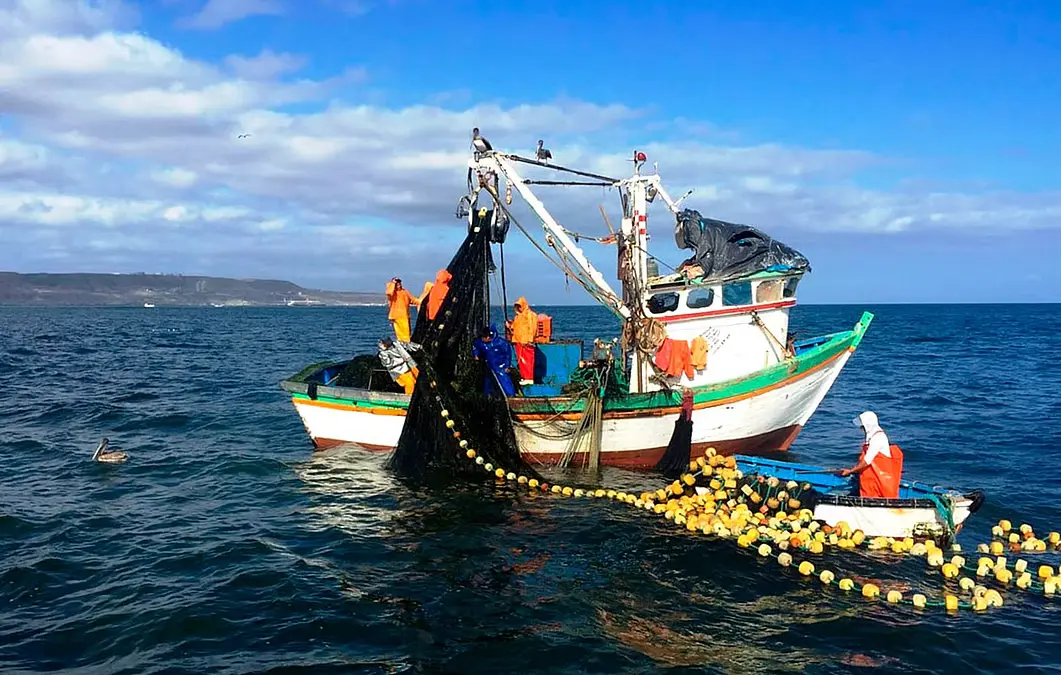
The Importance and Current Reality of Peru’s Fishing Sector
The Importance and Current Reality of Peru’s Fishing Sector.
RT
Ask Rio Times
Latin American markets, currencies and companies.
Open the full Ask Rio Times →

Peru’s government has responded to the sector’s growth with stricter regulations and enforcement. In 2024, authorities carried out a record 163,148 inspections to combat illegal, unreported, and unregulated (IUU) fishing, seizing over 3,200 tons of fishery products.

The LatAm Brief

One email, every weekday morning. What moved in Latin American markets, politics and expat life.

Yesterday’s subject line: “Brazil stocks jump 7.7%, real up 4%, after the vote”

Free. We send a confirmation link first — nothing arrives until you click it. Unsubscribe with one click in any edition. If you stop opening us for 30 days we stop sending by ourselves, as we assume the interest is no longer there. See our privacy policy. We never share your email.

Peru Tightens Oversight to Protect Key Fishing Industry

Anchovy, the backbone of the industry, made up the largest share of these seizures. The government enacted Supreme Decree No. 014-2024-PRODUCE, requiring satellite tracking for foreign vessels and giving the military authority to intervene against illicit activities at sea.

Officials say these measures are necessary to protect marine resources, ensure fair competition, and maintain Peru’s reputation as a reliable supplier.

The Ministry of Production has also updated the General Fisheries Law to strengthen artisanal fishing and restrict industrial activity within five nautical miles of the coast, aiming to balance economic interests with sustainability.

Despite these gains, the sector faces ongoing challenges. Climate change continues to threaten fish stocks, and disputes over fishing rights near protected areas highlight tensions between industry and conservation.

Still, Peru’s experience shows that strict oversight and strong demand can drive growth in a sector vital to the country’s economy and global food supply.

This article was produced by The Rio Times’ automated newsroom system. How we use AI · Report an error · Editorial responsibility: Matthias Camenzind, Editor-in-Chief

The Rio Times · Power Map
See who really holds power in Latin America
Click to open the Power Map →

Rotate for Best Experience

This report is optimized for landscape viewing. Rotate your phone for the full experience.