Peru’s Tourism Recovery: Numbers Reveal a Steady Return, Not a Full Comeback
Peru’s Ministry of Foreign Trade and Tourism reports that the country welcomed over one million international tourists in the first four months of 2025.
This marks a 6.7% increase compared to the same period in 2024, but the real story sits in the broader context. While the sector continues to recover from the pandemic’s impact, the figures remain well below the record 5.28 million visitors Peru saw in 2019.
By the end of 2024, Peru recorded 3.26 million international arrivals, a 29% jump from 2023. This recovery, however, only brought the country to about 74% of pre-pandemic levels.
Authorities expect around 3.6 million visitors for all of 2025, still short of the pre-pandemic peak. International tourist spending reached $3.5 billion in 2024, a strong figure but not yet matching the $5.3 billion generated in 2019.
The main sources of tourists remain regional neighbors. Chile led with 700,000 visitors in 2024, followed by the United States with 604,000, Ecuador with 291,000, Bolivia with 189,000, Brazil with 185,000, and Colombia with 170,000.
These six countries together accounted for nearly two-thirds of all arrivals. South America contributed more than half of all foreign tourists, with North America and Europe following.
Peru’s Tourism Recovery
Jorge Chávez International Airport in Lima continues to serve as the main gateway, handling over 66% of international arrivals. Border points in Tacna, Tumbes, and Puno also play significant roles, reflecting the importance of regional land travel.
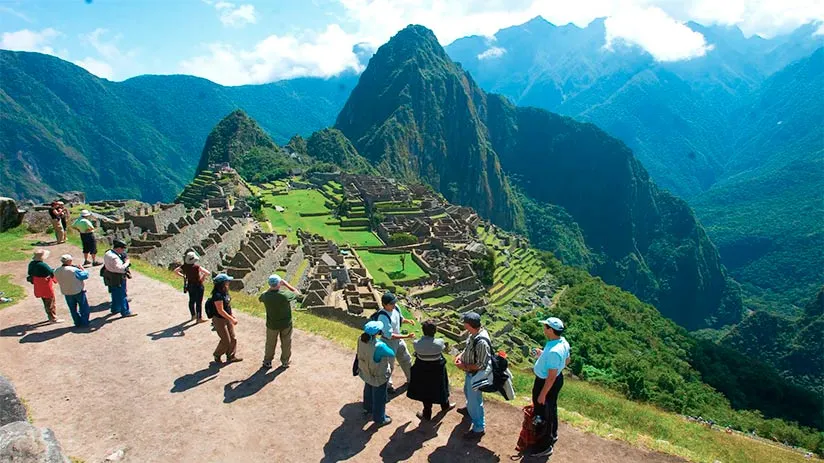
Machu Picchu remains the top draw, attracting more than 190,000 visitors in just the first two months of 2025. This site, along with others like Sacsayhuaman and Paracas, drives much of the sector’s activity.
Tourism now contributes between 2.5% and 2.9% to Peru’s GDP and supports 1.2 million jobs. The numbers show that Peru’s tourism industry is recovering, but not yet thriving at its former level.
The country still relies heavily on nearby markets, and full recovery will depend on attracting more distant visitors and maintaining stability.
For businesses and policymakers, these facts highlight the need for continued investment in infrastructure, marketing, and visitor safety to close the gap with pre-pandemic performance.
More: Latin America news in English, every day from The Rio Times.
This article was produced by The Rio Times’ automated newsroom system. How we use AI · Report an error · Editorial responsibility: Matthias Camenzind, Editor-in-Chief