Michelle Bowman Confirmed as Fed’s Top Bank Regulator: What Changes Now?
The U.S. Senate has confirmed Michelle Bowman as the Federal Reserve’s vice chair for supervision, with a 48-46 vote. Bowman, a Fed governor since 2018, now leads the central bank’s regulatory agenda, signaling a move toward less restrictive banking oversight.
Her background as a community banker and state regulator informs her approach, which prioritizes efficiency and reduced regulatory complexity.
Bowman has argued before Congress that current banking rules are too complicated and create unnecessary obstacles for banks and their customers.
She supports relaxing leverage requirements for large banks, making annual stress tests more transparent, and opposes broad increases in capital requirements.
This stance contrasts with her predecessor, Michael Barr, who pushed for stricter rules before resigning earlier this year. Industry groups have praised Bowman’s confirmation, noting her understanding of how regulations affect both banks and consumers.
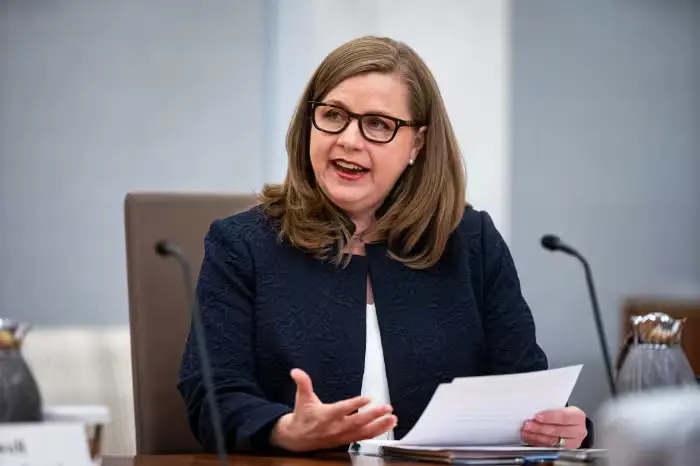
They expect her leadership to bring a more rational regulatory framework, giving banks flexibility to support economic growth while maintaining safety. Critics warn that reducing safeguards could increase risks in the financial system, referencing the deregulation that preceded the 2008 crisis.
Bowman also questions international banking standards like Basel III, arguing these rules can overburden smaller U.S. banks and accelerate sector consolidation. She advocates for regulations tailored to each bank’s size and risk profile, not a one-size-fits-all model.
Her confirmation aligns with the Trump administration’s broader push for deregulation and economic transformation. Meanwhile, Jerome Powell remains Fed chair until May 2026, as law protects the chair’s independence from political removal.
Bowman’s leadership signals a pivotal moment for U.S. banking, with potential impacts on lending, competition, and financial stability. These changes will shape the U.S. economy and affect consumers, businesses, and investors in the coming years.
This article was produced by The Rio Times’ automated newsroom system. How we use AI · Report an error · Editorial responsibility: Matthias Camenzind, Editor-in-Chief