Mauritania Is Betting on Gas Without Letting Go of Its Iron
MAURITANIA · ENERGY
Key Facts
- —The field The Greater Tortue Ahmeyim field straddles the Mauritania-Senegal border, operated by BP.
- —Phase one Production began in December 2024, with capacity of about 2.3 million tonnes LNG yearly.
- —Phase two BP, Kosmos, PETROSEN and SMH weigh a 2.5-3.0 million tonne expansion.
- —The old economy Gold is roughly 39% of exports, iron ore about 28%.
- —The growth World Bank projects 4.4% growth in 2026, up from 4.2% in 2025.
- —The catch Gas is new, but iron ore and gold still pay most bills.
Mauritania’s GTA gas made it an LNG exporter, not just an iron ore country. A decision on doubling that capacity comes this year.
The gas is new, while iron ore and gold still pay most bills. A green hydrogen program is being added on top of both.
What Mauritania GTA gas has delivered so far
The Greater Tortue Ahmeyim field sits on the maritime boundary between Mauritania and Senegal. This makes it one of very few cross-border developments in African hydrocarbons.
BP operates it with Kosmos Energy and the two countries’ state oil firms, PETROSEN and SMH.
Production started in December 2024. The plant can make about 2.3 million tonnes of LNG each year.
First cargoes went out in April 2025.
The gas is turned into liquid on a floating facility at sea.
Shared sovereignty over a single reservoir is administratively difficult and politically useful. Neither country can unilaterally disrupt the project without harming itself.
The World Bank projects growth of 4.4 percent in 2026, up from 4.2 percent in 2025, helped by fuller gas production.
The phase two decision falls this year
The partners are looking at a gravity-based structure for expansion. Its total capacity would be 2.5 to 3.0 million tonnes a year.
Decisions on development and commercial structure are expected in 2026.
A gravity-based structure is a concrete platform that sits on the seabed under its own weight. It is expensive to build and durable once installed, which suits a long-lived gas field.
The choice is about market view. Phase two means betting on LNG demand into the late 2030s.
European import policy and Asian growth are both uncertain then.
For Nouakchott the calculation is simpler. A second train roughly doubles the state’s gas revenue at no additional capital cost to the treasury.
The economy that still pays the bills
Gas is the newest export and not yet the largest earner. Gold accounts for roughly 39 percent of exports and iron ore around 28 percent.
Mauritania is Africa’s second largest iron ore producer, behind South Africa. State miner SNIM has run the sector for decades from deposits in the north.
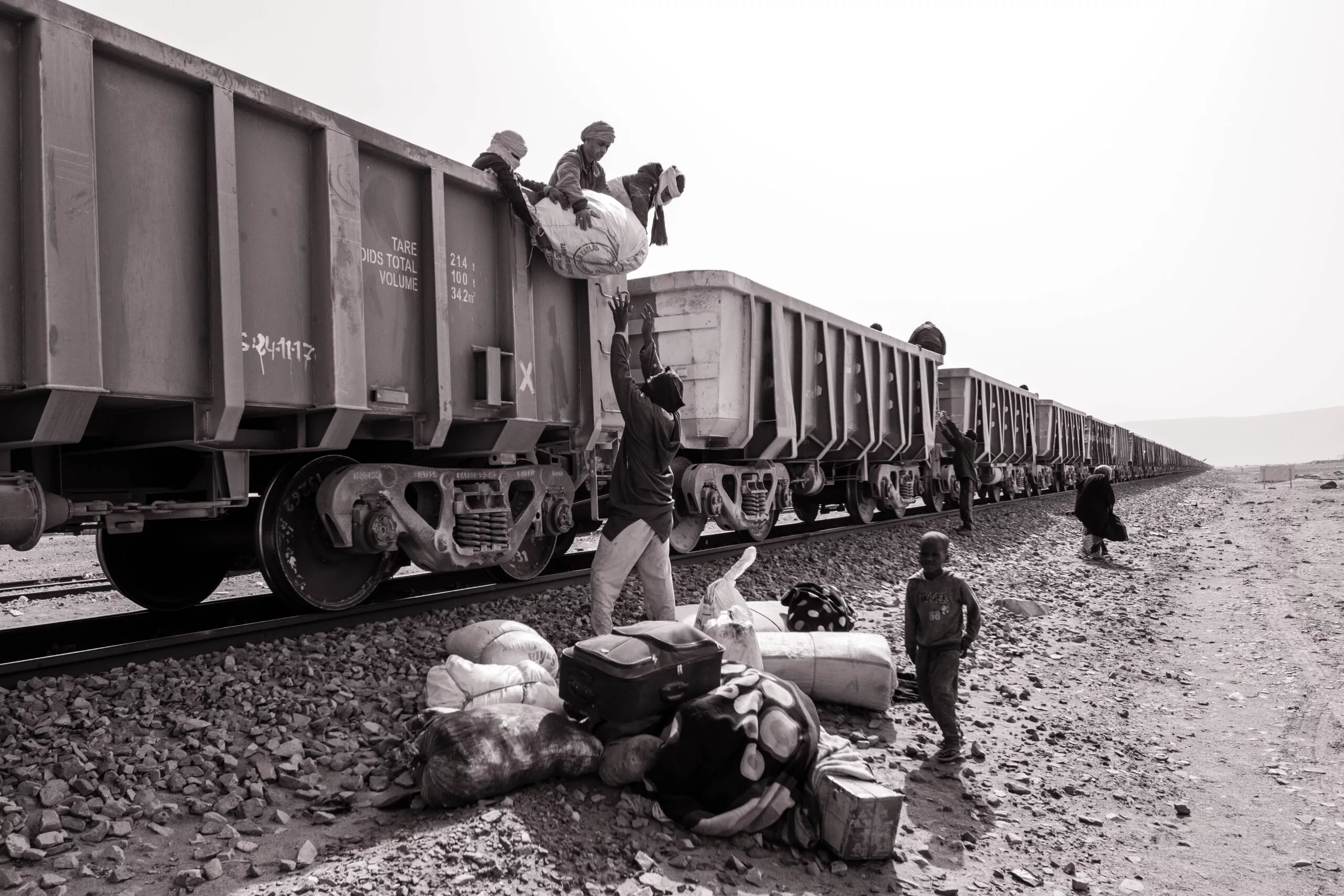
The ore travels on one of the world’s longest and heaviest freight trains.
High global prices for both metals have supported mining output through the gas construction period. That sequencing has been fortunate rather than planned.
The country therefore has three commodity exposures at once: gold, iron ore and now LNG. Diversification of that kind reduces volatility without reducing dependence.
Green hydrogen is the third bet
Mauritania adopted a green hydrogen code in October 2024, and international developers including CWP and Chariot have announced large-scale projects. BP signed a memorandum with the government to explore production.
The physical case is unusually strong. Wind speeds in Nouadhibou reach 9 metres per second.
The country has vast empty land next to a deep-water port.
The demand case is European. The European Union’s hydrogen strategy targets up to 10 million tonnes of imported renewable hydrogen a year by 2030.
North West Africa is the closest large-scale supply option.
The honest caveat is that almost none of these projects has reached final investment decision anywhere in the world. Announced capacity and built capacity are very different numbers.
Why this matters beyond West Africa
Mauritania is becoming a test of whether a small, sparsely populated state can manage three simultaneous resource booms without the usual pathologies.
The population is around five million across a territory larger than Egypt and Nigeria combined. Revenue per head from these projects could be transformative or could simply be captured.
The European Union’s Global Gateway programme is funding related infrastructure, including the Nouakchott to Nouadhibou road and high-voltage power lines. That support also builds European ties to the region’s future energy supply.
For Latin American readers the parallel is Guyana. A small country, a large offshore discovery and a very short window to build institutions before the money arrives.
What to watch next
The first thing is the phase two decision itself, and whether the partners commit to the gravity-based structure.
The second is whether any hydrogen project reaches final investment decision rather than another memorandum.
The third is how gas revenue is handled fiscally, because that choice is usually made once and lived with for decades.
Frequently Asked Questions
What is the GTA project?
Greater Tortue Ahmeyim is a gas field on the Mauritania and Senegal maritime border. BP operates it with Kosmos Energy and the two national oil companies.
When did Mauritania start exporting LNG?
Production began in December 2024 with capacity of about 2.3 million tonnes a year, and first exports were delivered in April 2025.
What is GTA phase two?
The partners propose to expand output from 2.5 to 3.0 million tonnes a year. They are studying a gravity-based structure.
They expect to decide during 2026.
What are Mauritania’s main exports?
Gold accounts for roughly 39 percent of exports and iron ore about 28 percent. The country is the second largest iron ore producer in Africa.
Is Mauritania developing green hydrogen?
A green hydrogen code was adopted in October 2024 and BP signed a memorandum with the government. Wind speeds near Nouadhibou reach up to 9 metres per second.
Connected Coverage
- The other half of this field belongs to Senegal. We cover Senegal’s position and its partner in the same gas field.
- That partner faces credit pressure. The wider resource contest is in Africa: The New Scramble.
This article was produced by The Rio Times’ automated newsroom system. How we use AI · Report an error · Editorial responsibility: Matthias Camenzind, Editor-in-Chief