Maduro Pushes Constitutional Reform Amid Legitimacy Crisis and Repression
Venezuelan President Nicolás Maduro has launched a constitutional reform initiative, aiming to reshape the country’s governance amid ongoing political and economic crises.
The announcement, made on February 15, follows his controversial re-election for the 2025–2031 term, which opposition leaders and international observers widely disputed.
While Maduro claims the reforms will modernize Venezuela’s 1999 Constitution, critics argue they could further consolidate his power. The reform focuses on four key areas.
First, it seeks to expand participatory democracy by formally integrating 49,000 communal councils into the constitutional framework. These councils, largely loyal to Maduro’s government, would gain greater control over local governance.
Second, the proposal introduces a debate on “postmodernity,” aiming to redefine societal values around equality, justice, and mental health. Third, it emphasizes diversifying Venezuela’s oil-dependent economy to address technological and global challenges.
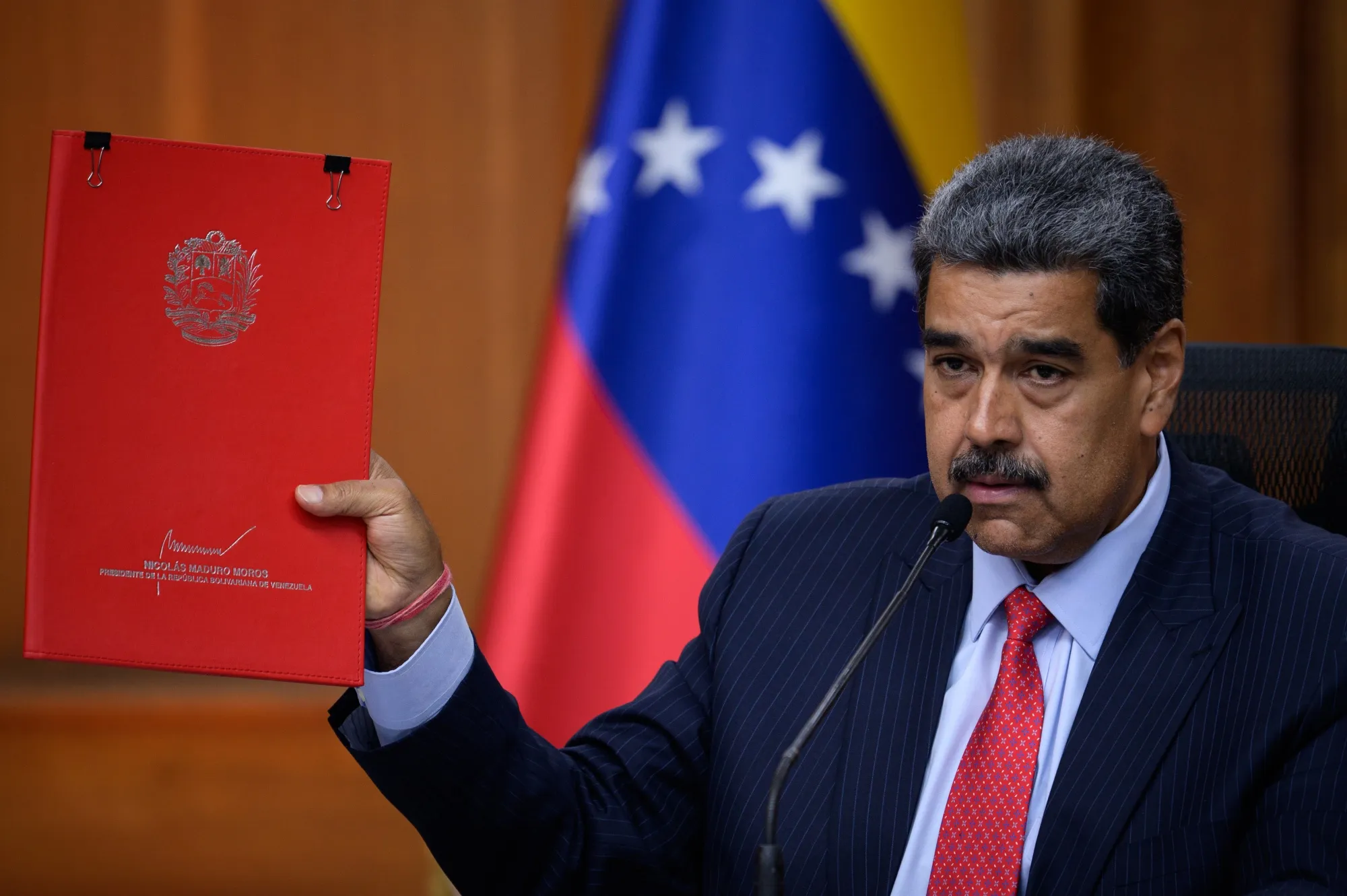
Finally, it aims to update legal and political frameworks to reflect contemporary realities. A special commission led by Attorney General Tarek William Saab and Vice President Delcy Rodríguez will draft the reforms within 90 days before presenting them for a national referendum later this year.
Venezuela’s Political Reform
However, opposition leaders and human rights groups view this process with skepticism. They argue that recent laws targeting NGOs and dissent signal a broader strategy to suppress opposition voices.
This reform comes as Venezuela faces severe economic instability, with hyperinflation and widespread poverty affecting millions. Allegations of electoral fraud in July 2024 further eroded trust in Maduro’s leadership.
Independent observers reported that opposition candidate Edmundo González Urrutia had secured 67% of the vote. The international response remains divided. While allies like Russia and China back Maduro, Western nations continue to denounce his administration’s human rights abuses.
The outcome of this reform process will likely shape Venezuela’s political future and have significant implications for investors, policymakers, and regional stability.
More: Latin America news in English, every day from The Rio Times.
This article was produced by The Rio Times’ automated newsroom system. How we use AI · Report an error · Editorial responsibility: Matthias Camenzind, Editor-in-Chief
In depth