IBOV 206,911.89 ▲ 7.70% IPSA 11,124.65 ▲ 1.91% IPC MEX 64,975.08 ▲ 0.69% MERVAL 2,869,488 — 0.00% COLCAP 2,582.65 ▲ 2.69% BVL PERÚ 59,860.04 ▲ 0.60% USD/BRL4.99— 0.00% USD/MXN18.02▼ 0.33% USD/CLP970.78▼ 1.99% USD/COP3,197▲ 0.11% USD/PEN3.44▼ 0.25% USD/ARS1,520▼ 0.32% USD/UYU40.34▼ 0.30% USD/PYG5,844▲ 0.40% USD/BOB11.95▲ 0.17% USD/DOP60.10▲ 0.33% USD/CRC455.71▲ 2.84% USD/GTQ7.63▲ 3.33% USD/HNL26.86▲ 3.48% USD/NIO36.62▲ 2.96% USD/VES870.21▼ 0.13% USD/PAB1.00— 0.00% USD/BZD2.00— 0.00% USD/JMD 157.28 — 0.00% USD/TTD6.68▲ 1.88% EUR/BRL5.61▼ 4.39% BRENT 88.88 ▼ 0.03% WTI 83.11 ▼ 0.11% IRON ORE 161.91 — — COPPER 6.61 ▲ 0.03% GOLD 4,461 ▲ 1.78% SILVER 65.59 ▲ 1.26% SOY 1,184 ▲ 3.20% CORN 480.50 ▲ 10.02% WHEAT 655.00 ▲ 3.93% COFFEE 317.25 ▼ 5.51% SUGAR 16.43 ▼ 1.79% ORANGE JUICE 138.55 ▼ 0.47% COTTON 85.03 ▲ 2.33% COCOA 5,719 ▲ 3.18% BEEF 223.60 ▼ 3.93% CATTLE 339.10 ▼ 3.16% LITHIUM 75.20 ▲ 1.47% PETR4 41.64 ▼ 0.05% VALE3 72.97 ▲ 0.83% ITUB4 38.60 ▼ 1.03% BBDC4 16.85 ▲ 0.36% ABEV3 14.89 ▼ 0.80% BBAS3 19.37 ▲ 0.47% B3SA3 14.26 ▼ 0.21% WEGE3 47.59 ▲ 0.49% PRIO3 59.14 ▼ 0.19% SUZB3 41.33 ▲ 2.35% RENT3 34.68 ▼ 0.09% AZZA3 15.89 ▼ 2.63% CSAN3 3.22 ▼ 1.83% RAIZ4 0.25 — 0.00% PCAR3 2.75 ▼ 0.36% GMAT3 3.65 ▼ 1.08% PSSA3 48.13 ▼ 0.54% CVCB3 1.33 ▼ 2.92% POSI3 3.36 ▲ 2.44% SLCE3 13.34 ▲ 0.30% NATU3 8.14 ▼ 0.73% IBOV 206,911.89 ▲ 7.70% IPSA 11,124.65 ▲ 1.91% IPC MEX 64,975.08 ▲ 0.69% MERVAL 2,869,488 — 0.00% COLCAP 2,582.65 ▲ 2.69% BVL PERÚ 59,860.04 ▲ 0.60% USD/BRL 5.16 ▲ 0.01% USD/MXN 17.06 ▼ 0.24% USD/CLP 913.98 ▲ 0.04% USD/COP 3,140 ▲ 0.03% USD/PEN 3.36 ▼ 0.66% USD/ARS 1,493 ▲ 0.10% USD/UYU 40.27 ▲ 1.24% USD/PYG 5,939 ▲ 1.68% USD/BOB 11.64 ▼ 0.76% USD/DOP 58.34 ▲ 1.25% USD/CRC 445.92 ▲ 0.89% USD/GTQ 7.62 ▲ 2.21% USD/HNL 26.79 ▲ 1.57% USD/NIO 36.62 ▲ 0.69% USD/VES 762.44 ▼ 0.13% USD/PAB 1.00 — 0.00% USD/BZD 2.00 — 0.00% USD/JMD 157.28 — 0.00% USD/TTD 6.70 ▲ 0.61% EUR/BRL 5.95 ▲ 1.01% BRENT 88.88 ▼ 0.03% WTI 83.11 ▼ 0.11% IRON ORE 161.91 — — COPPER 6.61 ▲ 0.03% GOLD 4,461 ▲ 1.78% SILVER 65.59 ▲ 1.26% SOY 1,184 ▲ 3.20% CORN 480.50 ▲ 10.02% WHEAT 655.00 ▲ 3.93% COFFEE 317.25 ▼ 5.51% SUGAR 16.43 ▼ 1.79% ORANGE JUICE 138.55 ▼ 0.47% COTTON 85.03 ▲ 2.33% COCOA 5,719 ▲ 3.18% BEEF 223.60 ▼ 3.93% CATTLE 339.10 ▼ 3.16% LITHIUM 75.20 ▲ 1.47% PETR4 41.64 ▼ 0.05% VALE3 72.97 ▲ 0.83% ITUB4 38.60 ▼ 1.03% BBDC4 16.85 ▲ 0.36% ABEV3 14.89 ▼ 0.80% BBAS3 19.37 ▲ 0.47% B3SA3 14.26 ▼ 0.21% WEGE3 47.59 ▲ 0.49% PRIO3 59.14 ▼ 0.19% SUZB3 41.33 ▲ 2.35% RENT3 34.68 ▼ 0.09% AZZA3 15.89 ▼ 2.63% CSAN3 3.22 ▼ 1.83% RAIZ4 0.25 — 0.00% PCAR3 2.75 ▼ 0.36% GMAT3 3.65 ▼ 1.08% PSSA3 48.13 ▼ 0.54% CVCB3 1.33 ▼ 2.92% POSI3 3.36 ▲ 2.44% SLCE3 13.34 ▲ 0.30% NATU3 8.14 ▼ 0.73%
since 2009
Tuesday, October 6, 2026

Opinion Analysis

Rio Carnival and the Wealth That Cannot Be Kept

By · October 6, 2026 · 3 min read
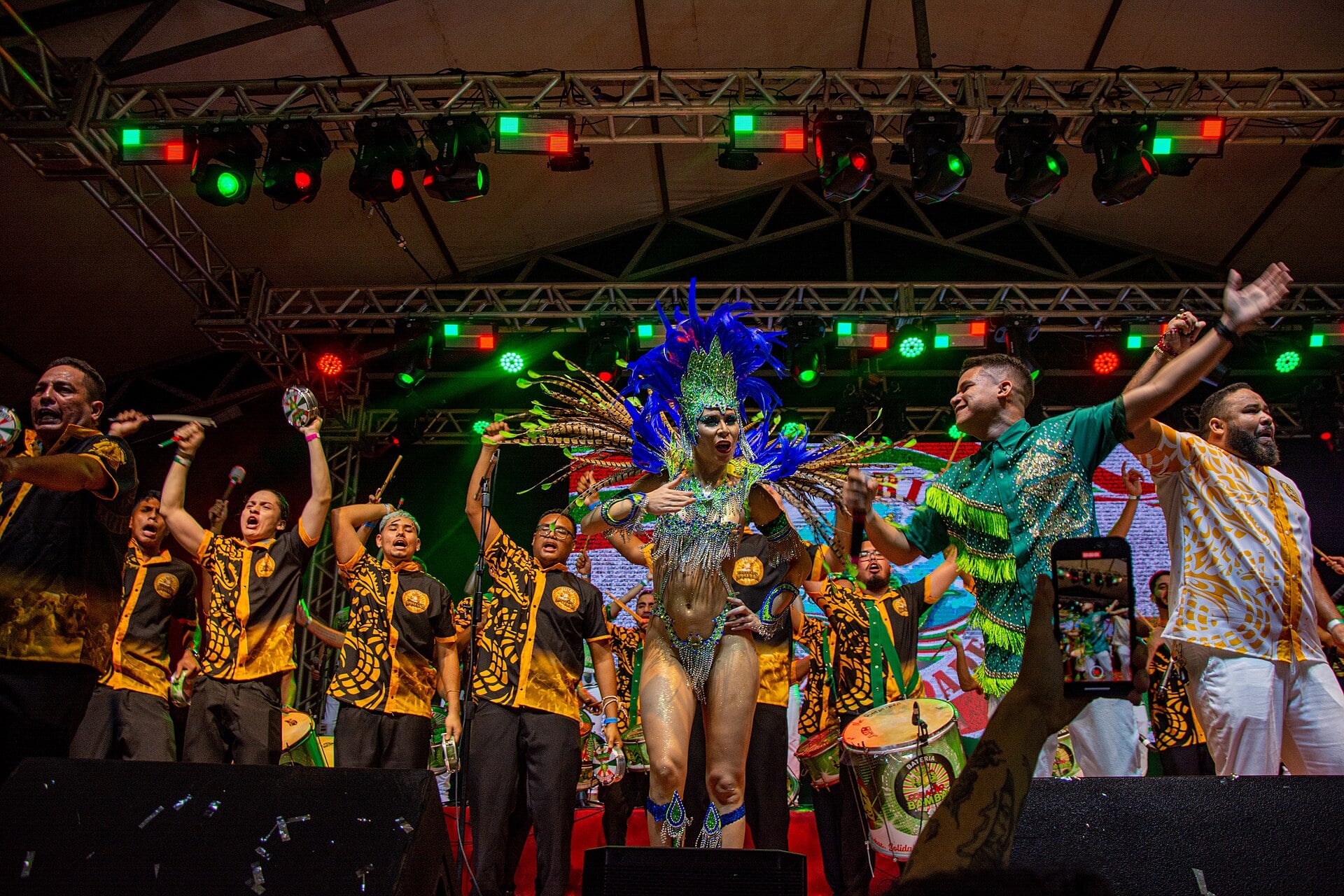
A samba school performs for its community at its quadra in Rio de Janeiro
A samba school performs for its community in Rio de Janeiro. File photo.

Samba schools, public spectacle, and an anthropological theory of generosity.

Rio Carnival is usually described in superlatives. Millions of people move through the city. Hundreds of blocos fill the streets. Samba schools spend months preparing performances that last a fraction of that time. The scale can make Carnival look like an economy of consumption. It is equally an economy of contribution.

A samba school is a useful place to see the difference. Costumes, music, choreography, float construction, rehearsals, neighbourhood organisation and storytelling require sustained labour. The finished parade is public, temporary and impossible for any one person to own. The school converts private and collective effort into a shared event.

A Comparison From Another Hemisphere

Anthropology offers a comparison from another hemisphere. Franz Boas’s work among Northwest Coast Indigenous peoples, much of it recorded with his Kwakwaka’wakw collaborator George Hunt, made the potlatch a classic problem in the study of exchange. In Kwakwaka’wakw traditions, gifts distributed before witnesses could affirm status, rights, family history and communal ties. The U’mista Cultural Centre summarises a conception of wealth in which the powerful person is also the generous person.

The comparison needs one guardrail. Carnival is not a descendant of the Northwest Coast potlatch, and the two should not be collapsed into one custom. The value of the comparison is analytical. It asks what public giving does to status, memory, obligation and belonging in two very different ceremonial worlds.

The Gift Is the Performance

Rio broadens the comparison because the principal gift is not a trinket. It is performance. A samba school’s standing rises through what it can produce for others to witness. Prestige is made visible by expenditure, coordination, beauty and the ability to mobilise a community.

The street blocos make the principle even more democratic. The city estimated hundreds of official bloco parades and millions of revellers in 2026. Much of the value lies in access. People receive music and the shared use of public space even when they have not bought a ticket.

A Gift Is Not Free

This does not make Carnival economically free. Quite the opposite. The city, workers, schools, vendors, artists, sponsors and residents bear enormous costs. That is precisely why the anthropology of gifts is useful. A gift is not valuable because it costs nothing. It is valuable because someone bears a cost without reducing the exchange to an immediate sale.

Rio’s challenge is to preserve that public generosity while confronting labour conditions, waste, safety, commercialisation and unequal access. A gift economy can coexist with exploitation. Romantic language should never hide who works and who is paid.

Still, the annual willingness to spend months making something that vanishes down the avenue remains remarkable. The parade ends. The costumes come off. The floats are dismantled. What remains is rank, memory, rivalry, pride and the conviction that the community must build it again next year.

That is a kind of wealth modern accounting has trouble keeping on a balance sheet.

Charles E. A. Lincoln IV

Charles E. A. Lincoln IV is a doctoral researcher at the University of Groningen and a legal scholar focusing on taxation and administrative law. He holds degrees from Harvard University, Texas A&M University, the University of Amsterdam and Boston University, and writes on the intersections of community, culture, jurisprudential hermeneutics, philosophy and economic theory.

The views expressed in this article are the author’s own and do not necessarily reflect those of The Rio Times.

Sources: U’mista Cultural Centre, Living Tradition: The Kwakwaka’wakw Potlatch; Riotur, City of Rio de Janeiro, Carnival 2026 street-parade estimate.

This article was drafted with automated assistance and reviewed before publication. How we use AI · Report an error · Editorial responsibility: Matthias Camenzind, Editor-in-Chief

RT
Ask Rio Times
17 years of Latin America reporting, on demand.
Open the full Ask Rio Times →

The LatAm Brief

One email, every weekday morning. What moved in Latin American markets, politics and expat life.

Yesterday’s subject line: “Brazil stocks jump 7.7%, real up 4%, after the vote”

Free. We send a confirmation link first — nothing arrives until you click it. Unsubscribe with one click in any edition. If you stop opening us for 30 days we stop sending by ourselves, as we assume the interest is no longer there. See our privacy policy. We never share your email.

The Rio Times · Power Map
See who really holds power in Latin America
Click to open the Power Map →

Rotate for Best Experience

This report is optimized for landscape viewing. Rotate your phone for the full experience.