Vale Shares Fall 3.46% to a 12-Month Low | Iron Ore Wrap, Nov 20
Brazilian miner Vale fell to a 12-month low for a seventh session as weak Chinese steel demand met a market-wide sell-off.
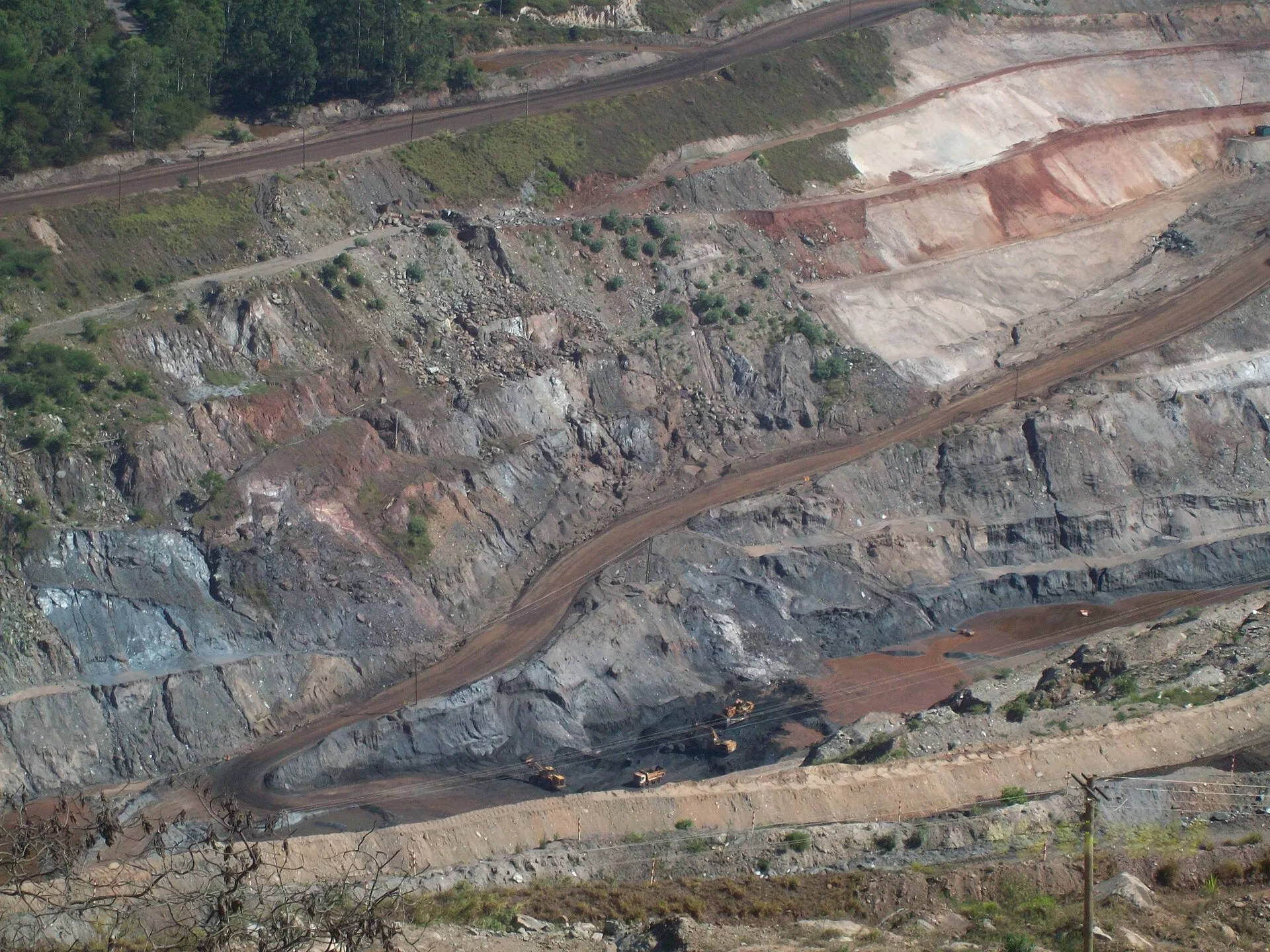
Key Facts
- Brazilian miner Vale’s New York shares fell 3.46% to US$9.49, a 12-month low and a seventh straight loss.
- Vale is 46.7% below its 20 April high of 17.82 and fell 15.42% in five sessions.
- Miner Rio Tinto fell 2.64% to US$72.73, also after seven down sessions in a row.
- China is the main cause: steelmakers are in their winter off-season and holding back on restocking.
- A wider sell-off added weight: the S&P 500 fell 3.70%, the VIX fear gauge jumped 26.20%.
- Prediction markets: Polymarket, a real-money prediction market, prices a 0.25-point US Federal Reserve rate rise in December at 89.5% (US$47.6 million traded, 9:25 p.m. ET, 20 November).
Today’s Focus
Vale, the Brazilian miner that is the world’s second-largest iron-ore exporter, has had a brutal autumn. Its New York shares, which we use because the iron-ore price itself is not on our spot feed, closed Friday at US$9.49, the lowest in a year.
The main cause is China, which makes more than half the world’s steel and buys most of Vale’s ore. Mills are entering the winter slowdown with unsold steel piling up, so they are buying less ore.
A broad market rout on Friday made things worse. Investors were selling stocks, gold and metals together, and miners were caught in it.
What matters today. Brazil’s biggest exporter is being priced for a long Chinese slowdown, and that matters for the real, for Brazilian budgets and for anyone holding Latin American stocks.
01 The session in one read
Iron ore had a bad week, and Friday, November 20, 2026 was the worst day of it. Vale’s New York shares fell 3.46% to US$9.49, their lowest close in at least 12 months.
Rio Tinto, the Anglo-Australian giant that competes with Vale, dropped 2.64% to US$72.73. Both have now fallen for seven sessions in a row.
It slipped 0.99% to R$5.02.
The best-supported reading is that weak Chinese steel demand started the fall and a global flight from risk turned it into a rout. We are fairly confident of the first part, because Vale and Rio Tinto fell together while the dollar barely moved, and less sure how much of Friday’s drop was panic that could fade. The variable to watch is whether Chinese steel mills resume buying ore once their winter stock-up begins.

02 The board
Read the board as a pair of thermometers for the ore price. The two global giants, which live and die by the iron-ore price, both fell for a seventh session.
Vale, by contrast, is sitting exactly on its low.
| Asset | Level | Change |
|---|---|---|
| Iron ore (Vale) | US$9.49 | -3.46% |
| Rio Tinto | US$72.73 | -2.64% |
Source: RT close, 2026-11-20. Where a commodity has no spot feed, an exchange-traded tracker or leading producer is shown as a labelled proxy.
Live Market IntelligenceThe live market board
Rio Times · Live Market Intelligence
Latin America — Cross-Market Board
| Instrument | Last | Change | YoY | Prev. | High | Low | Volume |
|---|---|---|---|---|---|---|---|
| IBOV | 166,376.43 | -0.69% | +7.08% | 167,537.95 | 168,498 | 165,833 | — |
| IPSA | 10,350.51 | +0.16% | — | 10,333.77 | 10,351 | 10,249 | — |
| IPC MEX | 68,456.71 | -0.37% | +11.28% | 68,713.60 | 69,253 | 68,306 | 201,576,684 |
| MERVAL | 2,848,945 | — | — | 2,848,945 | — | — | — |
| COLCAP | 2,452.46 | — | — | — | — | — | — |
| USD/BRL | 5.95 | +0.24% | +11.64% | 5.93 | 5.95 | 5.90 | — |
| EUR/BRL | 6.52 | +1.12% | +6.14% | 6.45 | 6.54 | 6.49 | — |
| USD/MXN | 19.14 | +0.30% | +4.51% | 19.09 | 19.20 | 18.95 | — |
| USD/CLP | 1,022 | +0.52% | +9.67% | 1,017 | 1,023 | 1,012 | — |
| USD/COP | 3,483 | +3.77% | -6.17% | 3,357 | 3,508 | 3,404 | — |
| USD/PEN | 3.45 | +0.19% | +2.23% | 3.45 | 3.46 | 3.43 | — |
| USD/ARS | 1,580 | +0.93% | +12.26% | 1,565 | 1,580 | 1,562 | — |
| USD/UYU | 40.61 | +3.16% | +3.31% | 39.36 | 40.61 | 40.61 | — |
| USD/PYG | 6,212 | +2.34% | -10.37% | 6,070 | 6,212 | 6,212 | — |
| USD/BOB | 11.64 | +2.55% | +72.76% | 11.35 | 11.64 | 11.64 | — |
| USD/DOP | 59.52 | -0.80% | -5.52% | 60.00 | 60.00 | 59.47 | — |
| USD/CRC | 441.73 | +2.68% | -9.50% | 430.21 | 441.73 | 441.73 | — |
| USD/GTQ | 7.64 | +3.22% | +2.03% | 7.40 | 7.64 | 7.64 | — |
03 Why it moved
Cause one, and the heaviest: China. Chinese iron-ore futures in Dalian, China’s commodity exchange, touched their weakest level since November 2022 on November 16, as traders bet that winter will bring weak steel demand and possible production cuts.
When mills hold unsold steel, they stop buying the raw material.
Cause two: a market-wide panic. The S&P 500 fell 3.70% on Friday and 8.61% over five sessions, while the VIX, Wall Street’s fear gauge, jumped 26.20%.
Gold fell 3.67% through the GLD fund and the copper fund has fallen into a bear market, which means a drop of 20% or more from its recent peak. Headlines pointed to expectations that the US Federal Reserve may raise interest rates, which hurts assets that pay no interest and companies tied to global growth.
The usual drivers did not explain the move on their own. The US dollar index barely moved at 103.84, and the 10-year Treasury yield eased by 10 basis points to 4.94%, a fall that would normally help miners. That tells us the selling was about forced exits and fear, not about the dollar.
Our confidence is high on China as the underlying cause and medium on the panic’s share of Friday’s fall.
China, the largest buyer of industrial metals, left its benchmark lending rates unchanged on Friday: the one-year loan prime rate stayed at 3.0% and the five-year at 3.5% (RT economic calendar). That gave metals no new support from Beijing.
04 The trend behind it
This is a continuation, not a fresh shock, but an accelerating one. Vale’s shares are down 23.47% over 20 sessions and 38.0% over 60 sessions, and are 46.7% below their April peak of 17.82.
Rio Tinto is 35.1% below its 12-month high of 112.04 from 13 May, and sits only 5.7% above its November 2025 low of 68.78. That is the nearest floor for the sector.
RT’s own price history since 2007 gives some perspective. After 17 earlier falls as large as Vale’s recent one, the shares were higher 20 sessions later in 10 of the cases, or 59%, with a median gain of 0.9%.
The worst case was a further 43.4% loss and the best a gain of 30.1%. History is not a forecast, but it says deep falls often pause and sometimes keep going.
05 What it means for Latin America
Brazil is the region’s iron-ore economy. Vale’s slump hits its dividends, which feed pension funds and the government’s tax take, and weighs on the real because fewer export dollars come in.
Smaller Brazilian steel and logistics firms that depend on mining volumes feel it next.
Chile and Peru are exposed through copper rather than iron, and copper’s drop into a bear market this week hits them too. A traveller will notice little at once, but a weaker real makes Brazil cheaper for foreign visitors and imports dearer for Brazilians.
06 The names to watch
Vale is the barometer. Its 12-month low is today’s close of 9.49, so any bounce has to start there, and a further fall would leave it with no support in the past year’s trading.
Rio Tinto’s 68.78 low of November 2025 is the level to watch, and its 112.04 peak is far out of reach.
07 What would end it
Two things would stop the slide. China would need to show that mills are restocking, probably after a policy signal from Beijing aimed at steel or property, and the global panic would need to ease.
The next test is Monday, November 23, when Dalian futures reopen and show whether Friday’s fall was shared in China. Watch also for Chinese announcements on winter production cuts, and for the Fed’s next moves on rates.
Honest answer: the fall may pause soon, since seven straight losses is stretched, but a lasting recovery needs Chinese buyers, not just calmer markets.
08 What to watch
- Dalian futures: China’s iron-ore futures reopen Monday, November 23, and show whether the four-year low of November 16 holds.
- Chinese steel stocks: Mills’ unsold steel and port ore stocks decide whether buying resumes.
- Fed rate path: Rate-hike expectations are pressuring gold, copper and miners together.
- Vale at 9.49: A close below this year’s low would signal the sell-off is still running.
What Prediction Markets Say
Polymarket, where users bet real money, lists a market on the US Federal Reserve’s December decision, with US$47.6 million traded as of 9:25 p.m. ET, 20 November 2026. It prices a 0.25-point rise at 89.5%, no change at 8.2%, a 0.5-point or larger rise at 1.8% and a 0.25-point cut at 0.4%.
These prices are bets, not polls. They show traders expect the Fed, the US central bank, to raise rates again in December, which would lift the dollar and US yields and weigh on miners and the Brazilian real.
Why we show this: prediction markets turn real-money bets into a live probability that moves within minutes of the news, which is why investors, campaigns and newsrooms in the United States now follow them closely. We show them next to polls and official results, never instead of them.
More: Latin America news in English, every day from The Rio Times.
Frequently Asked Questions
Why is Vale a proxy for iron ore?
Vale is the world’s second-largest iron-ore exporter, so its shares track the ore price closely. Our spot feed does not carry the ore price itself.
Why did iron ore fall?
Chinese steel mills are buying less in the winter off-season, and a broad market sell-off added to the pressure.
Is this a buying chance?
History is not a forecast. In 17 similar past falls, Vale was higher 20 sessions later 10 times, but once fell another 43.4%.
How does it affect Brazil?
It lowers Vale’s profits and dividends, cuts export dollars and weighs on the real.
Market data: The Rio Times
This article was produced by The Rio Times’ automated AI newsroom. Editorial responsibility: Matthias Camenzind, Publisher and Editor-in-Chief. The Rio Times also runs Ask Rio Times, which answers from 100,000+ of our own articles, the daily Latin America Power Map, and prediction-market odds on elections and markets.. How we use AI · Report an error
LatAm Markets: Live Signals → — real-time movers, turnover leaders and FX across Latin America.