Pandemic: the borderland between Uruguay and Brazil between hope, resilience and faith
RIO DE JANEIRO, BRAZIL – A resounding “no” is the reception of Paco, owner of a ‘baurú’ stall – a traditional Brazilian food similar to a hamburger – when he sees the press; then he admits, like many traders on the border between Uruguay and the neighboring country, that his business has suffered losses of up to 90% in the pandemic.
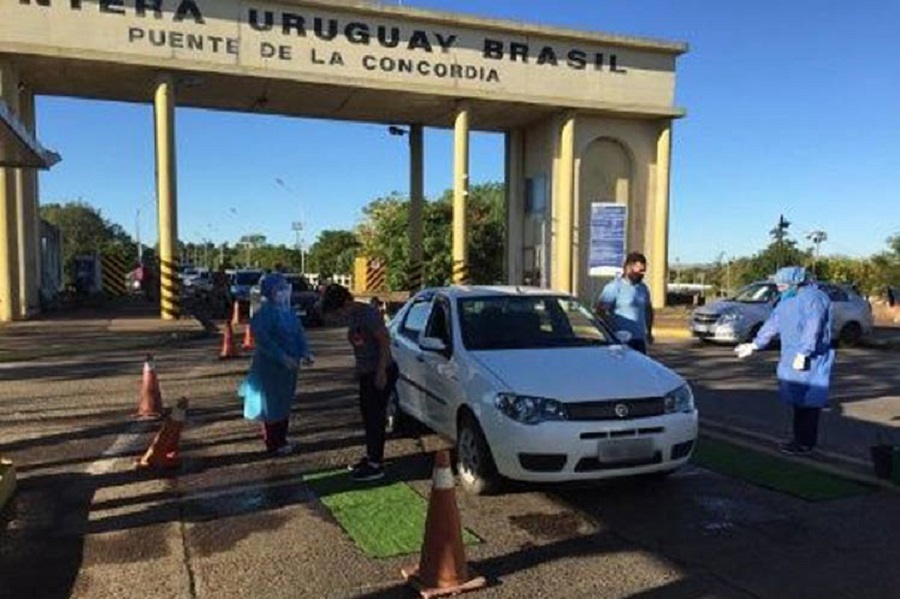
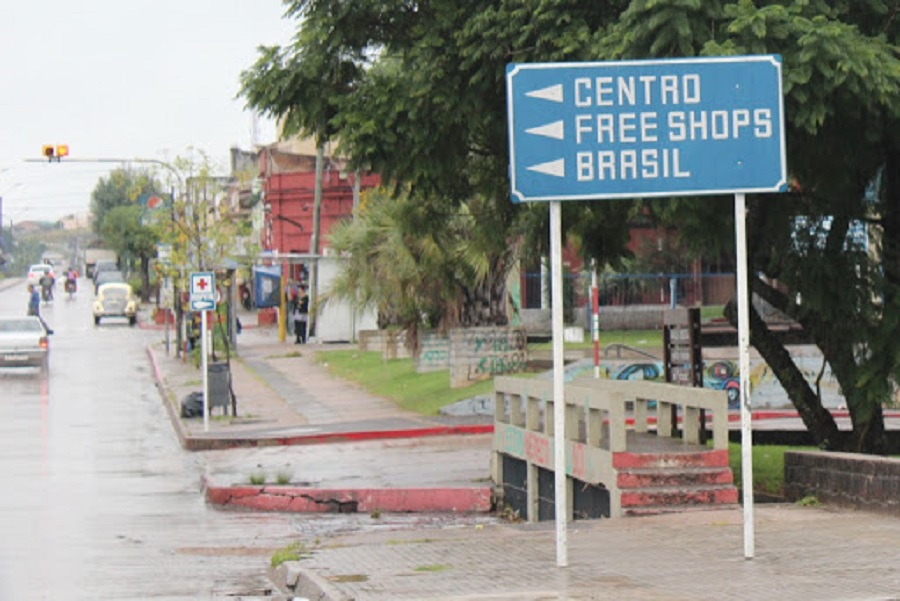
Such is the reality of commerce in a “dry border” which is actually a public space, the International Plaza, where Brazilians and Uruguayans lead a “binational” life, where “Portuguese” is unofficially spoken, a situation that worsened this week after the measure taken by the Uruguayan government to close the duty free shops.
These represent the source of employment and income of almost the totality of Uruguayan commerce in Rivera’s northern city, which attracts Brazilian citizens in search of bargains and which today is one of the hardest hit by covid-19 in Uruguay.

Currency exchanges of both countries in improvised kiosks in the middle of an avenue, sales of Real Madrid, Barcelona, Nacional or Peñarol jerseys, stores with prices in Brazilian reais and then in Uruguayan pesos, among others, are the daily routine in the city also known as the “border of peace”.
Hundreds of stories surround this place, which is witness to the arrival of immigrants from different countries in search of a better life and of those who, in this same place, have dedicated more than 20 years to see their business grow with the hope that the pandemic will soon be just a memory.
SALES DROPPING
“They have dropped quite a bit,” says Graciela Mora Campos, owner of a stall selling handicrafts and leather goods, mates and souvenirs, about sales during the last few months, although she does not lose hope that everything will improve.
“We are still in the struggle. We have to continue. Take care of ourselves and continue. They have dropped a lot, 80%. We sell to both countries, and the customers are Uruguayans and Brazilians, the weekends sold quite well, some holidays, and now we are limited, “he tells Efe.
Mora Campos, Uruguayan by birth, although she works on the Brazilian side, is emphatic about the recent measure of the Executive of Luis Lacalle Pou, which meant the closure until April 12 of the ‘free shops’, a measure that, in her opinion, “does not let people work”.
“They have to let us work. We take all the care. You saw that here there is no crowding, it is open and ventilated and has all the care,” she says.
For this artisan, the most important thing is that “people take care of themselves” so that soon this region, which is the hardest hit and has the highest incidence of contagion in Uruguay per 100,000 inhabitants according to the Harvard index, can return to normality and trade can prosper.
LOW-FLYING KITES
“César.” That is how he identifies himself and, although he does not want to talk to the camera or pose for a photo, he tells his story. He has been selling kites and “other items” for about 25 years, depending on the season, he says.
It is the reality he has to face every day in which his business has had losses of up to 80% during the last few months.
“It has not been easy; we want everything to improve to have prosperity in our business. I must leave because I have to attend to another business,” he says while leaving his sister in charge of the kites.
“César” is one of the many who had to look for a source of extra income in addition to his usual work due to the situation in a border threatened day by day by covid-19 and the arrival of the Brazilian P1 strain.
WITH GOD, EVERYTHING; WITHOUT HIM, NOTHING
On February 4, 1981, Jesús arrived at Plaza Internacional intending to have a job in which he could be at ease and in which, above all, he could be in contact with the people.
Forty years have passed, and he has remained in the same place, where he sells, according to his regular and loyal customers, “the best” panchos (hot dogs) of the border and its surroundings.
The secret ingredient? Yes, humility and his unwavering faith in God make a sausage between two buns with mayonnaise, ketchup, mustard, a “special” pesto, and grated cheese what has attracted locals and strangers alike for four decades.
“Thank God I’m fine because God doesn’t let you miss the supplement, nothing, he doesn’t let you miss anything. It is unnecessary to want to live on top of everything, no, but as God commands you. If he ordered you to be in a position, stay there as you are”, he affirms.
Jesús assures that the pandemic has not affected his business since another of his secrets is that “you reap what you sow”.
“I’m fine; I’m more than happy. If you have God, you are happy. If you believe in him, you lack nothing,” he says.
With a progeny of three professional children, twelve grandchildren, and two great-grandchildren, Jesús assures that he has no intention – “until God decides it” – of leaving his pancho stand, where he has seen generations pass by and continue to be faithful to his humble charms.
Source: infobae
More: Brazil news in English, every day from The Rio Times.
Editorial responsibility: Matthias Camenzind, Editor-in-Chief · Editorial standards · Report an error