Germany’s 2027 Budget and Record Borrowing Plan
Berlin's budget committee approved record spending for defence and infrastructure, and the borrowing behind it matters for bonds, the euro and US suppliers.

GERMANY · ANALYSIS
Germany is Europe’s largest economy and is now borrowing heavily to rebuild its armed forces and public infrastructure. This analysis explains how the money is raised, who supports and opposes it, and what it could mean for the euro area and US exporters, building on the Europe Intelligence Brief of 25 November 2026.
Key Facts
- What is happening The Bundestag budget committee approved 2027 federal spending of €560.92 billion (about US$614 billion) in the early hours of 13 November 2026.
- Why it matters Most new borrowing sits outside the debt brake, so Germany can fund rearmament on credit while euro bond supply rises.
- The numbers Core net borrowing is €122.97 billion (about US$135 billion), of which €84.55 billion (about US$93 billion) is exempt, and the defence chapter is €109.75 billion (about US$120 billion) (Bundestag, 13 November 2026).
- Who is who Chancellor Friedrich Merz leads the coalition, Finance Minister Lars Klingbeil defends the debt, and Defence Minister Boris Pistorius wants the money.
- What to watch The final Bundestag vote on 27 November 2026 and the 2027 bond issuance plan due in December 2026.
- What it means for you US holders of euro bonds face more German supply, and US defence suppliers should note that the only procurement data found is a leaked 2025 list.
The Germany 2027 budget plans €560.92 billion (about US$614 billion) of spending, financed by core net borrowing of €122.97 billion (about US$135 billion). For readers in the United States it matters because most of that borrowing escapes the debt brake and feeds euro bond supply, NATO burden sharing and defence orders.
Why Germany Is Borrowing More
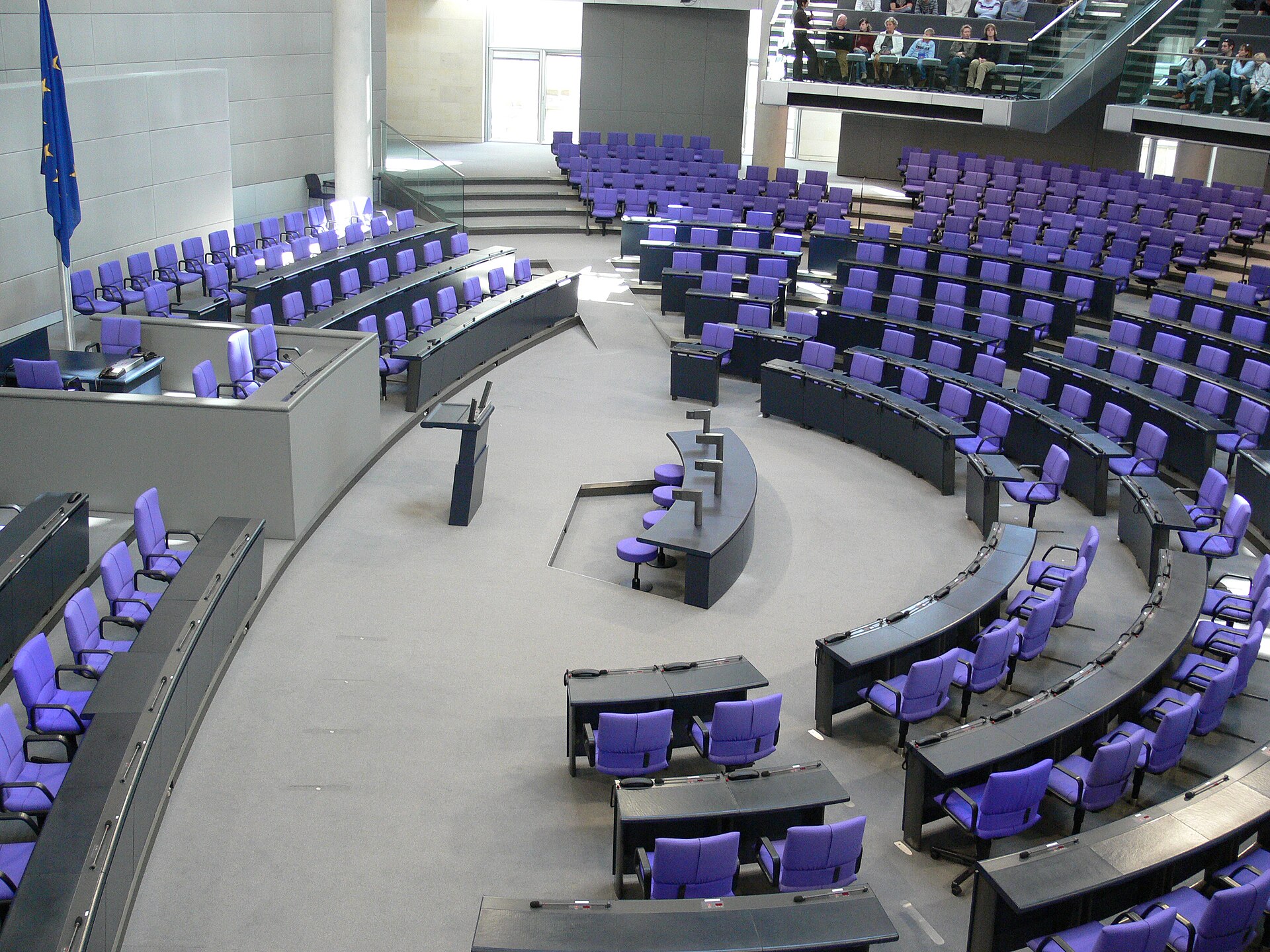
The Bundestag budget committee approved the 2027 federal budget in the early hours of Friday 13 November 2026. The overnight session ran from Thursday afternoon until 5:55 a.m. and voted on about 2,000 motions.
The governing CDU/CSU and SPD parties passed it, while the AfD, the Greens and Die Linke voted against. The full Bundestag, the lower house of parliament, holds its final roll-call vote on Friday 27 November 2026.
The spending reflects a political choice to rebuild the armed forces and public infrastructure on credit. Lars Klingbeil, the Finance Minister, argued on 8 September that Germany cannot defend itself without new debt.
The debt brake is the constitutional limit on federal borrowing. Under the Bundestag’s figures, defence and security spending is exempt from it, and a separate infrastructure and climate neutrality fund also borrows outside the core budget.
The Numbers That Matter
The committee version is larger than the government’s July draft on every main line. The two sets of figures are not interchangeable, so each number below carries its source.
- Spending: €560.92 billion (about US$614 billion), which is €5.48 billion (about US$6.00 billion) above the draft and 6.9% above the 2026 budget of €524.54 billion (about US$575 billion) (Bundestag, 13 November 2026).
- Core net borrowing: €122.97 billion (about US$135 billion), up from €97.96 billion (about US$107 billion) in 2026 and €4.25 billion (about US$4.66 billion) above the draft (Bundestag).
- Debt-brake split: €84.55 billion (about US$93 billion) is exempt under the defence and security carve-out, and €38.43 billion (about US$42 billion) counts against the brake at exactly the permitted limit (Bundestag).
- Core investment: €61.85 billion (about US$68 billion), raised by €5.58 billion (about US$6.11 billion) in committee (Bundestag).
- Revenue: €396.21 billion (about US$434 billion) from taxes and €41.74 billion (about US$46 billion) from other sources (Bundestag).
- Defence chapter: €109.75 billion (about US$120 billion), unchanged in committee, with commitment authorisations of €296.88 billion (about US$325 billion) (Bundestag).
About 69% of net borrowing is exempt from the debt brake, a Rio Times calculation from the Bundestag figures. The defence chapter equals about 19.6% of core spending by the same method.
Dollar values in brackets use the RT rate of about US$1.095 per euro on 25 November 2026.
Borrowing Beyond the Core Budget
Core borrowing is not the full picture, because the special funds borrow separately. The cabinet’s July draft put total 2027 borrowing at €203.6 billion (about US$223 billion), including €54.9 billion (about US$60 billion) through the infrastructure fund and €30 billion (about US$33 billion) through the defence fund (Reuters, via Investing.com).
Börsen-Zeitung, a German financial daily, puts the post-committee total at about €210.4 billion (about US$230 billion), but this rests on one source. Planned borrowing for 2027 to 2030 is €838.2 billion (about US$918 billion) in the draft, according to the same Reuters report.
Defence Totals Differ by Definition
The chapter is €109.75 billion (about US$120 billion), while the draft shows €130.1 billion (about US$143 billion) once Ukraine and other security items are added. Defense News reported on 23 September that Boris Pistorius, the Defence Minister, seeks nearly €140 billion (about US$153 billion) by also counting about €30 billion (about US$33 billion) from the expiring special fund.
Defence spending is planned to rise from 2.8% of GDP in 2026 to 3.5% in 2029 (Reuters, via Investing.com). Ukraine support is €11.6 billion (about US$13 billion) in 2027, then €8.5 billion (about US$9.31 billion) a year from 2028 to 2030.
Who Wants What
The budget divides parliament along familiar lines, but it also divides economists and industry. Each actor is explained in one line below.
- Friedrich Merz is Federal Chancellor and leads the CDU/CSU and SPD coalition behind the budget.
- Lars Klingbeil is Finance Minister and argues that defence cannot be funded without new debt.
- Boris Pistorius is Defence Minister and is seeking a record defence budget.
- The AfD is an opposition party that argues most “investment” is really current spending, according to the Rio Times brief citing a Bundestag page.
- The Greens are an opposition party that voted against the budget in committee.
- The Council of Economic Experts is the government’s advisory body and says defence and pension spending should be reined in, forecasting 1% growth for 2027 (Reuters, via BDNews24).
- The BDI is the federal industry association and has criticised the level of borrowing (Reuters, via Investing.com).
- Tammo Diemer is managing director of the Deutsche Finanzagentur, the federal debt agency that issues Bunds.
Money for the new priorities is partly found elsewhere. The draft cuts the extra federal subsidy to pension insurance by €1 billion (about US$1.10 billion) in 2027, and the budget committee raised the cut to €3 billion (about US$3.29 billion) in total.
Transport falls by €1.08 billion (about US$1.18 billion) to €25.35 billion (about US$28 billion), and Autobahn GmbH investment is cut to €2.38 billion (about US$2.61 billion) (Bundestag). The SPD says the coalition closed a €34 billion (about US$37 billion) gap, and a household electricity tax cut of about €5 billion (about US$5.48 billion) was still open, according to ZDFheute.
Bonds, the Euro and US Exposure
The Bund Market
Tammo Diemer said on 24 September that 2027 issuance rises to “record levels”, without giving a figure. The Bund is borrowing €525.5 billion (about US$576 billion) in 2026 against €309 billion (about US$338 billion) of maturities, and the 2027 plan is due in December 2026.
Interest payments are planned to rise from €41.9 billion (about US$46 billion) in 2027 to €80.7 billion (about US$88 billion) by 2030, and a funding gap of about €109 billion (about US$119 billion) remains from 2028 (Reuters, via Investing.com). That path is why debt costs, not only the headline total, draw criticism.
The 10-year Bund yield fell toward 3.3% on 29 October 2026, its lowest since late August, after the ECB held rates (Trading Economics). Late September had seen a 17-year high.
The European Central Bank held rates after two hikes since the Iran war disrupted energy markets. Christine Lagarde, ECB President, said policymakers discussed a rate hike but unanimously chose to hold rates steady.
The Euro
No verified euro exchange-rate data was available for this analysis, so any view on the currency is judgement. Heavy bond supply could lift yields, and higher yields can support a currency, but that link is an assumption, not a finding.
US Defence Suppliers and NATO
A leaked Bundeswehr procurement list for September 2025 to December 2026 showed about €83 billion (about US$91 billion) across 154 proposals. About 8% (€6.8 billion (about US$7.45 billion)) went to US firms, mostly €5.1 billion (about US$5.59 billion) for Raytheon Patriot missiles (POLITICO, via defence-network.com, 25 September 2025).
That is a leaked 2025 list, not 2027 budget data. SIPRI, the Stockholm peace research institute, reports that the US supplied 64% of arms imported by European NATO members in 2020 to 2024, up from 52% in 2015 to 2019.
POLITICO reported a planning document of nearly €3.4 billion (about US$3.72 billion) for Typhon and Tomahawk systems, which still needs parliamentary approval. The 35-jet F-35 purchase of €8.3 billion (about US$9.09 billion) dates from 2022 and is not new 2027 money.
The 3.5% of GDP path is the budget plan’s own timetable. NATO’s text on the Ankara summit commitments was not retrieved, so the link to alliance burden sharing is not confirmed here.
Latin America
No sourced data was found on direct effects for Latin America. Any channel runs through global yields and the euro, which shape financing costs and export prices, and that is analysis rather than evidence.
Scenarios for 2027 and Beyond
In a stabilising scenario, the Bundestag passes the budget on 27 November and the December issuance plan is orderly. The ECB stays on hold and Bund yields stay near the 3.3% of late October.
In a tipping scenario, growth stays near the 1% forecast by the Council of Economic Experts while interest costs rise toward €80.7 billion (about US$88 billion) by 2030. The €109 billion (about US$119 billion) funding gap from 2028 would then become harder to close, and yields could revisit the 17-year high of late September.
A political scenario is also possible, because the Bundesrat, the chamber of the 16 states, rejects several consolidation measures in the 2027 accompanying budget law (Bundestag, 14 October 2026). Those details were not verified, and these scenarios are not forecasts.
What It Means for You
If you hold euro-area bonds, expect larger German supply, with the 2027 issuance plan due in December 2026. Yields fell toward 3.3% in late October, but the 17-year high of late September shows how quickly they can move.
If you supply defence equipment, note that the only procurement data found is a leaked 2025 list in which US firms had about 8%. The Patriot share of €5.1 billion (about US$5.59 billion) shows where US orders concentrated, and the Typhon and Tomahawk plan still needs parliament’s approval.
What Is Not Known
The outcome of the 27 November vote is not known, and neither is the 2027 Bund issuance figure. The post-committee total borrowing of about €210 billion (about US$230 billion), including special funds, is unconfirmed.
No verified euro exchange rate, November Bund yield or Bundesrat date for the budget was found. The original source for the March 2025 debt brake reform was not retrieved, so this analysis does not rely on it.
What to Watch
- 27 November 2026: the final Bundestag roll-call vote on the 2027 budget.
- December 2026: the Finanzagentur’s 2027 issuance plan, the first official borrowing figure for Bunds.
- Mid-December 2026 (unconfirmed): the Bundesrat’s final session on the budget, to be checked at bundesrat.de.
- Coalition committee: the open decision on the household electricity tax cut of about €5 billion (about US$5.48 billion).
Also watch the Bund yield against its late-October level near 3.3% and its late-September peak. The ECB’s next decision will shape both.
Frequently Asked Questions
How big is the Germany 2027 budget?
The Bundestag budget committee approved spending of €560.92 billion (about US$614 billion). That is 6.9% above the 2026 budget of €524.54 billion (about US$575 billion).
How is Germany financing the 2027 budget?
Core net borrowing is €122.97 billion (about US$135 billion), with tax revenue of €396.21 billion (about US$434 billion). The July cabinet draft put total borrowing including special funds at €203.6 billion (about US$223 billion).
How much of the borrowing is exempt from the debt brake?
Of the €122.97 billion (about US$135 billion), €84.55 billion (about US$93 billion) is exempt under the defence and security carve-out. The remaining €38.43 billion (about US$42 billion) counts against the brake and sits at the permitted limit.
How much does Germany spend on defence in 2027?
The defence chapter is €109.75 billion (about US$120 billion), about 19.6% of core spending by a Rio Times calculation. Totals including Ukraine and other security reach €130.1 billion (about US$143 billion) in the cabinet draft.
What does the budget mean for the euro and US exporters?
No verified euro exchange-rate data was available, so any euro effect is judgement. A leaked 2025 procurement list showed about 8% (€6.8 billion (about US$7.45 billion)) going to US firms, mostly for Patriot missiles.
When is the final vote on the budget?
The Bundestag holds its final roll-call vote on Friday 27 November 2026. The Bundesrat’s session date was not confirmed.
Sources: riotimesonline.com, bundestag.de, bundesregierung.de, investing.com, boersen-zeitung.de, defensenews.com. Retrieved 25 November 2026.
This article was produced by The Rio Times’ automated AI newsroom. Editorial responsibility: Matthias Camenzind, Publisher and Editor-in-Chief. The Rio Times also runs Ask Rio Times, which answers from 100,000+ of our own articles, the daily Latin America Power Map, and prediction-market odds on elections and markets.. How we use AI · Report an error
LatAm Markets: Live Signals → — real-time movers, turnover leaders and FX across Latin America.