European Leaders Rally to Fortify Defense as U.S. Pivots Toward Peace with Russia
European Union leaders convened in Brussels on March 6, 2025, for a high-stakes summit to strengthen defense spending and reaffirm support for Ukraine, as U.S. President Donald Trump’s policy shift widens a transatlantic divide.
The meeting follows Trump’s suspension of military aid to Kyiv in February 2025 and his push for swift peace talks with Russia. This move has unsettled European allies long dependent on U.S. security guarantees.
Trump’s direct engagement with Russian President Vladimir Putin—marked by a lengthy February 12, 2025, phone call—has deepened concerns that the U.S. might negotiate a deal pressuring Ukraine into concessions.
The call, described by Trump as “highly productive,” came shortly before his public dispute with Ukrainian President Volodymyr Zelenskyy over war aims. This prompted Europe to reassess its role in supporting Kyiv amid waning U.S. commitment.
EU leaders are poised to approve bold measures to enhance military autonomy. Building on a 30% surge in defense spending from 2021 to 2024—reaching €326 billion annually, according to Eurostat—European Commission President Ursula von der Leyen has unveiled an €800 billion plan.
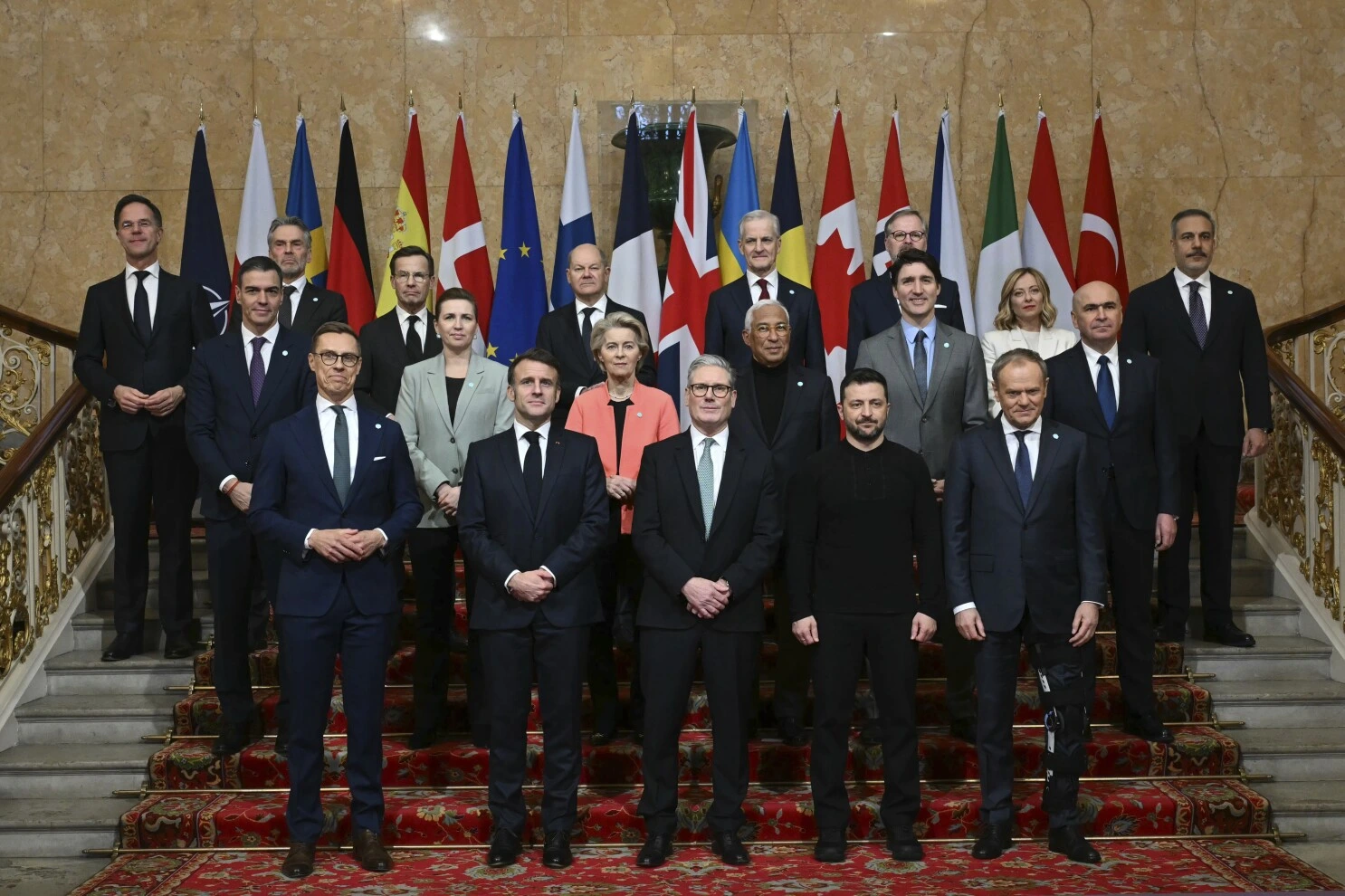
The plan aims for the joint procurement of drones, missile defenses, and other cutting-edge systems. French President Emmanuel Macron and German Chancellor Olaf Scholz are expected to lead the charge.
Europe’s Strategic Dilemma at the Brussels Summit
They will stress the need for self-reliance in an unpredictable geopolitical landscape. Yet internal divisions cloud the summit’s prospects. Hungary’s Prime Minister Viktor Orbán, aligning with Trump’s call for rapid peace talks, has threatened to block aid to Ukraine. He declared, “Strong leaders forge peace, not war.”
Slovakia has echoed this reluctance, while Poland and the Baltic states advocate a harder line against Russia, highlighting the EU’s fractured consensus. The growing rift reflects stark ideological differences.
Europe’s commitment to collective security contrasts with Trump’s inward-looking stance, which he justifies as sparing American resources from foreign entanglements. This divergence, echoing domestic divides across the West, tests the resilience of the transatlantic bond.
As the Brussels summit unfolds, Europe confronts a pivotal challenge: uniting to secure its defenses and Ukraine’s future. Alternatively, it risks fragmentation in a world where its longtime protector pursues a divergent path.
This article was produced by The Rio Times’ automated newsroom system. How we use AI · Report an error · Editorial responsibility: Matthias Camenzind, Editor-in-Chief
Read More from The Rio Times