Europe Intelligence Brief — Monday, September 28, 2026
Executive Summary
Europe Intelligence Brief for September 28: Poland treats a burnt Starlink station as sabotage, Serbia's president resigns on his own terms, Sweden
Europe Intelligence Brief — Monday, 28 September 2026
Europe’s temper this Monday is vigilance with a hangover. The weekend gave the continent a burnt relay station in Poland, a dead priest, more dead Ukrainians in Kyiv and Odesa and a resignation in Belgrade — and on Monday morning its institutions simply opened on time.
The register is readiness rather than panic. Warsaw is rehearsing the worst out loud, Stockholm is counting its three-seat gap, and Brussels is completing the legal text that releases six and a half billion euros for Kyiv, all with the manner of people who no longer expect quiet weeks.
Poland is the sharpest case because it has stopped pretending its incidents are accidents. A fire at a Starlink ground station is being treated as sabotage, and the prime minister has told his parliament, on the record, which scenario he considers most likely.
What steadies the continent is procedural and dull, which is usually the good news. Sweden’s new parliament assembles today on schedule, the European Peace Facility’s money moves through its final legal step today, and Lisbon’s truckers went home for the weekend.
Key Facts
—The Starlink fire. A fire at a Starlink ground station at Wola Krobowska in central Poland was called a deliberate “act of sabotage” by Deputy Prime Minister Krzysztof Gawkowski, the BBC reported on 24 September; investigators have not yet formally concluded the fire was deliberate. Prime Minister Donald Tusk warned the Sejm of the “most likely” scenario of hybrid attacks on Poland and other backers of Ukraine.
—Belgrade’s resignation. President Aleksandar Vučić announced his resignation on 27 September, paving the way for early presidential elections, Reuters reported; he is expected to seek the premiership in an early parliamentary election.
—Kyiv’s offer and Russia’s answer. Foreign Minister Andrii Sybiha said Ukraine is prepared to accept an immediate ceasefire if Russia agrees, DW reported, days after Russian drone attacks killed 14 people and struck infrastructure in Kyiv and Odesa, Euronews reported.
—Stockholm’s arithmetic. Sweden’s new parliament assembles today, 28 September, with the two blocs separated by three seats, 176 to 173, and opposition leader Magdalena Andersson saying she cannot form a government in the current situation, Reuters reported.
—The Coimbra convoy. Portugal’s gendarmerie counted 380 lorries driving at walking pace toward Coimbra on Friday against diesel up 63 euro cents a litre since February; commuters blared horns on Lisbon’s main bridge, with fuel prices up 24 per cent in August year on year, Reuters reported.
—The Plaka warnings. Residents of the Athens building that collapsed after a blast on Friday had warned the city and the utility companies about the risk a year earlier, the BBC reported as the search ended with six people dead.
—The money for Kyiv. European Union governments complete the final legal step today for releasing €6.6 billion (about US$7.53 billion) from the European Peace Facility, agreed in principle on Friday.
—A call across the old line. Germany and Russia held their first diplomatic contact since 2022, Reuters reported, as German students struck against military service.
Warsaw Rehearses The Worst Out Loud
Poland spent the weekend deciding, in public, to believe its own worst assessment. A fire at a Starlink ground station at Wola Krobowska, in the Masovian countryside, was called a deliberate “act of sabotage” by Deputy Prime Minister Krzysztof Gawkowski, the BBC reported on 24 September; investigators have not yet formally concluded the fire was deliberate, and the station kept working. But the government is no longer lowering its voice about what it suspects.
Prime Minister Donald Tusk went to the Sejm and said the quiet part into the record. He warned of the “most likely” scenario involving serious events and hybrid attacks on Poland and on other countries that back Ukraine, Euronews reported — a head of government telling his parliament to expect to be attacked, in the grammar of probability.
The official response has been calibrated to be seen and not to provoke. Deutsche Welle described Poland’s posture as a “nonprovocative but serious response” to the Russian drone incidents, a phrase that is itself a diplomatic instrument: firm enough for Warsaw’s voters, soft enough for NATO’s lawyers.
A second story darkened the same days, and the country is holding them together whether or not the police do. A knife attack at a Polish abbey killed a priest, an act with no established link to anything larger — but a nation rehearsing for hybrid war no longer experiences any act of violence as merely local.
The register in Warsaw is the defining mood of Europe’s eastern tier: not fear exactly, but a decision to stop being embarrassed about preparation. Shelters, sirens and sabotage investigations have become administrative normalcy, and the country’s argument is no longer whether the threat is real but whether the state is fast enough.
For the rest of the continent, Poland has become the laboratory. What Warsaw does with a burnt relay station this week — attribution, response, restraint — is the procedure every capital between Helsinki and Athens expects to follow eventually.
Belgrade’s President Resigns, On His Own Terms
Serbia produced the weekend’s genuine political earthquake, measured on a scale the region keeps calibrated. President Aleksandar Vučić announced his resignation on 27 September, paving the way for early presidential elections, Reuters reported.
The resignation arrives after months in which Belgrade’s streets made the country ungovernable by any ordinary definition, and it comes with a destination attached: Vučić is expected to seek the premiership in an early parliamentary election, converting a street confrontation into a ballot on terrain he still owns.
That ambiguity is the Serbian story. The opposition reads a resignation as the first crack in the wall; the incumbent’s strategists read it as a reset, sprung while the opposition is organised for protest rather than for ballots.
The register in Belgrade this morning is disoriented energy. A movement that spent a year demanding exactly this now faces questions it did not expect to answer so soon: candidates, lists, observers, and the arithmetic of a vote on terrain Vučić’s party still owns.
For the European Union, the timing is an unrequested exam. Brussels has spent the autumn balancing its enlargement language against its energy geography, and a Serbian early election will force it to say, in public, what kind of result it is hoping for.
Kyiv Offers A Ceasefire Into The Drone Noise
Ukraine’s week is the region’s cruelest split-screen. Foreign Minister Andrii Sybiha said Ukraine is prepared to accept an immediate ceasefire if Russia agrees, DW reported — the clearest formulation Kyiv has yet put on the record.
The other half of the screen shows what the offer is being made over. Russian drone attacks killed 14 people and struck infrastructure in Kyiv and Odesa in the same days, Euronews reported, keeping the war visibly aimed at what President Zelenskiy has called “ordinary life” — the ability to stay connected, study and work.
The diplomacy around the offer is thin but real. The United States has proposed a trilateral meeting in the UAE with Ukraine and Russia, according to Zelenskiy, and Moscow’s public line — that all peace proposals are on the table while Russia weighs its interests — is the exact wording of a power that wants to seem reachable without moving.
The register in Kyiv is endurance with an exit strategy sketched in pencil. A public ceasefire offer commits Ukraine to nothing Russia has not first accepted, and it buys Kyiv the ledger entry it needs with its own tired public and its wavering backers: we said yes; watch who says no.
Stockholm Convenes Its Deadlock On Time
Sweden’s new parliament assembles today, and it arrives without a government to form one. The 13 September election left the two blocs separated by three seats, 176 to 173 on the chamber’s own count, and a fortnight of exploration has produced nothing.
The week’s definitive sentence came from the woman holding the larger bloc. Magdalena Andersson said she cannot form a government in the current situation, Reuters reported — the Social Democrat leader stating, on the record, that the arithmetic defeats her.
The knot remains where it was. The Left Party wants ministries in a Social Democrat-led cabinet; the Centre Party refuses to sit with it; and Ulf Kristersson governs on as caretaker, having conceded the numbers and not the argument.
The register in Stockholm is exasperation rather than crisis. Sweden has done long formations before — 134 days after the 2018 election — and the national conversation treats this one as an expensive civics lesson: a country that insists on negative parliamentarism must occasionally watch it not work.
Portugal Measures The Week In Litres
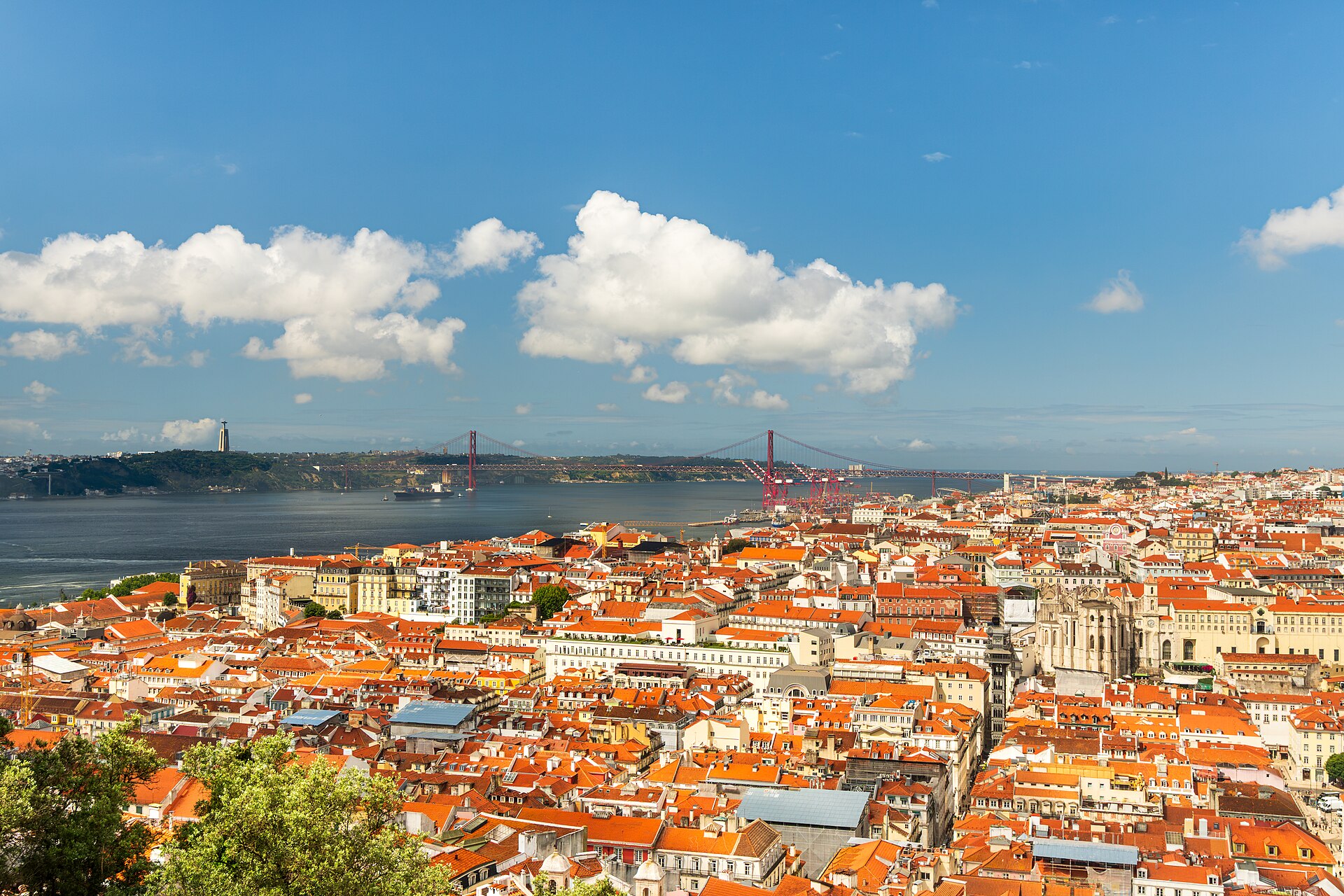
Portugal’s protest has a unit of account, and it is the litre. The gendarmerie counted 380 lorries driving at walking pace toward Coimbra on Friday — the organisers claimed 450 — against diesel up 63 euro cents a litre since February, Reuters reported on 25 September.
The convoy was felt where it was meant to be. Commuters blared their horns on Lisbon’s main bridge, and fuel prices stand 24 per cent higher than a year ago on August’s measure, with diesel above €2 a litre at the pumps that matter.
The same litre is being argued over in France, where a rural baker paid €2,200 for 1,200 litres of heating oil on 23 September — €100 more than he paid for 2,000 litres six months earlier. The two countries’ protests are not coordinated; they are simply the same arithmetic arriving at different counters.
The register on the Iberian street is economic grievance without ideology. The truckers are not asking for a different government; they are asking for a cheaper input, and the government’s adjusted fuel support has so far read as a reply in the wrong currency.
Athens Reads Out The Warnings It Ignored
The Plaka story has entered its second, harder phase. The search beneath the collapsed building near the Acropolis ended on Saturday with six people dead, and the reporting has turned from rescue to the record: residents had warned the city and the utility companies about the building a year earlier, the BBC reported.
That single fact has reorganised Greek politics for the week. A preventable death in the shadow of the Acropolis is now an indictment with a date on it — and every ministry statement is being measured against the warnings that predate it.
The register in Athens is grief converted into paperwork. The opposition wants resignations; the government wants the investigation; and the residents who wrote the warning letters have become, unwillingly, the most credible voice in the neighbourhood.
Berlin Picks Up A Phone It Hung Up In 2022
Germany and Russia held their first diplomatic contact since 2022, Reuters reported — a fact stated without ceremony and received, in Berlin, with the same. No channel between the two capitals has operated since the invasion, and the week’s contact is being described as technical rather than political.
It lands in a Germany arguing with itself about its own hardening. Students struck across the country against military service, an eastern town banned future Holocaust memorial plaques, and the coalition is spending relief money that is not yet law — a country accelerating toward a harder posture while its internal debate jogs to keep up.
Paris Holds Its Mass And Its Breath
Pope Leo XIV said mass on the Place de la Concorde and the Champs-Élysées on Saturday, with 600,000 people registered on the diocese’s own count — the largest public gathering Paris has attempted in years, staged without incident.
The mass was also a stress test the state needed to pass. A capital arguing about fuel prices, debt and its own policing put six hundred thousand people into its ceremonial centre and handed them back safely, which in the France of 2026 counts as a governing achievement.
What This Means From Latin America
Poland’s sabotage investigation matters to the region in a specific, unglamorous way: Starlink is Latin America’s rural connectivity layer too, from Amazon school programs to Chilean mining telemetry. If Warsaw confirms sabotage against satellite ground infrastructure in Europe, the political risk of depending on it anywhere is repriced.
Serbia’s early election is being watched in Brasília and Buenos Aires for the same reason all Balkan resets are: lithium. Rio Tinto’s Jadar project, suspended and revived through Serbia’s political cycles, anchors Europe’s battery supply chain — and a Belgrade campaign season is a season of promises about who gets to dig.
The fuel arithmetic needs no translation. Brazil’s truckers brought down a government coalition over diesel in 2018, and Argentina’s hauliers are watching Portugal’s walking-pace convoy the way labour movements watch each other everywhere: for the method, not the message.
The comparison is set out at greater length elsewhere. The dossier carries the leader, the country health check and the outcome table with its Latin America column — open the Europe Intelligence Dossier.
There is a deadline Europe and Latin America share today. The European Peace Facility’s €6.6 billion completes its legal release in Brussels while the Inter-American Development Bank’s own autumn disbursements stall in committee — two institutions, two continents, one question: how fast can a bloc actually move money it has already promised.
What We Are Watching
- Today, 28 September: Stockholm convenes and Brussels signs — Sweden’s new Riksdag assembles with its 176-to-173 deadlock unresolved, and the EU completes the legal release of €6.6 billion from the European Peace Facility for Ukraine. Both are procedural; neither is routine.
- This week: attribution in Warsaw — Whether Poland formally attributes the Starlink station fire is the week’s most consequential sentence. A named perpetrator triggers the response Tusk has already described to his parliament.
- The fortnight: Serbia’s election mechanics — A date, an electoral framework and an observation mission are the three things the opposition needs and does not yet have. The president’s camp controls the calendar; watch when it chooses to spend it.
- Through the week: the UAE track — The American proposal for a trilateral meeting in the UAE now has Kyiv’s ceasefire offer attached to it. Moscow’s answer, or its silence, sets the diplomatic weather for October.
- Wednesday 30 September: Portugal’s fuel support review — The government’s adjusted measures meet their first street test after a weekend to cool. A second convoy would move the story from protest to negotiation.
- Ongoing: Athens’ paper trail — The warnings residents filed a year before the Plaka disaster are now the case. Expect the first resignations or the first indictments this week; the government cannot survive both the letters and inaction.
Frequently Asked Questions
Why is Poland treating a fire as sabotage?
The fire hit a Starlink ground station — infrastructure that feeds Ukraine’s battlefield connectivity — at a moment when Poland is already investigating drone incursions and has publicly committed to what Deutsche Welle called a “nonprovocative but serious response”. The BBC reported on 24 September that Deputy Prime Minister Gawkowski called the fire a deliberate “act of sabotage”, while investigators have not yet formally concluded it was deliberate; Prime Minister Tusk separately warned the Sejm of the “most likely” scenario of hybrid attacks on Poland and other Ukraine backers.
Did Serbia’s president actually leave power?
He resigned the office, but the framing matters: Reuters reported on 27 September that the resignation of Aleksandar Vucic paves the way for early presidential elections, and he is expected to seek the premiership in an early parliamentary election. In Belgrade the move is being read less as a departure than as a bid to convert a street confrontation into a ballot he can schedule, shape and plausibly win.
Is a Ukraine ceasefire actually on the table?
Ukraine has put its clearest version on the record: Foreign Minister Andrii Sybiha said Kyiv is prepared to accept an immediate ceasefire if Russia agrees, DW reported. The United States has proposed a trilateral meeting in the UAE, and Moscow says all proposals are on the table while it weighs its interests — language that costs nothing. Russian drone attacks killed 14 people in the same days, which is the offer’s real counterparty.
Why can’t Sweden form a government with only three seats between the blocs?
Because the seats are not the problem — the conditions are. The red-green bloc leads 176 to 173, but the Left Party demands ministries and the Centre Party refuses to sit with it, so the majority exists only on paper. Opposition leader Magdalena Andersson said this week she cannot form a government in the current situation, and Sweden’s negative parliamentarism means a cabinet falls if half the chamber votes against it, even without a majority for anything else.
This article was produced by The Rio Times’ automated newsroom system. How we use AI · Report an error
LatAm Markets: Live Signals → — real-time movers, turnover leaders and FX across Latin America.