Ecuador Approves Law Letting Military Aid Police Without Emergency
The 83-vote approval implements a 2024 referendum mandate and ends Quito's reliance on rolling emergency decrees, but critics say key controls were cut.
Ecuador · SECURITY
Key Facts
- —Law Organic law regulating complementary Armed Forces support to the National Police under Article 158
- —Vote 83 in favor, 63 against, 3 abstentions on 25 August 2026
- —Scope drug trafficking, terrorism, extortion, illegal mining and prison crises
- —Limits deployments capped at 180 days, renewable once for 30 days
- —Next step bill goes to President Noboa for signature or veto
The 83-vote approval implements a 2024 referendum mandate and ends Quito’s reliance on rolling emergency decrees, but critics say key controls were cut.
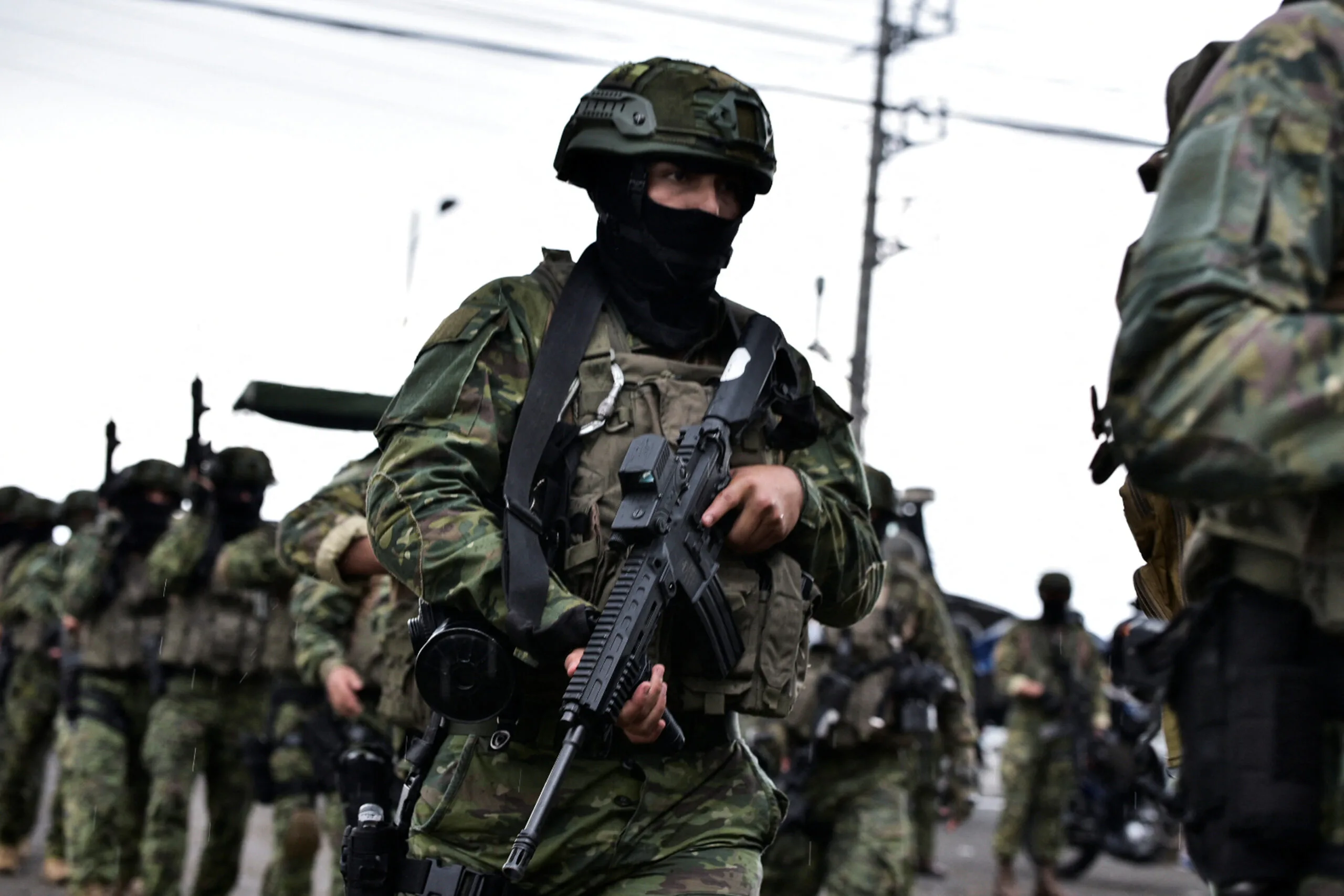
Ecuador’s National Assembly on Tuesday, 25 August 2026, approved a long-delayed law that allows the Armed Forces to support the National Police in fighting organized crime without the president having to declare a state of emergency. The Ecuador military support law passed its second and final debate with 83 votes in favor, 63 against and three abstentions, and will now be sent to President Daniel Noboa, who can sign it into law or veto it.
What the Ecuador Military Support Law Allows
The bill, formally called the Organic Law Regulating the Complementary and Subsidiary Support of the Armed Forces to the National Police, develops Article 158 of the Constitution, which Ecuadorians reformed in an April 2024 referendum. It contains 20 articles plus general, reform and transitory provisions, including amendments to the law on the legitimate use of force and to the public and state security law. Under the Ecuador military support law, troops can back the police only when the force’s operational capacity has been objectively and demonstrably overwhelmed by a specific threat.
The law restricts military support to a closed list of crimes written into the Constitution: drug trafficking, terrorism, money laundering, arms and human trafficking, illegal mining, extortion, intimidation and organized crime, as well as grave internal disturbances in the prison system. It states that the Armed Forces will not replace the police or assume ordinary public security duties permanently, and that activation does not in itself suspend constitutional rights. The support provided for in this law ‘does not require an internal armed conflict, does not in itself constitute a state of emergency and does not imply the suspension of constitutional rights,’ ruling-party lawmaker Inés Alarcón, who sponsored the bill, told the chamber, adding that it does not create powers or modify the competences of either institution.
How Military Support Will Be Activated
The Ecuador military support law sets out a fixed chain of steps before a single soldier can deploy. The process starts with a motivated, documented request from the general commander of the National Police to the president, specifying the territory, the crimes targeted and why police capabilities have been exceeded. The Joint Command of the Armed Forces then has 48 hours to produce a technical report on the need, relevance and scope of the support. Within 24 hours the president must convene the Public and State Security Council (Cosepe) to approve a definitive report, and the head of state has a further 48 hours to issue the decree.
Safeguards continue after the decree is signed. The executive must notify the Constitutional Court and the National Assembly within 24 hours so both can exercise subsequent oversight. Deployments are capped at 180 days, renewable once for up to 30 additional days if the original causes persist, and a renewal request must be filed at least 10 days before the initial period expires; support can also be ended early. The text adds rules on operational coordination between police and soldiers and requires human rights and legitimate-use-of-force training for personnel involved in joint operations. For prison crises, the request must also draw on information from the technical body of the social rehabilitation system.
Who Backed the Law and Who Opposed It
The bill cleared its second and final debate with 83 votes in favor from Noboa’s Acción Democrática Nacional (ADN), the Social Christian Party (PSC) and independents aligned with the executive. The 63 lawmakers of the opposition Revolución Ciudadana, the party of former president Rafael Correa, voted against, while three legislators from the Indigenous movement Pachakutik abstained.
Opposition lawmakers said they did not reject military cooperation itself, which seven in ten voters endorsed at the ballot box, but rather the final wording. Revolución Ciudadana assembly member Paola Cabezas said provisions in the first-debate report had disappeared from the text that was voted on, removing oversight of possible excesses in the use of force, rules on the progressive use of force and guarantees for peaceful protest, while widening the secrecy surrounding military operations. PSC lawmaker Alfredo Serrano also flagged differences, noting that an obligation for the president to report to the Assembly and the Constitutional Court and complaint mechanisms before the Ombudsman’s Office had been cut. Even so, he said he considered 95 percent of the project positive, and his party voted it through.
From Referendum to Law: A Two-Year Delay
The Ecuador military support law implements a mandate voters delivered more than two years ago. On 21 April 2024, 72.24 percent of voters approved a partial reform of Article 158 of the Constitution to allow complementary military support for the police. A transitory provision gave the Assembly 200 days to pass the implementing rules, but the process took more than 600 days, and the full chamber held the first debate only on 7 January 2026.
In the absence of the legal framework, President Noboa has relied on successive states of emergency to put soldiers on the streets, measures that suspend certain rights and require Constitutional Court review. In January 2024 he went further, declaring an internal armed conflict against 22 criminal gangs his government labels terrorists. Despite the militarized strategy, violence has kept climbing: local outlet Vistazo reported that 2025 closed with a record 9,283 homicides, the worst annual figure in the country’s history.
What Happens Next
The approved text now passes to the executive. Noboa can sign it, object to it in part or veto it outright; if signed, the Ecuador military support law takes effect once published in the Registro Oficial, the official gazette. A veto is considered unlikely, since the bill was sponsored by the chair of the Assembly’s Security Committee, a lawmaker from the president’s own party, and the government has repeatedly urged the legislature to deliver the framework.
The law is a central piece of Noboa’s security policy, which has made military deployment against organized crime its hallmark, alongside a push for foreign security cooperation and tougher sentencing. The vote came one day after Ecuador’s anti-mafias law, which sets prison penalties for gang membership, was published in the Official Register. Supporters argue the new framework replaces open-ended emergency rule with a regulated, time-limited tool; critics counter that it entrenches the military’s role in public security while weakening the controls lawmakers had originally drafted.
More: Ecuador news in English, every day from The Rio Times.
Frequently Asked Questions
What is the Ecuador military support law?
It is an organic law approved by Ecuador’s National Assembly on 25 August 2026 that regulates how the Armed Forces can provide complementary and subsidiary support to the National Police against organized crime, without requiring a state of emergency. It implements a constitutional reform backed by 72.24 percent of voters in an April 2024 referendum.
Does the law suspend constitutional rights?
No. According to its sponsors, military support under the law does not by itself constitute a state of emergency or suspend constitutional guarantees. Deployments are limited to specific serious crimes, capped at 180 days with a single 30-day renewal, and must be notified to the Constitutional Court and the National Assembly within 24 hours.
When does the Ecuador military support law take effect?
The bill was sent to President Daniel Noboa, who may sign it, partially object to it or veto it. If signed, it enters into force upon publication in the Registro Oficial, and the government has pressed for the framework for months.
Connected Coverage
Ecuador Gang Law Bill Would Jail Criminal Group Members Up to 22 Years
Sources
This article was produced by The Rio Times’ automated AI newsroom. Editorial responsibility: Matthias Camenzind, Publisher and Editor-in-Chief. The Rio Times also runs Ask Rio Times, which answers from 100,000+ of our own articles, the daily Latin America Power Map, and prediction-market odds on elections and markets.. How we use AI · Report an error