Recent discussions in the French Senate have cast doubts on the viability of two significant European defense initiatives: the Future Combat Air System (FCAS) and the Main Ground Combat System (MGCS).
Senators Hugues Saury and Hélène Conway-Mouret, analyzing France’s 2024 defense budget, expressed concerns about these projects.
Both projects involve collaborations among France, Germany, and Spain, specifically for the FCAS.
Industry skepticism about the success of these programs is evident in their report.
The senators pinpointed differing perspectives between Paris and Berlin on the projects’ capabilities and timelines as major hurdles.
These variations, coupled with distinct economic interests, could delay production stages and weaken defense capabilities in the period from 2030 to 2050.
A pivotal moment is approaching in 2025 when France must decide on replacing its Leclerc tanks with the MGCS and Rafale combat aircraft with the NGF under the FCAS.
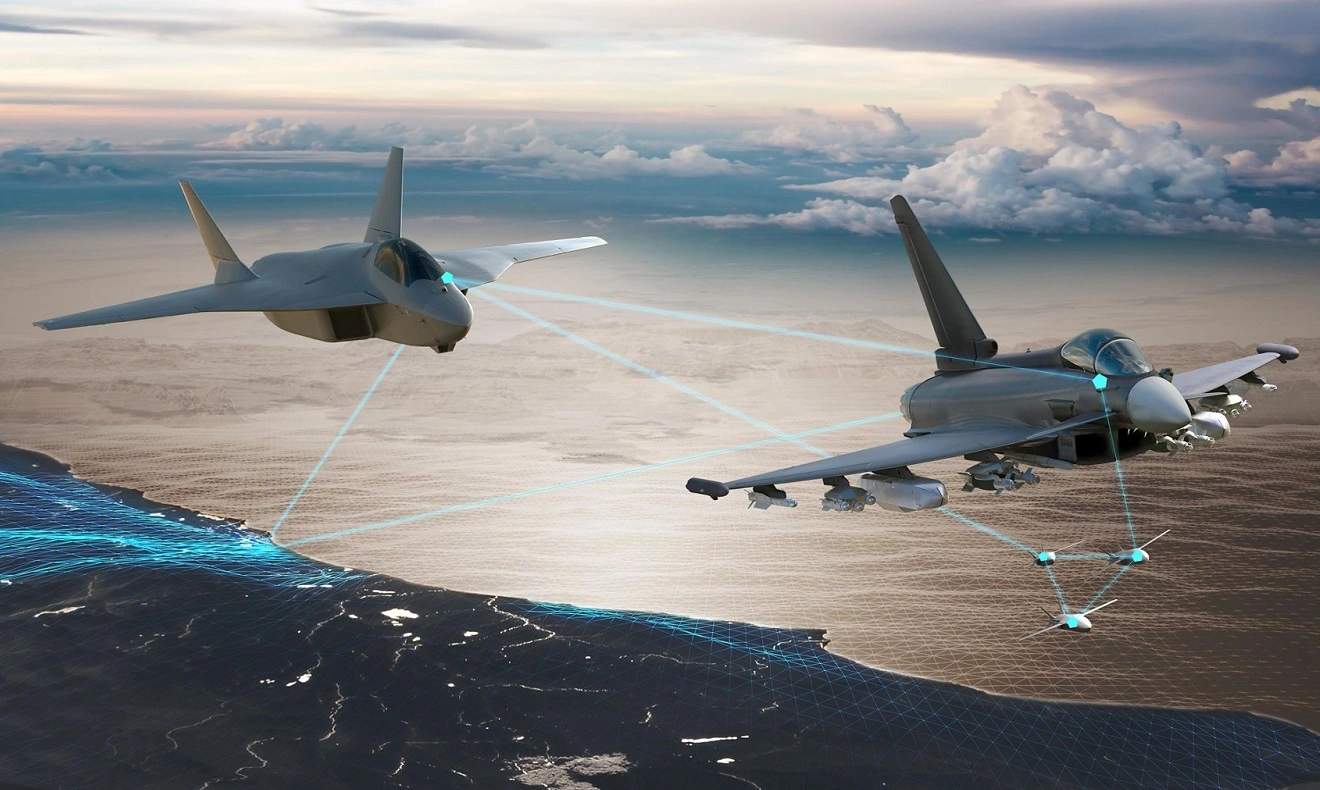
However, the report suggests that the MGCS’s upcoming study phase, slated for 2024, lacks a shared industrial strategy.
This leaves questions about France’s future armored capabilities unanswered. German industrial partners’ interest in these projects also appears uncertain.
The report highlights Germany’s preference for solutions involving Rheinmetall and KMW, causing significant delays in operational readiness, not expected until 2040-2045.
Despite the joint tank development initiative (EMBT) proposed in 2018 by KNDS, a collaboration between German and French firms, Berlin seems to favor a local approach.
Germany’s limited interest in French firepower
Considering these issues and Germany’s limited interest in French firepower, the senators suggest two alternatives.
One is a complete overhaul of existing Leclerc tanks, and the other is developing a new tank based on the EMBT.
Regarding the FCAS, doubts arise about its progression after the 2029 flight of its demonstrator.
New partners, like Belgium, might further complicate production.
Moreover, the cost of the NGF is likely to exceed initial estimates, and German export restrictions could hinder sales to other countries.
Finally, the report discusses the Rafale F5 development, capable of operating with an unmanned aircraft.
This new development could offer France a more immediate, cost-effective, and domestically controlled alternative, potentially challenging the need for the FCAS.
This situation reflects the dynamic and complex nature of international defense collaborations, where national interests and strategic visions often intersect and sometimes conflict.
This article was produced by The Rio Times’ automated newsroom system. How we use AI · Report an error · Editorial responsibility: Matthias Camenzind, Editor-in-Chief
Read More from The Rio Times