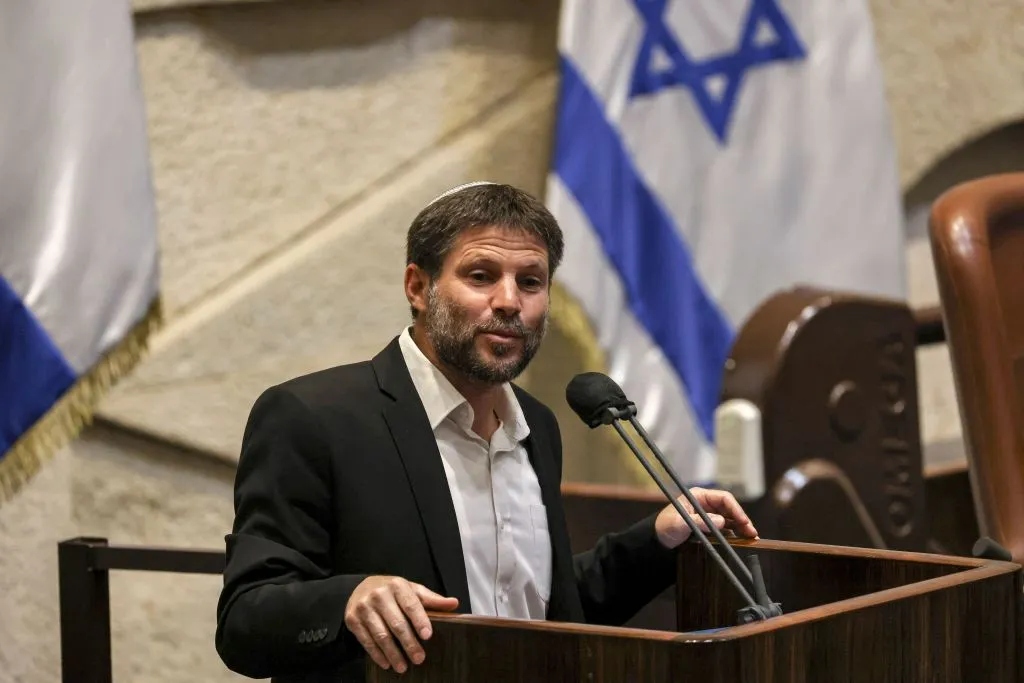
Israeli Finance Minister Bezalel Smotrich, head of the Religious Zionism party, is implementing a plan to annex the West Bank.
His strategy includes legal changes to support settlers and undermine the Palestinian Authority financially.
This approach has led to an increase in settlement activities, especially during the Gaza conflict.
Since the Gaza war began, nine new outposts have been established, often on private Palestinian land or near sensitive sites like the UNESCO World Heritage Site in Battir.
These outposts reflect Smotrich’s broader agenda to integrate the West Bank more firmly into Israel.
Public opinion in Israel is divided. Less than 40% of Israelis support annexation, and both the defense establishment and many citizens oppose these measures.
This opposition reflects concerns about international relations, legal challenges, and the potential for increased violence.
The motivations of settlers vary. Some are ideologically driven, seeking to prevent a two-state solution.
Others move to settlements for economic reasons, drawn by lower housing costs and a higher quality of life.
This mix of motivations has resulted in the settler population growing at a rate nearly three times that of Israel’s general population.
Challenges to Peace and Diplomacy
This surge in settlement activity and the construction of new outposts have drawn significant international criticism and legal challenges.
Despite this, the Israeli government continues to invest in these areas, complicating peace efforts and the potential for a two-state solution.
The broader context of Smotrich’s plan highlights the ongoing struggle between different visions for Israel and Palestine.
His annexation efforts reflect a segment of Israeli society that prioritizes territorial claims over diplomatic resolutions.
This has significant implications for the region’s stability and Israel’s international relations.
In summary, Smotrich’s annexation strategy underscores the complex and contentious nature of Israeli-Palestinian relations.
While it garners support from certain factions, it faces substantial opposition both domestically and internationally.
The ongoing conflict in Gaza further complicates these developments, making the path to peace more challenging.
This article was produced by The Rio Times’ automated newsroom system. How we use AI · Report an error · Editorial responsibility: Matthias Camenzind, Editor-in-Chief
Read More from The Rio Times