US Says Iran Port Blockade Can Last Indefinitely as Deadline Expires
United States · GEOPOLITICS
Key Facts
—Blockade reinstated: US Central Command resumed blockade of Iranian ports on 14 July 2026, effective 16:00 Eastern Time.
—Indefinite posture: Pete Hegseth said on 13 August 2026 the Navy can hold blockade indefinitely, rotating ships.
—Oil flow impact: Iran’s oil exports fell from 1.84 million bpd in March 2026 to below 300,000 in May, per Kpler.
—Tariff threat: White House order of 6 February 2026 on buyers of Iranian goods, citing 25 percent.
—Chokepoint stakes: 20.9 million barrels a day through Hormuz in early 2025, a fifth of world oil use.
—Campaign name: Operation Economic Fury; Scott Bessent called it the “financial equivalent” of a bombing campaign.
US Defense Secretary Pete Hegseth said on 13 August 2026 that the naval blockade of Iran can be sustained indefinitely. Washington is pairing the blockade with sanctions to cut Iran’s oil revenue.
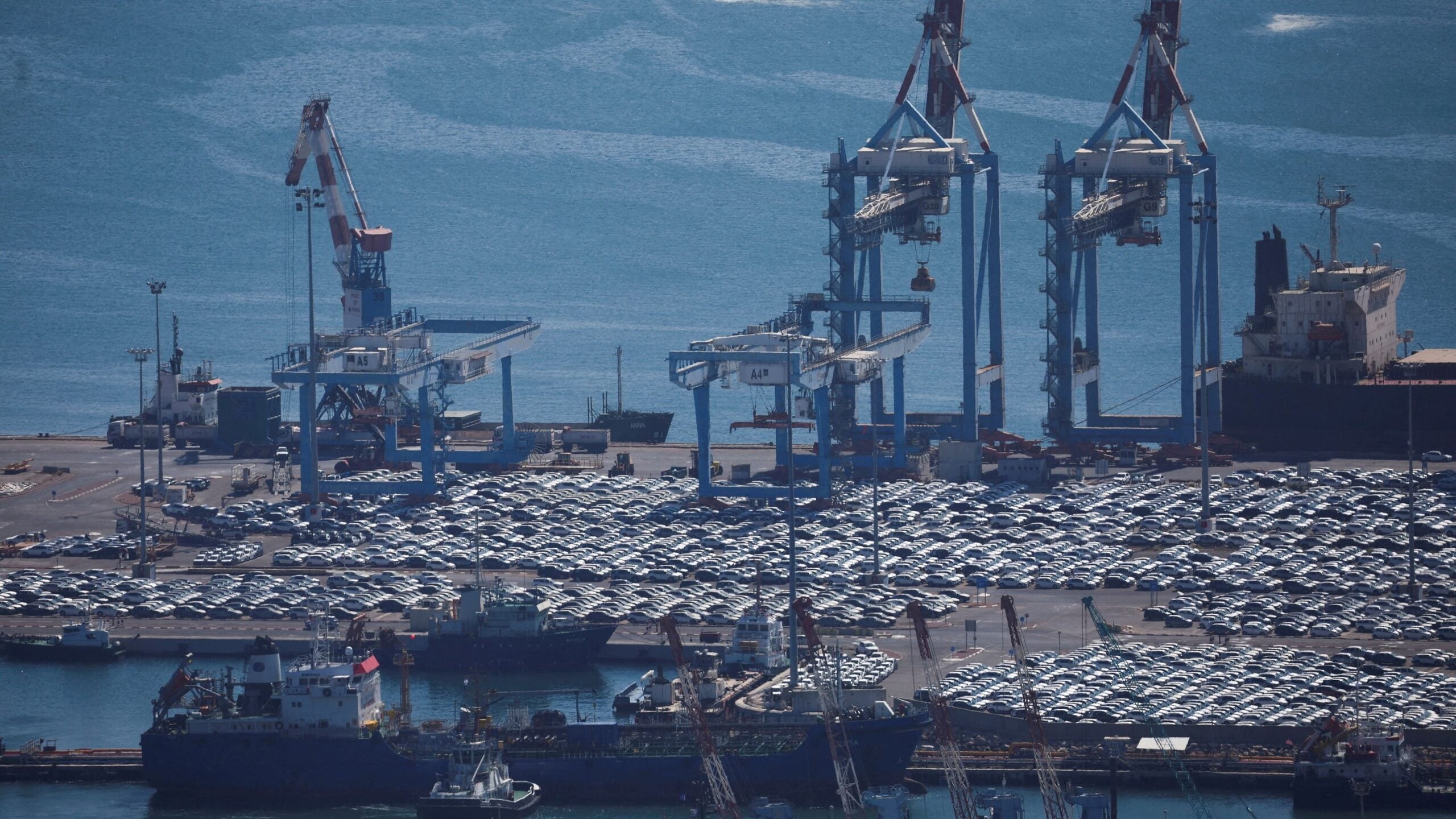
Two blockades, not one
Iran closed the Strait of Hormuz on 28 February 2026. The US blockade is of Iranian ports, which is a separate measure.
Washington signals an open-ended maritime campaign
The United States Central Command, known as CENTCOM, resumed the blockade of Iranian ports on 14 July 2026. It took effect at 16:00 Eastern Time.
The blockade first ran from 13 April 2026 until late May. Trump announced on 29 May that it would be lifted, and ordered its removal on 14 June.
US Central Command said on 13 July 2026 that it would blockade maritime traffic entering and leaving Iranian ports. It said forces would act against vessels going to or from Iranian ports and coastal areas.
Hegseth spoke to reporters on 13 August 2026 aboard the USS Gridley during the PANAMAX exercises in Panama. He said of the blockade: “We can hold it as long as we need to.”
Oil markets and the Strait of Hormuz standoff
Iran’s oil exports fell from 1.84 million barrels a day in March 2026 to below 300,000 in May. Its daily oil earnings fell from about US$165 million to about US$27 million.
Economic Fury and the financial squeeze
Washington is combining the blockade with financial sanctions under Operation Economic Fury. Treasury Secretary Scott Bessent called it the “financial equivalent” of a bombing campaign.
A White House order of 6 February 2026 covers countries that buy Iranian goods or services, directly or indirectly. It gives 25 percent as an example tariff rate, with the actual rate set later.
What the naval blockade on Iran means for Africa
Africa imports more than 70 percent of its refined fuel, the Africa Finance Corporation says. Kenya’s diesel price rose 24 percent to about US$1.60 a litre.
Nigeria has gained from higher crude prices, with Bonny Light averaging US$116.84 a barrel. Kenya is seeking a US$600 million World Bank loan to cushion the shock.
What has changed since 13 August
Trump said on 14 August that he would declare the Strait of Hormuz a territory of the United States. He called the blockade “a wall of steel”.
Iran’s deputy foreign minister for legal affairs, Kazem Gharibabadi, replied that the strait cannot be taken over by a decree. The 60-day negotiating deadline then expired on 17 August.
Iran announced a Hormuz transit understanding with Oman instead of with Washington. Ships would enter by an Iran-side corridor and leave by an Oman-side one.
The blockade tightened rather than loosened. Central Command counted 62 vessels redirected, three disabled and two boarded as of 14 August.
Two tankers linked to Abu Dhabi’s ADNOC were attacked on 13 and 14 August. Brent settled at US$88.52 and West Texas Intermediate at US$82.40.
What to watch next
Beijing has already answered the question about Chinese buying. China’s Commerce Ministry has ordered its firms to ignore US sanctions on Iranian oil.
The second question is whether talks survive. The 60-day deadline set by the June deal expired on 17 August with no wider agreement.
What it costs Latin America
Hormuz is not a Latin American shipping route, but the fuel-subsidy bill is the transmission channel. Six governments are absorbing the same shock six different ways.
Petrobras has held Brazilian refinery gate prices below import parity, capping distributor increases. Brazilian inflation ran at 4.64 percent in June, with energy ahead of the headline rate.
Mexico used weekly fuel-tax adjustments and voluntary caps to hold petrol under 24 pesos a litre. Its July inflation of 3.12 percent was the region’s lowest.
Chile’s stabiliser actually cut pump prices, with 95-octane down 95 pesos a litre. Colombia is suppressing prices now and deferring the cost to later budgets.
Peru has drawn on its fuel price stabilisation fund after supply disruption pushed inflation above target. Argentina staggered fuel-tax rises against inflation of 33.5 percent in June.
Frequently Asked Questions
How long can the US naval blockade on Iran last?
US Defense Secretary Pete Hegseth said on 13 August 2026 that the Navy can hold the blockade indefinitely. He said the Navy would rotate ships in and out.
How much has the blockade cut Iran’s oil exports?
Iran’s oil exports fell from 1.84 million barrels a day in March 2026 to below 300,000 in May. The data firm Kpler supplied those figures.
What is the Economic Fury campaign?
Operation Economic Fury is the US sanctions campaign against Iran. Treasury Secretary Scott Bessent has likened it to a bombing campaign in financial form.
Connected Coverage
The blockade is part of a wider contest over maritime chokepoints, explored in Africa: The New Scramble.
Sources
This article was produced by The Rio Times’ automated newsroom system. How we use AI · Report an error
Read More from The Rio Times