China’s Satellite Expansion Challenges U.S. Military Supremacy in Space
China’s rapid expansion of its satellite network has sparked concern among U.S. military leaders. The Asian giant has increased its operational satellites from 129 in 2015 to 848 in 2024.
This surge represents a 550% growth in less than a decade. Of these satellites, 179 serve military and intelligence purposes. The U.S. Space Force has taken notice of this development.
They view it as a potential threat to their operations in the Indo-Pacific region. China’s space-based surveillance capabilities have tripled since 2018. They now operate 359 surveillance satellites, forming a formidable network.
In December 2023, China launched the Yaogan-41 remote sensing satellite. This satellite orbits in geosynchronous Earth orbit (GEO). It potentially allows China to monitor U.S. and allied forces continuously.
This capability raises concerns about the balance of power in space. China’s advancements don’t stop there. In August 2023, they deployed the Ludi Tance-4 satellite.
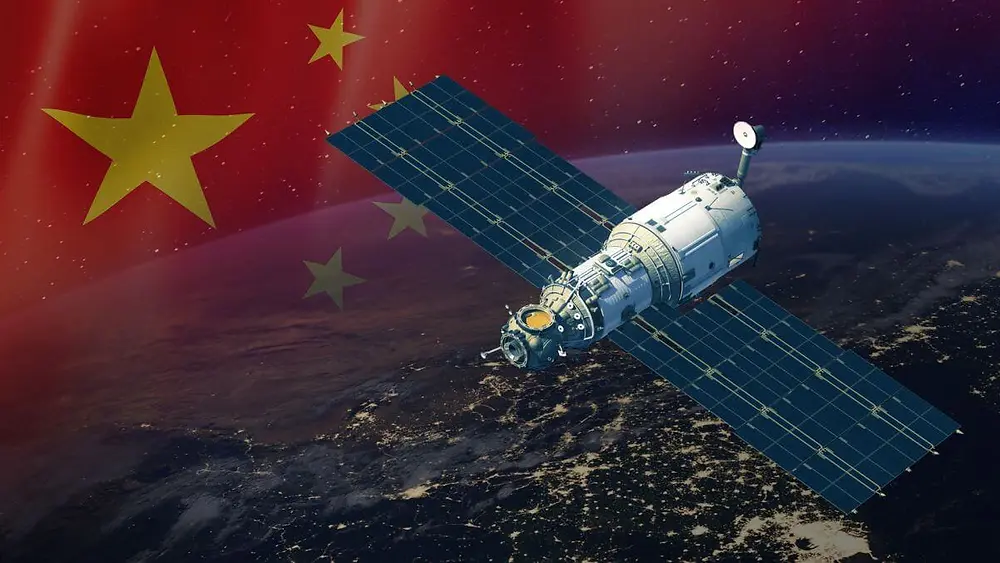
In addition, this satellite is the world’s first GEO satellite with a synthetic-aperture radar payload. Such technology enhances China’s ability to gather detailed intelligence from space.
The Growing Role of Space in Military Strategy
The U.S. military has responded to these developments. They activated U.S. Space Forces Japan on December 3, 2024. Initially, ten Space Force guardians will staff the headquarters at Yokota Air Base.
This move aims to strengthen the U.S. presence in the region. U.S. Space Forces Indo-Pacific, established in late 2022, plays a crucial role.
It works to integrate space operations across the region. The U.S. is also developing space-capable Link 16 tactical data lines. Military leaders expect these to be a “game changer” in potential conflicts.
China’s satellite network poses significant strategic challenges. It could potentially track and target U.S. aircraft carriers and other military assets. Under certain conditions, China’s optical sensors might even detect stealth aircraft.
However, this capability threatens U.S. technological advantages. The situation has prompted increased cooperation between the U.S. and its allies.
Japan plans to create a space operations brigade in fiscal 2025. They will also rename their Air Self-Defense Force by fiscal 2027. These moves reflect the growing importance of space in military strategy.
The global Space Militarization Market reflects these developments. Experts project it to reach $54.49 billion in 2024. They expect it to grow at a CAGR of 8.02% to $86.54 billion by 2029.
North America will likely dominate this market due to increased space sector spending. As tensions rise in the Indo-Pacific, space militarization accelerates. Both China and the U.S. invest heavily in space-based capabilities.
In short, they seek strategic advantages in this new frontier. The situation underscores space’s critical importance in 21st-century national security and global power projection.
This article was produced by The Rio Times’ automated newsroom system. How we use AI · Report an error · Editorial responsibility: Matthias Camenzind, Editor-in-Chief