Central American Independence Day Explained
CENTRAL AMERICA · CULTURE
Key Facts
- —The region Central America is the strip of land between Mexico and Colombia; five of its seven countries share one independence day from Spain.
- —The date 15 September, the anniversary of the act of independence from Spain signed in Guatemala City on Saturday 15 September 1821.
- —Who celebrates Guatemala, El Salvador, Honduras, Nicaragua and Costa Rica. Belize and Panama, the other two, mark independence on different dates.
- —Signature customs A student torch relay from Guatemala to Costa Rica, lantern parades in Costa Rica on the night of 14 September and school marching bands on the 15th.
- —The US link About 7.2 million US residents trace their roots to the five countries (2024 Census survey), and Hispanic Heritage Month starts on 15 September.
- —Next date Wednesday 15 September 2027 will be the 206th anniversary; 2026 marked the 205th.
Central American Independence Day falls on 15 September, and it also opens Hispanic Heritage Month in the United States. On that date Guatemala, El Salvador, Honduras, Nicaragua and Costa Rica celebrate the act that ended Spanish rule in 1821.
A torch carried by students across all five countries ties the celebrations together.

What Central American Independence Day Celebrates
Central American Independence Day marks a meeting in Guatemala City on 15 September 1821. Local leaders gathered in the colonial government palace and declared the region free from the Spanish Crown.
At the time, the whole isthmus from Guatemala to Costa Rica was run from Guatemala City as the Kingdom of Guatemala. That is why one document signed in one city counts as the birth certificate of five modern countries.
According to Guatemala’s official news agency, AGN, about 30 people attended the session and 13 signed the act. Among them was Gabino Gaínza, president of the Audiencia, the colonial high court and government.
The text was drafted by José Cecilio del Valle, a lawyer from Choluteca in Honduras who did not sign it himself. History remembers him as “el Sabio”, the wise man.
The original papers are kept in the Archivo General de Centro América, the national archive in Guatemala City. The independence came without a war, which sets it apart from much of Spanish America.
News of the act travelled south by riders on horseback. It reached Cartago in Costa Rica on 13 October 1821, according to the Guatemalan daily La Hora.
From One Act to Five Separate Countries
Independence in 1821 did not create five nations at once. On 5 January 1822 the provinces were annexed to the new Mexican Empire, according to Honduras’ El Heraldo.
The union with Mexico lasted less than two years. On 1 July 1823 Central America declared itself independent from Mexico as well, months after Mexican emperor Agustín de Iturbide abdicated.
On 22 November 1824 the provinces formed the Federal Republic of Central America. The federation did not last, and Honduras declared itself free of it in 1838.
The five successor states kept 15 September as their common birthday. That shared date is the reason Central American Independence Day is one holiday celebrated in five capitals, not five different holidays.
Belize, then ruled by Britain, was not part of this story, and Panama followed a separate route through Colombia. The Rio Times Belize explainer covers that neighbour.
Which Countries Celebrate on 15 September
Five countries share the date, and each adds its own customs. US government material on Hispanic Heritage Month names the same five: Costa Rica, El Salvador, Guatemala, Honduras and Nicaragua.
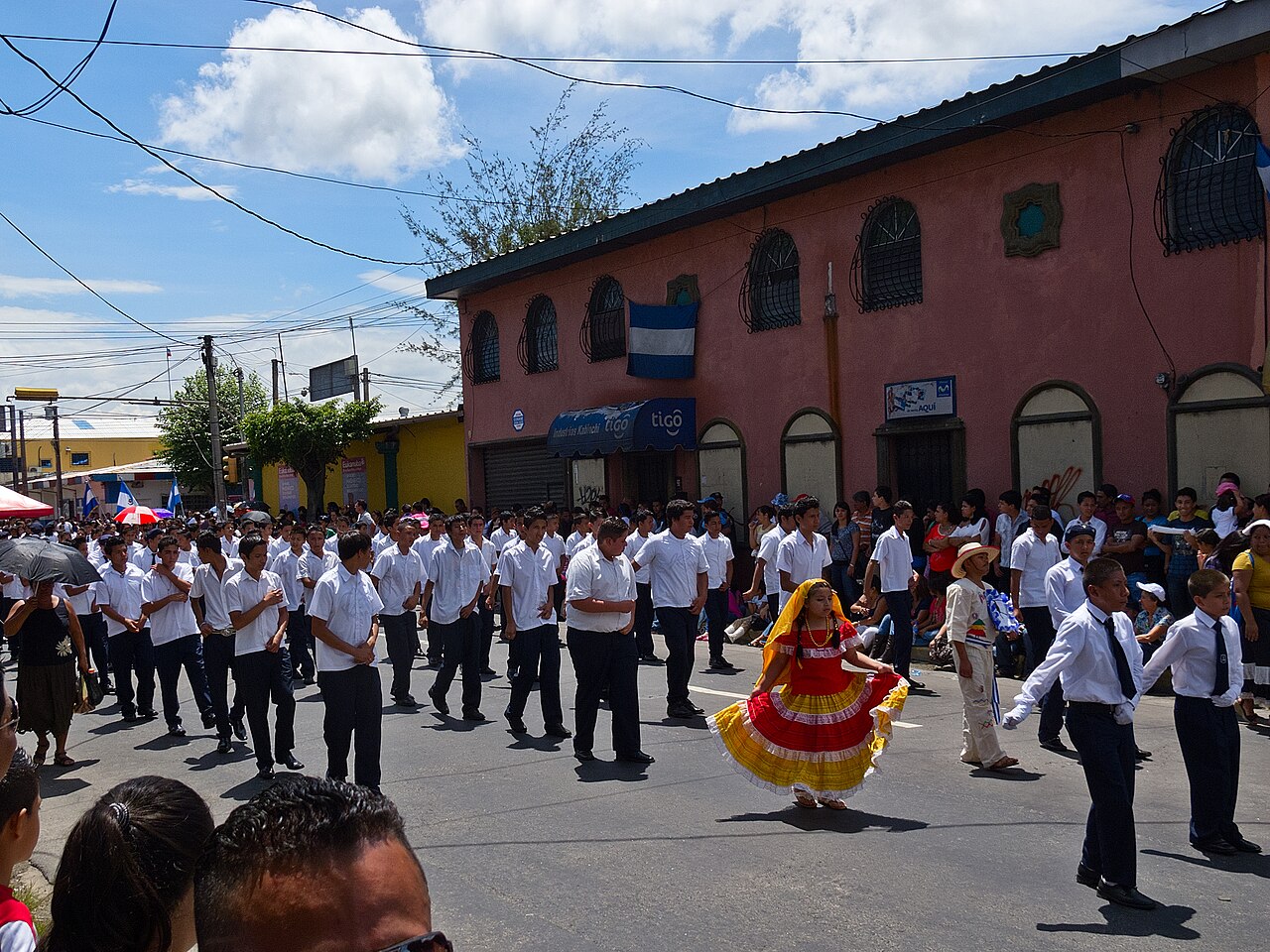
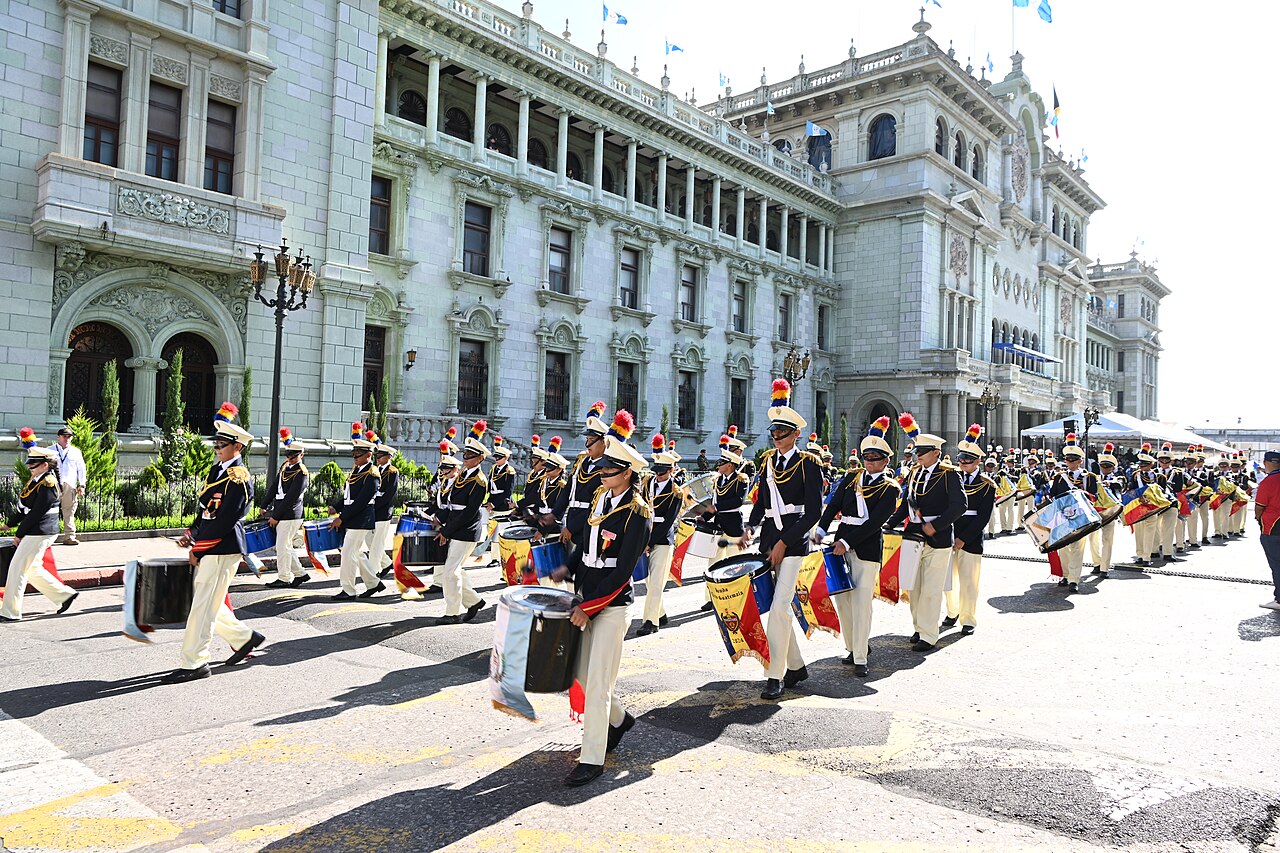
- Guatemala: torch runners fill the streets of the capital from 12 to 14 September, and school bands march on the 15th. In 2026 the government also gave public employees Monday 14 September off.
- El Salvador: the torch crosses the country from Ahuachapán in the west to La Unión in the east. Student parades and “bandas de paz”, or peace bands, are part of the ceremonies.
- Honduras: 15 September is a fixed national holiday that is never moved to create a long weekend, the private-sector council COHEP confirmed in 2026. Parades feature marching soldiers and “palillonas”, girls in fancy military-style uniforms who twirl batons to the beat of a band.
- Nicaragua: both 14 and 15 September are paid national holidays under article 66 of the labour code. The 14th honours the 1856 Battle of San Jacinto, where Nicaraguans defeated forces of William Walker, a US adventurer who wanted to rule Central America.
- Costa Rica: the torch ends its journey in Cartago on the evening of 14 September. That same evening children parade with lanterns called faroles.
Neighbours That Mark Independence on Other Dates
Central American Independence Day is not the same as Mexico’s holiday, which falls one day later on 16 September. Chile follows on 18 September, as the official Hispanic Heritage Month site notes.
Belize, the English-speaking country on Guatemala’s eastern border, celebrates on 21 September. It became independent from Britain on that date in 1981.
Panama has two key dates in November, a month locals call “el mes de la patria”. It declared independence from Spain on 28 November 1821 and separated from Colombia on 3 November 1903.
So between 15 and 21 September, independence parades run in every country from Mexico to Costa Rica. Travellers should check which holiday applies where they land.
The Torch Relay That Crosses Five Borders
The best-known custom is the Antorcha Centroamericana por la Paz y la Libertad, the Central American Torch for Peace and Freedom. It recalls the riders who carried the news of independence south in 1821.
The first torch race ran in 1959 from the Monument to the Founding Fathers in Guatemala City toward Cartago, La Hora reports. In 1964 the region’s ministers made it an official joint event.
The flame now travels about 1,300 kilometres, roughly 800 miles, from Guatemala to Costa Rica. Students, workers, families and officials pass it from hand to hand along the way.
In 2025 Guatemala’s AGN scheduled the handover to El Salvador for 4 September near the border town of Jalpatagua. In 2026 the flame again crossed into El Salvador at Las Chinamas on 4 September, for the 205th anniversary.
El Salvador’s education minister received it and planned to pass it to Honduras the following Monday. In 2025 Honduras handed it to Nicaragua at the Las Manos border post on 10 September.
Nicaragua then delivers it to Costa Rica at Peñas Blancas, the crossing between the two countries. In 2025 more than 22,000 Costa Rican students were set to carry it 378 kilometres, about 235 miles, to Cartago.
Lantern Parades, Anthems and School Bands
In Costa Rica the evening of 14 September belongs to children. At 6 p.m. the country sings the national anthem, and then children walk the streets carrying faroles, or lanterns.
Costa Rica’s Ministry of Public Education, known as the MEP, organises the torch relay and the school events. In San José’s 2025 programme, the anthem in Parque Nicaragua was set for 6 p.m.
The lantern parade followed at 6:10 p.m., with a lantern contest after it. On the morning of the 15th a parade ran from Parque Central to the Plaza de la Democracia.
San José also banned alcohol sales in parts of the centre during the celebrations.
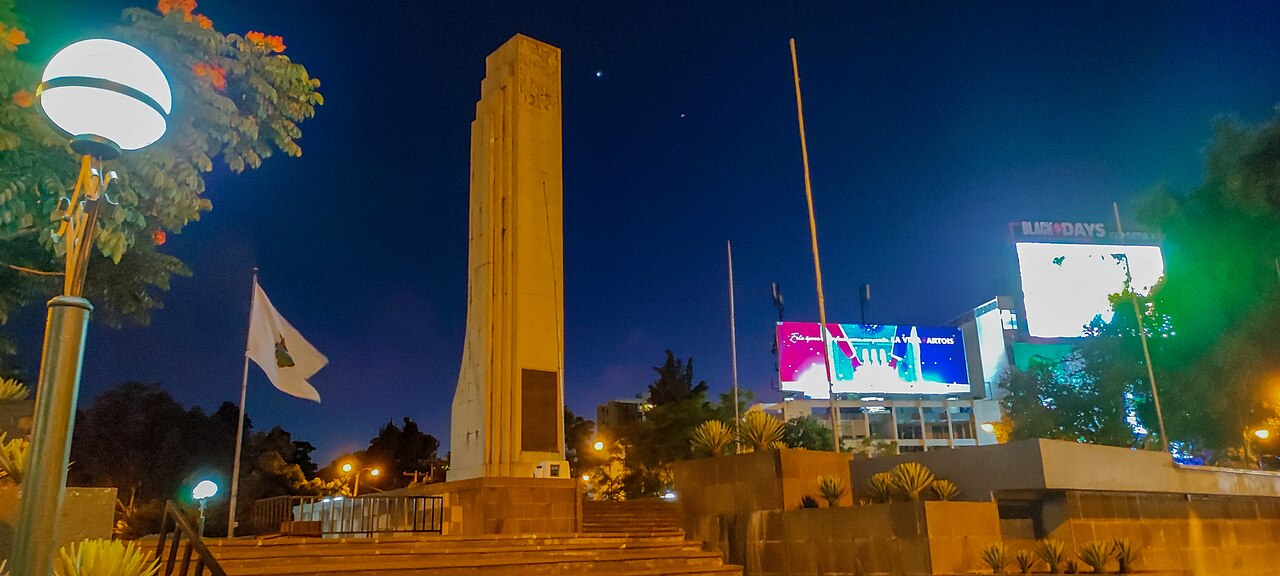
In Guatemala City the Obelisk is the starting point where torches are lit and sent out along different routes. La Hora reported an estimated 1,500 torch group movements in the capital between 12 and 14 September 2025.
Many Guatemalan runners wear blue and white, the national colours, and run alongside school bands. Since the 1996 peace accords ended Guatemala’s civil war, the torch has also served as a civic alternative to military parades.
Visitors planning a September trip can read the Rio Times Guatemalan food guide. It explains the dishes they will find across the country.
From the Bicentennial in 2021 to 205 Years in 2026
On 15 September 2021 the five countries reached 200 years of independence. The pandemic shaped how the bicentennial looked on the ground.
Costa Rica cancelled lantern and band parades for a second year in a row to avoid crowds. The MEP asked families to sing the anthem at 6 p.m. at home and to show their lanterns at their front doors.
The 2021 torch run in Costa Rica was only symbolic, with 10 students at 10 points and a virtual route map. The public holiday that year moved to Monday 13 September.
Lantern parades returned to Costa Rican schools in 2022, according to El Observador. For the 205th anniversary, Prensa Libre reported plans for school bands to march in cities across Guatemala on Tuesday 15 September 2026.
Nicaragua opened its own 2026 festivities on 1 September at the historic Hacienda San Jacinto, according to the Spanish agency EFE. To learn more about how Costa Ricans see their national identity, read the Rio Times guide to Costa Rica’s culture.
What It Means for US Readers
Central American Independence Day is also a US date. A federal law asks the President to proclaim 15 September to 15 October as National Hispanic Heritage Month each year.
The official Hispanic Heritage Month site says 15 September was chosen because it is the independence anniversary of these five countries. The observance began as a week in 1968 and became a month by law in 1988.
According to the US Census Bureau’s 2024 American Community Survey, about 7.5 million US residents are of Central American origin. That count includes about 2.77 million Salvadorans, 2.17 million Guatemalans and 1.46 million Hondurans.
It also counts about 607,000 Nicaraguans, 261,000 Panamanians and 220,000 Costa Ricans. The five 15 September countries alone account for about 7.2 million people.
The US Embassy in Tegucigalpa lists 15 September as “Central American Independence Day” on its holiday calendar. The same survey counts 68 million Hispanic residents, so about one in nine traces roots to Central America.
For travellers, 15 September is a public holiday in all five countries, so expect closed offices and schools. Road closures around parades on the 14th and 15th are common.
Migration keeps the region close to US politics, as the Rio Times coverage of Honduran returnees shows. More regional news sits on the Rio Times Central America page.
The Morazán Week travel story shows how another October holiday moves crowds across the same borders.
What Is Not Known
Governments publish the torch route and parade programme only weeks before each September. The exact 2027 timetable, border handover dates and city closures were not yet public as of October 2026.
Census survey figures are estimates, not a full count. The 2024 Central American total carries a margin of error of about 95,000 people, and the next annual release will update it.
What the 1821 act really delivered is still argued over in the region. Honduras’ El Heraldo described it in 2026 as an unpaid promise that each generation has to keep honouring.
Frequently Asked Questions
When is Central American Independence Day?
Central American Independence Day is on 15 September every year. It marks the act signed in Guatemala City on 15 September 1821 that ended Spanish rule over the isthmus. The next one is Wednesday 15 September 2027.
Which countries celebrate Central American Independence Day?
Guatemala, El Salvador, Honduras, Nicaragua and Costa Rica. Belize celebrates on 21 September and Panama on 28 November and 3 November, because their paths to independence were different.
Why do five countries share one independence day?
In 1821 all five were provinces of one colonial unit governed from Guatemala City. They declared independence together, briefly joined Mexico, then formed a federation that began to break up in 1838, but kept the shared date.
Is it the same as Mexican Independence Day?
No. Mexico celebrates on 16 September, one day later, and Chile on 18 September. Central American Independence Day is the 15 September holiday of the five former provinces of the Kingdom of Guatemala.
What is the Central American independence torch?
It is a relay flame that students carry from Guatemala through El Salvador, Honduras and Nicaragua to Costa Rica. The first race ran in 1959, and the region’s ministers made it official in 1964. It reaches Cartago on 14 September.
What are faroles in Costa Rica?
Faroles are lanterns. On the evening of 14 September, after the national anthem at 6 p.m., Costa Rican children parade through their towns carrying them to welcome Independence Day.
Is 15 September a public holiday?
Yes, in all five countries, so expect closed offices and schools. Nicaragua’s labour code also makes 14 September a paid holiday, and Guatemala gave public workers 14 September 2026 off as well.
Sources: Agencia Guatemalteca de Noticias (AGN), signing of the Act of Independence, 2022-09-06; AGN, torch handover at Jalpatagua, 2025-08-25; La Hora (Guatemala), history of the independence torch, 2025-09-14; El Heraldo (Honduras), Honduras and its three independences, 2026-09-14; El Heraldo (Honduras), José Cecilio del Valle and the 1821 act, 2026-09-15; Infobae, El Salvador receives the torch at Las Chinamas, 2026-09-04; El Observador (Costa Rica), MEP torch and San José programme 2025, 2025-09-11; El Observador (Costa Rica), MEP plan for the 2021 bicentennial, 2021-09; El Observador (Costa Rica), torch route from Peñas Blancas, 2022-09; Prensa Libre (Guatemala), public-sector days off for 15 September 2026, 2026-09-10; Confidencial (Nicaragua), labour code article 66 holidays, 2026-01-19; Infobae / EFE, Nicaragua 205th anniversary and San Jacinto, 2026-09-14; La Estrella de Panamá, column “Noviembre, mes de la patria”, 2025-11-13; elsalvador.com, 15 September as a mandatory paid holiday in El Salvador, 2026-09-11; Forbes Centroamérica, Honduras hands the torch to Nicaragua at Las Manos, 2025-09-10; Real Academia Española, Diccionario: palillona, accessed 2026-10-10; National Hispanic Heritage Month (official US site), About, accessed 2026-10-10; 36 U.S.C. 126, National Hispanic Heritage Month, accessed 2026-10-10; US Census Bureau, 2024 American Community Survey 1-year, table B03001, 2025-09; US Embassy in Honduras, holiday calendar, accessed 2026-10-10; Infobae, Honduras confirms the September and October holidays (COHEP), 2026-08-25; La Estrella de Panamá, 28 November Independence Day holiday, 2025-11-10; US Department of State, Office of the Historian, Building the Panama Canal 1903-1914, accessed 2026-10-10; US Department of State, Office of the Historian, Belize, accessed 2026-10-10.
This article was produced by The Rio Times’ automated newsroom system. How we use AI · Report an error · Editorial responsibility: Matthias Camenzind, Editor-in-Chief
Rotate for Best Experience
This report is optimized for landscape viewing. Rotate your phone for the full experience.
You've reached your free article limit
Subscribe to The Rio Times for unlimited access to our news, expat and nomad guides and market intelligence on Latin America and Africa.