Canada Critical Minerals Push Meets Latin America

CANADA · ANALYSIS
Key Facts
- —What is happening In March 2026, Ottawa announced 30 new critical-minerals partnerships and investments while deepening ties with Chile, Peru and Argentina.
- —Why it matters The United States depends on both Canadian processing and Latin American ore, so policy coordination across the three regions will shape battery, defence and grid supply chains.
- —Who is who Tim Hodgson, Minister of Energy and Natural Resources, leads the strategy; The Canada Growth Fund established a commercial framework for an equity-like investment of up to C$400 million directly into Teck’s Trail Operations facility.
- —What it means for you US manufacturers and investors should watch whether Canadian public finance redirects processing capacity northward while Latin American ore still feeds the same supply chain.
Canada critical minerals policy is shifting from a mining-development programme into an economic-security instrument that competes with Latin America for processing investment while depending on the region for lithium and copper. For US readers, the result is a three-way supply chain in which Ottawa finances Canadian processing, Latin America supplies ore, and the United States remains the largest end market.
Canada has long been a mining-finance power, but its new industrial-policy turn makes the state an investor and anchor customer, not only a regulator. This analysis explains how that shift interacts with Canadian mining assets in Chile, Peru, Argentina and Mexico, and what it means for the US-Canada-Latin America supply-chain triangle, drawing on the USA & Canada Intelligence Brief.
Ottawa Is Spending to Control More of the Value Chain
Canada launched its Canadian Critical Minerals Strategy in 2022, when its critical-minerals list contained 31 minerals; the list was updated to 34 minerals in June 2024.
Between the strategy’s 2022 launch and 2024, domestic production increased by more than 10% for nine critical minerals. The strategy has expanded well beyond early exploration support into infrastructure, equity investment and defence-linked procurement.
The First and Last Mile Fund holds C$1.5 billion for roads, transmission, mine-site infrastructure, processing facilities and transport links. It replaced or absorbed the Critical Minerals Infrastructure Fund and includes dedicated support for Indigenous leadership and participation.
The new Canada Critical Minerals Accelerator, previously announced as the Critical Minerals Sovereign Fund, has C$2 billion over five years for equity-like investments, loan guarantees, supply agreements and other interventions. At the March 2026 Prospectors & Developers Association of Canada convention, Energy and Natural Resources Minister Tim Hodgson announced up to C$165.2 million for 22 projects intended to unlock about C$434 million in project capital across eight provinces.
Canada said the G7 Critical Minerals Production Alliance had helped mobilize C$18.5 billion in Canadian critical-minerals projects, combining announcements made in October 2025 and March 2026. The Canada-led G7 Critical Minerals Production Alliance is designed to diversify production among trusted partners, a signal that Ottawa now treats minerals as security infrastructure rather than a purely commercial sector.
The Teck Deal Shows Ottawa’s Downstream Preference
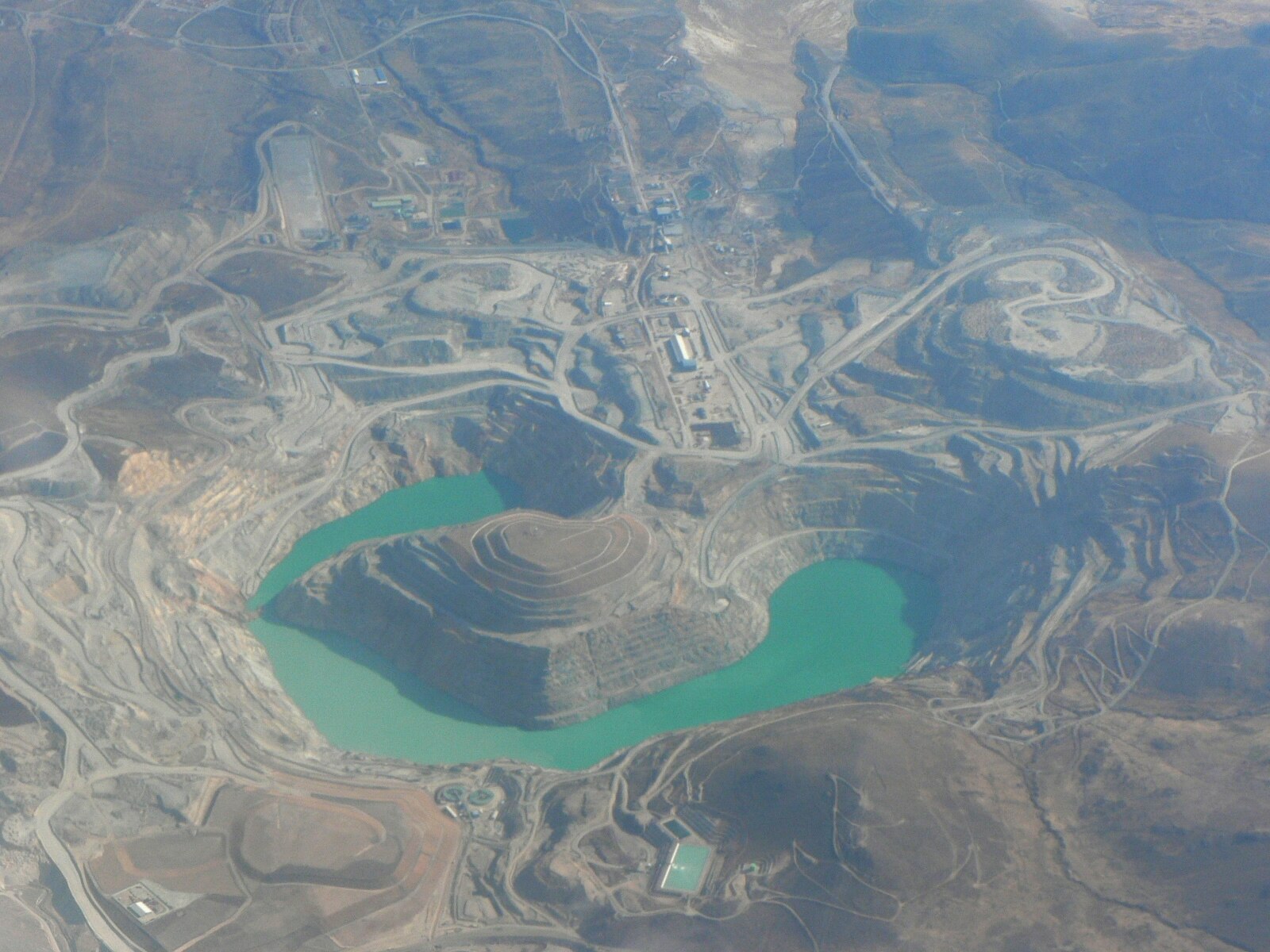
The clearest example of the new model is the Canada Critical Minerals Accelerator agreement involving Teck Resources Limited and the Canada Growth Fund. The arrangement establishes a framework for up to C$400 million of equity-like investment in Teck’s Trail facility in British Columbia.
The agreement permits negotiations on an offtake structure, including rights to a portion of future germanium, antimony and gallium produced at Trail; those rights were not yet finalized. Ottawa is not simply helping a mine expand; it is positioning itself to secure refined strategic metals.
This preference for processing and strategic by-products matters for Latin America. Canada wants more refining, recycling, engineering and manufacturing to remain at home or within trusted allied networks, while Latin American governments also seek greater local processing and industrial capture.
The result is simultaneous cooperation and friction. Canadian capital and technology can help develop Latin American projects, but each jurisdiction wants a larger share of the value chain that follows extraction.
Canadian Mining Exposure in Latin America
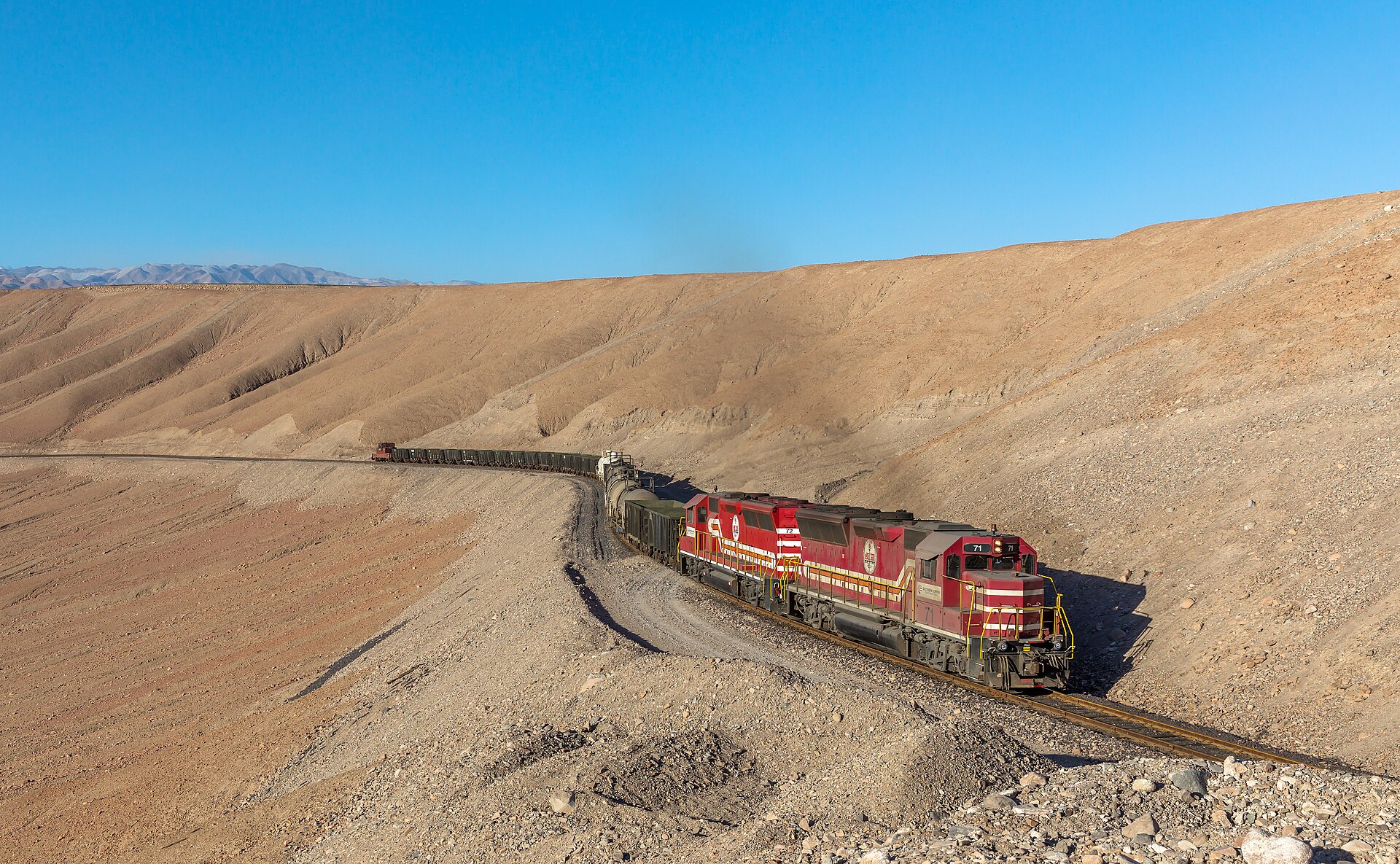
Canadian mining companies are among the most internationally active in the sector, and Latin America remains central to their portfolios.
Chile: Copper and State-Directed Lithium
Chile is strategically important because of its copper dominance and lithium resources. Its lithium framework is unusually state-directed, with the government seeking public-private arrangements involving state institutions.
Canadian firms bring capital, technical expertise and access to global investors. The disadvantage is that Canada competes with Chinese, US, Australian, European and local capital in a jurisdiction where the state is asserting a larger role.
Canada and Chile signed a Memorandum of Understanding on Critical Minerals and the Sustainable Development of Minerals and Metals in 2024. The Canada-Chile Free Trade Agreement also governs the relationship, giving Canadian firms a formal framework for engagement.
Peru: Copper Supply and Institutional Risk
Peru remains one of the world’s principal copper producers and a major destination for Canadian mining capital. Canadian-listed companies are prominent in Peru’s mining-finance ecosystem, and the country can complement Canada’s strategy by supplying copper concentrates to North American and allied smelters.
Peru’s political volatility, social conflicts, permitting delays and security concerns can raise costs and make long-term supply commitments difficult. The supply-chain issue is therefore institutional as much as geological.
Canada and Peru signed a Memorandum of Understanding on Critical Minerals and Mining Sustainability in March 2026. The agreement covers bilateral investment, traceability, decarbonisation, regulatory frameworks, environmental and social practices, and workforce development.
Argentina: Lithium Scale and Currency Risk
Argentina is central to lithium and increasingly significant for copper exploration. Its northwest lithium provinces offer some of the fastest-growing brine production in the world, while its large copper potential remains underdeveloped relative to Chile and Peru.
Canadian firms are important participants in Argentina’s lithium sector through exploration, project development and joint ventures. Argentina offers abundant resources and, in some provinces, strong government interest in attracting foreign investment.
Its risks include currency instability, changing tax and export rules, infrastructure gaps and provincial-national policy tensions. Canada and Argentina signed a Collaboration Arrangement on Critical Minerals and Mining Sustainability in March 2025, with stated objectives of stronger cooperation and resilient supply chains.
Mexico: Manufacturing Bridge and Policy Uncertainty
Mexico is relevant through silver, copper, zinc, industrial minerals and potential lithium resources. Canadian-listed mining companies have substantial historical exposure to Mexico, making it one of the most important Latin American jurisdictions for Canadian mining investment.
Mexico also occupies a special position in the US-Canada supply chain because of its manufacturing base and geographic proximity. It can provide mining output, processing, components and industrial capacity, but policy uncertainty around resource nationalism, permitting and lithium governance affects the investment case.
For North American supply chains, Mexico could become a bridge between mineral production and manufacturing. That depends on rules of origin, tariff treatment, electricity availability, logistics and whether projects qualify for public support.
The US-Canada-Latin America Triangle
The emerging structure has three distinct layers. Latin America supplies geological scale, especially lithium and copper that Canada cannot easily replicate at comparable cost.
Canada contributes mining capital, listed-company expertise, engineering, geological services, project finance and a growing set of public investment mechanisms. Ottawa’s goal is to capture more refining, recycling, midstream processing and advanced manufacturing at home.
The United States remains the dominant end market for North American minerals, batteries, vehicles, defence goods and clean-energy infrastructure. US policy seeks to reduce dependence on China and other perceived strategic rivals, making Canadian and Latin American supply increasingly valuable.
At the same time, US market access creates concentration risk for Canada. Canadian policymakers are trying to diversify exports and make domestic value chains more resilient because Canadian producers can be exposed to US demand, US tariffs and changes in US industrial policy.
Tariffs complicate the triangle. Even when minerals themselves receive favourable treatment, tariffs on downstream goods can weaken the economics of cross-border processing. A Canadian mineral may be mined in Canada or Latin America, processed in Canada, incorporated into a component in Mexico and sold into the United States, with each border adding compliance, origin and tariff risk.
Competition or Complementarity?
Canada and Latin America compete in four ways: capital, processing, government support and strategic relevance. Investors compare Canadian, Chilean, Peruvian, Argentine and Mexican projects, and each jurisdiction wants more refining, chemicals and industrial activity at home.
They complement one another in three more important ways. Resource diversity reduces dependence on any single country, value-chain specialisation lets Latin America provide feedstock while Canada provides capital and processing, and political risk diversification makes a regional portfolio safer than reliance on one country or transport corridor.
The strongest commercial model may therefore be a vertically coordinated portfolio rather than a purely Canadian or purely Latin American project. A Canadian company could produce lithium in Argentina, copper in Chile or Peru, raise capital in Toronto, process material in Canada or Mexico, and sell into US manufacturing.
Ottawa’s strategy improves the economics of some Canadian projects, but it does not eliminate mining risk. Public support can help with early-stage exploration, roads, rail, ports, power, processing, Indigenous participation, regulatory capacity and offtake gaps.
The C$1.5 billion First and Last Mile Fund is particularly significant for remote Canadian deposits whose economics depend on shared infrastructure. Yet the same logic applies to Latin American projects that need power, transport and community agreements before they can supply North American value chains.
What It Means for You
For US investors and executives, Canada’s critical-minerals spending is a signal that Ottawa will subsidise processing capacity that might otherwise locate in the United States or Latin America. The C$400 million Teck framework shows the state is willing to take equity-like positions and secure offtake rights for strategic metals.
For US manufacturers, the practical question is whether Canadian public finance makes North American supply chains more secure or simply shifts value-added activity across the border. Tariff and rules-of-origin coordination will determine whether a Canadian-processed mineral can move efficiently into US factories.
For Latin American governments and companies, Canada’s strategy is both an opportunity and a challenge. Canadian capital and technology can accelerate projects, but Ottawa’s preference for domestic processing may limit how much value remains in the region.
What Is Not Known
The research does not specify how much of the C$2 billion Canada Critical Minerals Accelerator will be deployed outside Canada or in partnership with Latin American projects. It also does not provide a fixed disbursement schedule for the Canada-Peru Memorandum of Understanding signed in March 2026.
It is unclear whether the G7 Critical Minerals Production Alliance will develop binding procurement rules or remain a coordination forum. The research does not state whether Canadian public finance will be available to projects in Mexico given the policy uncertainty there.
The open question for investors is whether Ottawa’s industrial-policy turn will change the risk profile of Canadian-listed miners with Latin American assets, or whether those companies will continue to be valued primarily on commodity prices and project execution.
What to Watch
The Canada–Peru MOU, signed in March 2026, aims to strengthen bilateral cooperation on critical minerals, mining sustainability and resilient supply chains.
Frequently Asked Questions
How much is Canada spending on critical minerals?
This includes C$1.5 billion for the First and Last Mile Fund and C$2 billion over five years for the Canada Critical Minerals Accelerator.
Does Canada compete with Latin America for critical minerals?
Canada competes with Latin America for capital, processing investment and government support, but it also depends on the region for lithium and copper. The relationship is a mix of competition for value-added activity and complementarity in resource supply.
What is the Canada Critical Minerals Accelerator?
The Canada Critical Minerals Accelerator is a C$2 billion fund over five years for equity-like investments, loan guarantees, supply agreements and other interventions across mineral value chains. It was previously announced as the Critical Minerals Sovereign Fund.
What is the Teck Resources deal with the Canada Growth Fund?
The arrangement establishes a framework for up to C$400 million of equity-like investment in Teck’s Trail facility in British Columbia. The agreement permits negotiations on an offtake structure, including rights to a portion of future germanium, antimony and gallium produced at Trail; those rights were not yet finalized.
Which Latin American countries have critical-minerals agreements with Canada?
Canada has a 2024 Memorandum of Understanding with Chile, a March 2025 Collaboration Arrangement with Argentina, and a March 2026 Memorandum of Understanding with Peru. The agreements cover investment, traceability, sustainability and workforce development.
Sources: riotimesonline.com, canada.ca, canada.ca, natural-resources.canada.ca, budget.canada.ca, news.ontario.ca. Retrieved 17 October 2026.
This article was produced by The Rio Times’ automated newsroom system. How we use AI · Report an error · Editorial responsibility: Matthias Camenzind, Editor-in-Chief
LatAm Markets: Live Signals → — real-time movers, turnover leaders and FX across Latin America.