BYD Brazil Factory Targets 300K EVs as Tesla Eyes Argentina
Electric Vehicles · Latin America
Key Facts
—Production. BYD’s Camaçari plant in Bahia began output in July 2025 and targets 300,000 vehicles a year by end-2026.
—Tesla’s Move. Tesla signed a letter of intent with Argentina’s YPF in June 2026 for 17 Superchargers, not car sales.
—Market Scale. Latin America sold 117,123 EVs in the first quarter of 2026, a jump of roughly 74 percent year on year.
—Regional Leader. Brazil is the largest EV market in Latin America and the region’s charging-infrastructure front-runner.
—Outlook. BloombergNEF projects EVs could reach 10 to 20 percent of new passenger-car sales in the region by 2028.
The BYD Brazil factory is scaling towards 300,000 vehicles a year while Tesla takes a first, narrow step into Argentina with a charging deal that stops well short of selling cars.
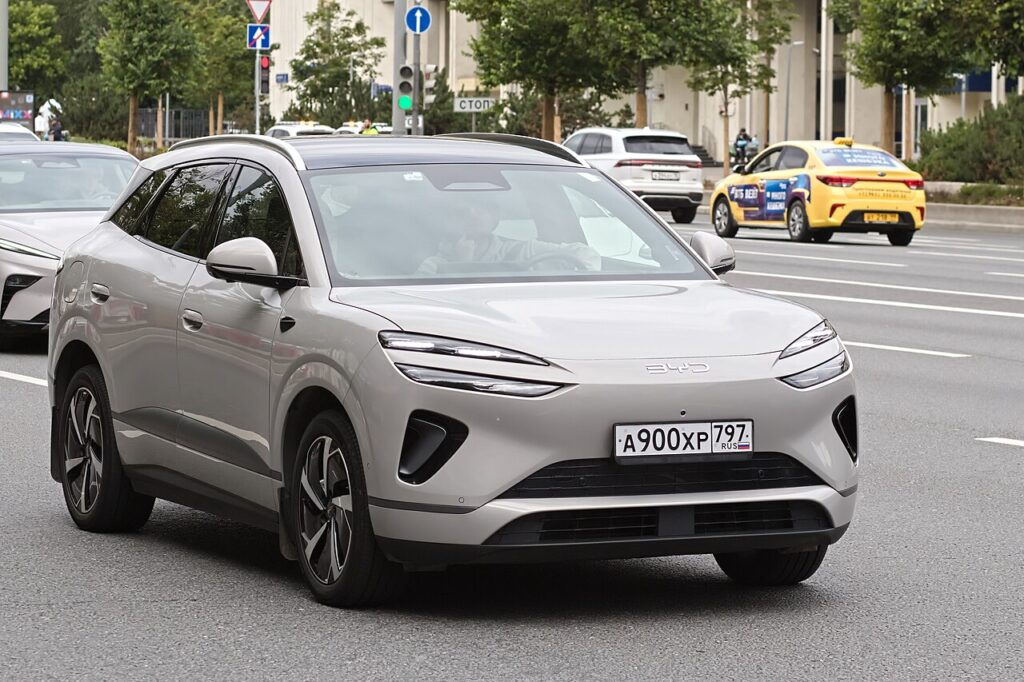
Two Different Bets on South America
BYD is pouring concrete and hiring workers in Brazil’s Bahia state. Tesla is signing paper in Buenos Aires.
The Chinese automaker’s Camaçari plant began production in July 2025 with an initial capacity of 150,000 vehicles a year. It now targets 300,000 by the end of 2026 and as many as 600,000 over the long term.
Tesla, meanwhile, signed a letter of intent with Argentina’s state oil company YPF in June 2026. The agreement covers 17 Superchargers along two key corridors, not a single car for sale.
Inside the BYD Brazil Factory Ramp-Up
The former Ford plant in Camaçari is now BYD’s largest manufacturing hub outside Asia. Local assembly of the Dolphin Mini, King and Song Pro models began ramping from October 2025 after a labour-probe delay.
A BYD official told Reuters in May 2025 that the site would be fully operational by December 2026. That timeline puts the company on track to supply not just Brazil but neighbouring markets from a local base.
The scale matters. Brazil is already the largest EV market in Latin America and the regional leader in charging infrastructure, giving BYD a home-field advantage that Tesla cannot yet match.
Tesla’s Argentina Entry: Charging, Not Cars
The Tesla-YPF deal is an infrastructure play, pure and simple. The 17 Superchargers will be installed along the Buenos Aires-Mendoza and Buenos Aires-Patagonia corridors in the second half of 2026.
Tesla has announced no plan to sell vehicles in Argentina. The letter of intent also covers energy storage exploration, suggesting the company sees Argentina as a renewables and grid-services opportunity first.
For investors, the distinction is critical. BYD is building a manufacturing and sales fortress in Brazil; Tesla is laying a few charging bricks in Argentina and watching.
BYD Plays Down the Tesla Threat
BYD’s Argentina country manager, Christian Kimelman, told Bloomberg Linea that the company already beats Tesla worldwide. He added that BYD will supply Argentina from its Brazil base.
The comment was a clear signal that BYD does not see Tesla’s charging deal as a competitive threat in the near term. For now, the Chinese automaker holds the cards on vehicle availability and price in the region.
That confidence is backed by numbers. Latin America sold 117,123 EVs in the first quarter of 2026, a jump of roughly 74 percent year on year, and the region topped 100,000 units in the fourth quarter of 2025 alone.
The Regional EV Race Is Accelerating
BloombergNEF projects that EVs could reach 10 to 20 percent of new passenger-car sales in Latin America by 2028. That is a fast climb from the 7.7 percent plug-in share recorded in early 2026.
Brazil is the engine of that growth, both in sales volume and charging-network build-out. Any automaker that wants to lead the region needs a Brazilian production story, and BYD is the only global EV player with one at scale.
Argentina, by contrast, is still building the basics. Tesla’s Supercharger deal is a sensible first step, but it does not put a single vehicle on the road.
What This Means for Investors and Expats
For investors, the asymmetry is plain. BYD is committing billions to local manufacturing, supply chains and jobs in Brazil, while Tesla is testing the water with a low-cost infrastructure pilot in Argentina.
Expats and professionals should watch Brazil’s Bahia corridor for new housing, logistics and services demand as the Camaçari plant scales. Argentina’s charging build-out is a longer-term story that may eventually open a market but offers little immediate opportunity.
The policy backdrop also favours Brazil. The government has tied EV incentives to local production, a framework that rewards BYD’s factory-first approach and leaves pure importers at a disadvantage.
What to Watch Next
The key milestone is December 2026, when BYD says the Camaçari plant will be fully operational. Hitting the 300,000-unit annual target would cement its dominance.
On the Tesla side, watch for any expansion of the YPF deal beyond the initial 17 chargers. A move into vehicle sales would change the competitive picture overnight, but no such signal exists yet.
The broader trend is clear: Latin America’s EV market is growing fast, and the companies that build local capacity now will be the ones that capture it.
More: Brazil news in English, every day from The Rio Times.
Frequently Asked Questions
Is Tesla selling cars in Argentina?
No. Tesla signed a letter of intent with YPF in June 2026 to install 17 Superchargers and explore energy storage. The company has not announced any plan to sell vehicles in Argentina.
How many vehicles can the BYD Brazil factory produce?
The Camaçari plant in Bahia started with 150,000 units a year in July 2025. It targets 300,000 by the end of 2026 and has a long-term goal of 600,000 vehicles annually.
Which country is the largest EV market in Latin America?
Brazil is the largest EV market in the region and leads in charging infrastructure. Latin America as a whole sold 117,123 EVs in the first quarter of 2026, with Brazil accounting for the biggest share.
This article was produced by The Rio Times’ automated newsroom system. How we use AI · Report an error
LatAm Markets: Live Signals → — real-time movers, turnover leaders and FX across Latin America.
Read More from The Rio Times